Arequipa and Colca Canyon
Arequipa, a colonial city of white volcanic stone at 2,335 meters, and Colca Canyon, twice as deep as the Grand Canyon, where condors take flight each morning.
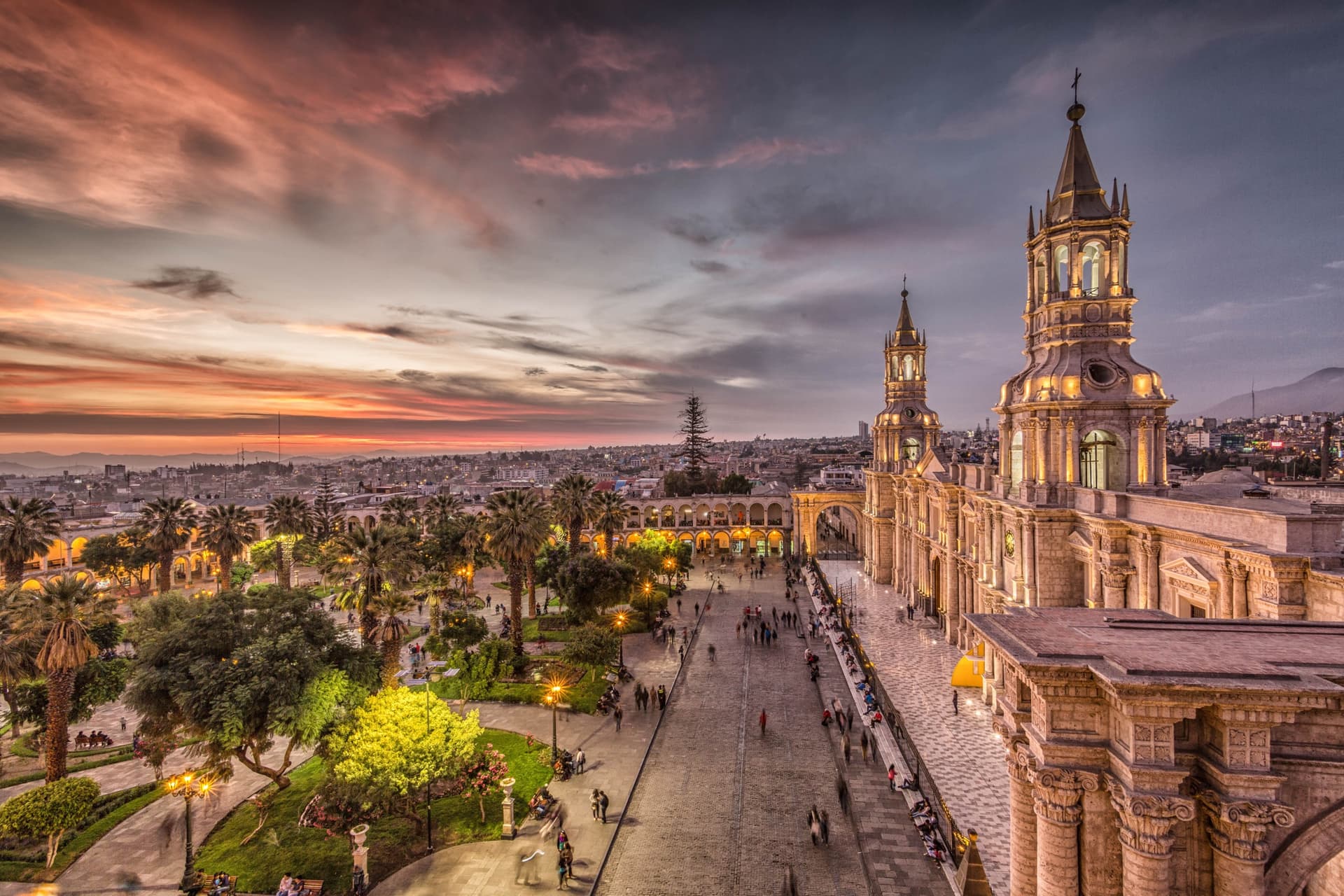
Arequipa stretches at 2,335 meters altitude at the foot of three volcanoes: Misti (5,822 m), Chachani (6,057 m), and Pichu Pichu (5,664 m). The city owes its nickname of ciudad blanca to sillar, a white volcanic stone from Misti's lava flows, which was used to build the cathedral, the Plaza de Armas arches, and most colonial buildings. Our English-speaking team based in Lima systematically organizes a 2-night stay here before departure to Colca, allowing time to acclimatize travelers to the altitude and explore the historic center, a UNESCO World Heritage site since 2000.
The Santa Catalina monastery, founded in 1579, occupies an entire city block of 20,000 m² within the city. You walk for two hours through lanes painted in ochre and indigo blue, past the cells of cloistered nuns and courtyards planted with geraniums. The Santuarios Andinos museum, two streets away, houses the mummy Juanita, a young Inca girl sacrificed around 1450 on the summit of Ampato and discovered in 1995. At the table, Arequipa claims its own regional cuisine: rocoto relleno (pepper stuffed with ground meat), adobo arequipeño on Sunday mornings, and chupe de camarones with crayfish from the Majes river.
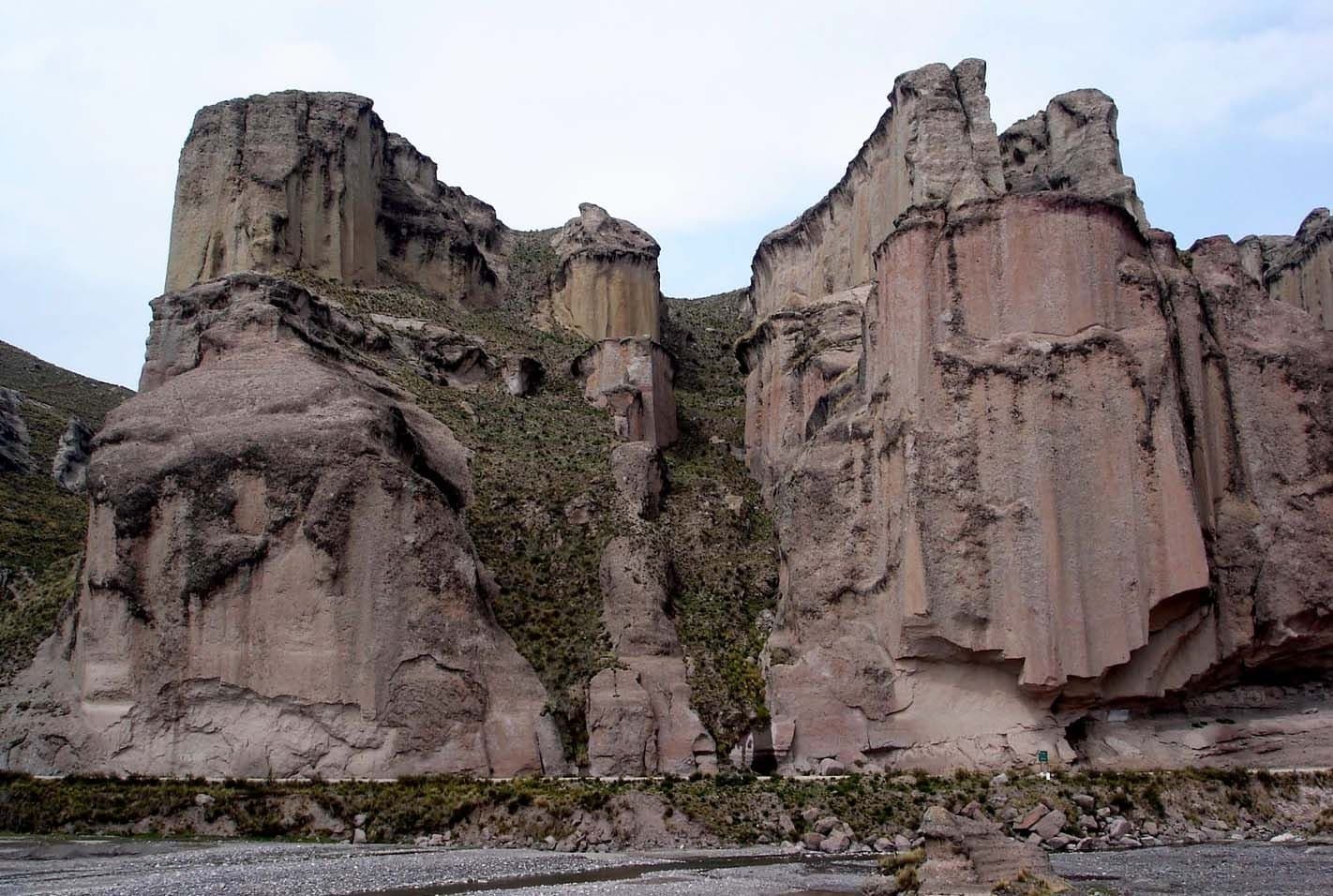
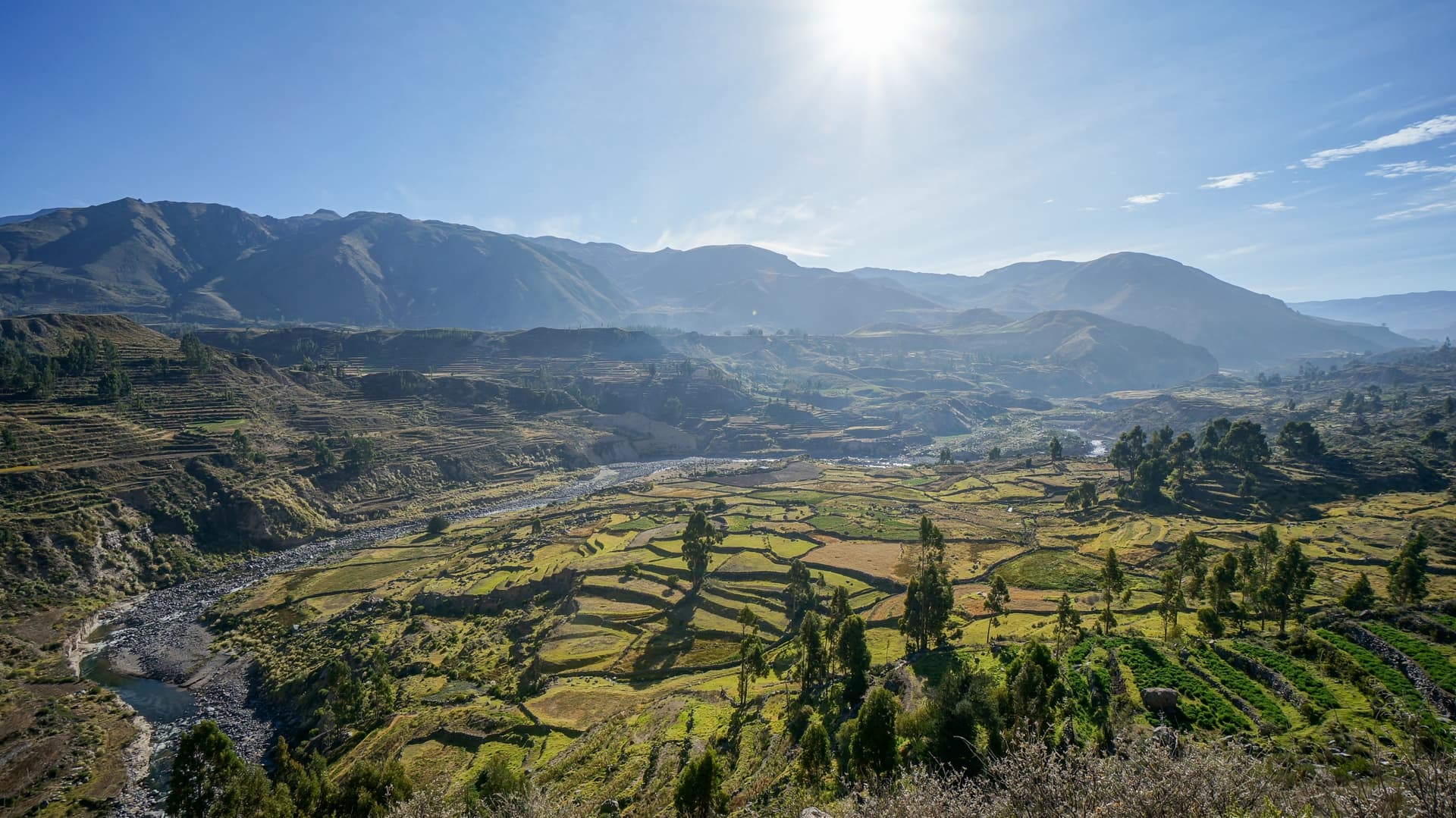
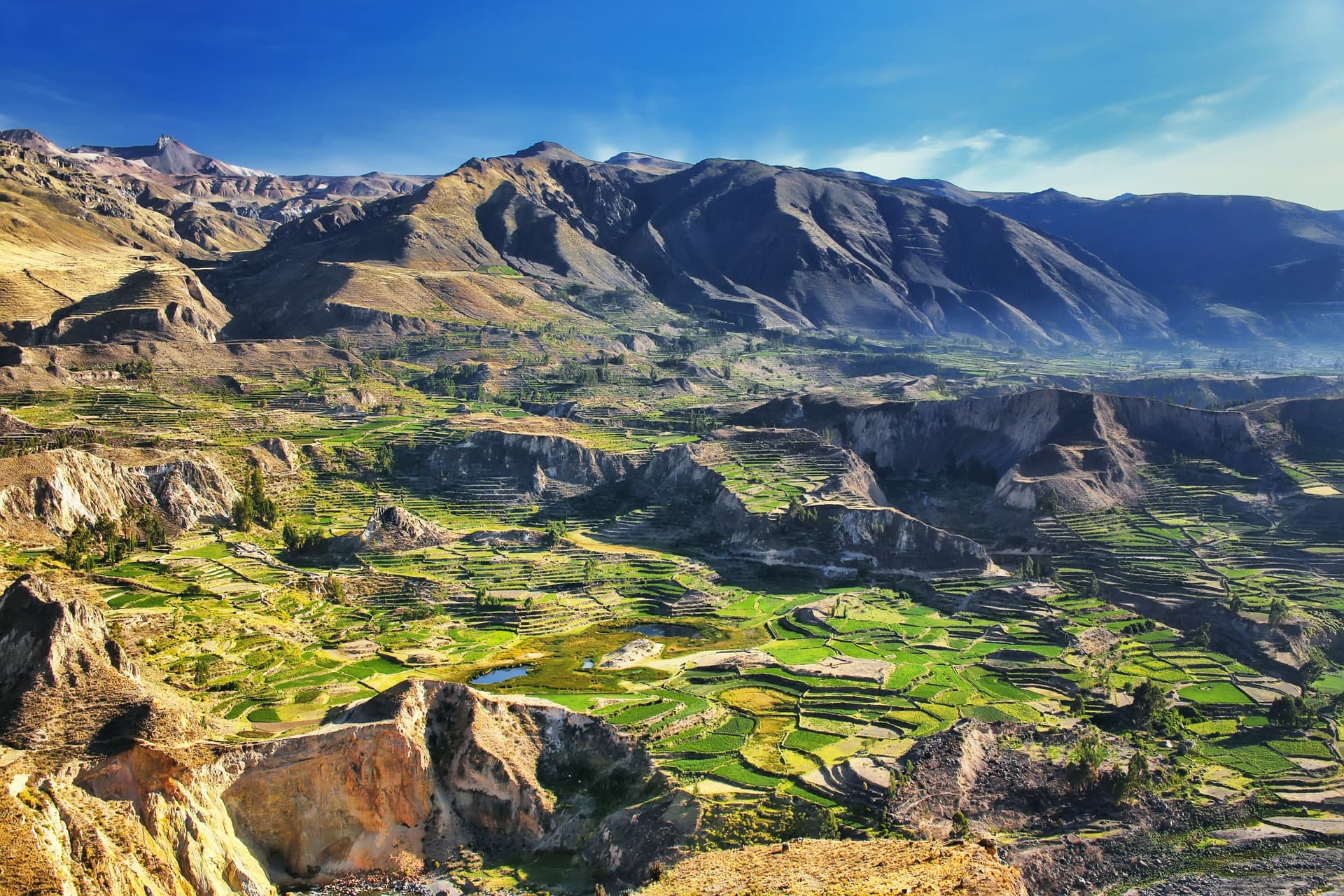
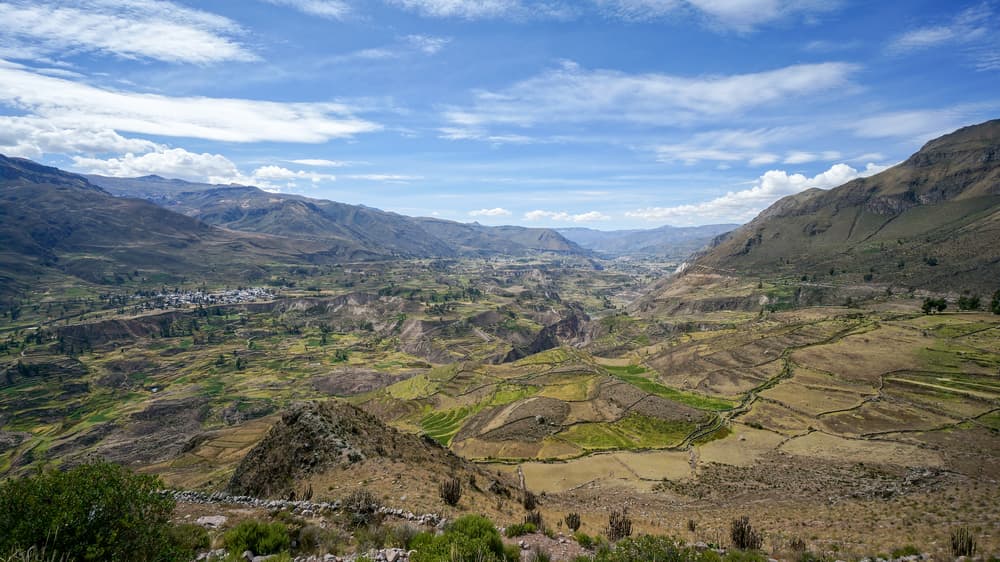
165 kilometers to the north, the road crosses the Patapampa pass at 4,910 meters before descending into the Colca valley. The canyon reaches 3,270 meters between the summit of Mismi and the Colca river bed—twice the depth of the Grand Canyon of Colorado. The valley has been inhabited since pre-Inca times by the Collaguas and Cabanas, two groups still distinguishable today by the shape of the embroidered hat worn by women: tall white straw hat among Cabanas, black felt bowler among Collaguas.
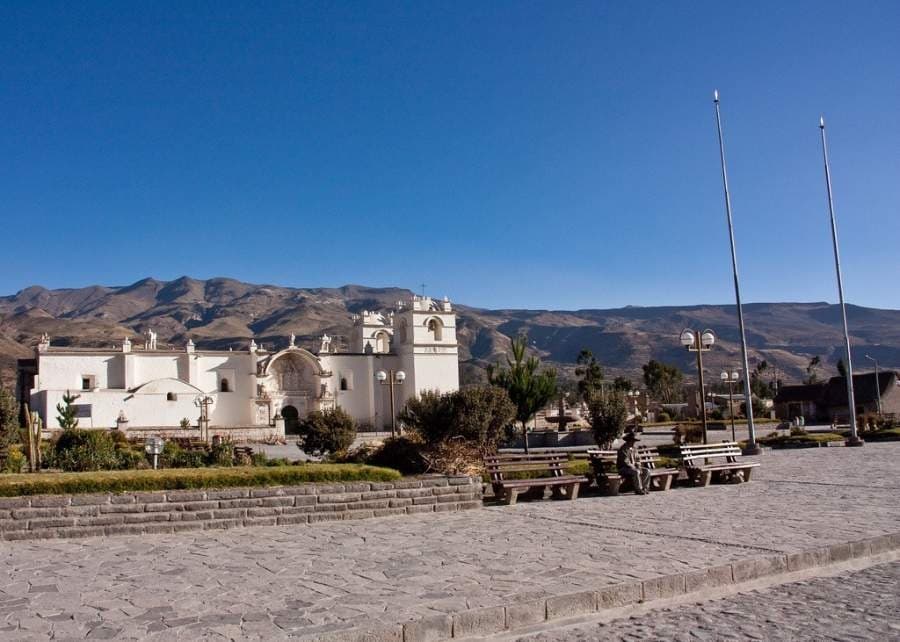
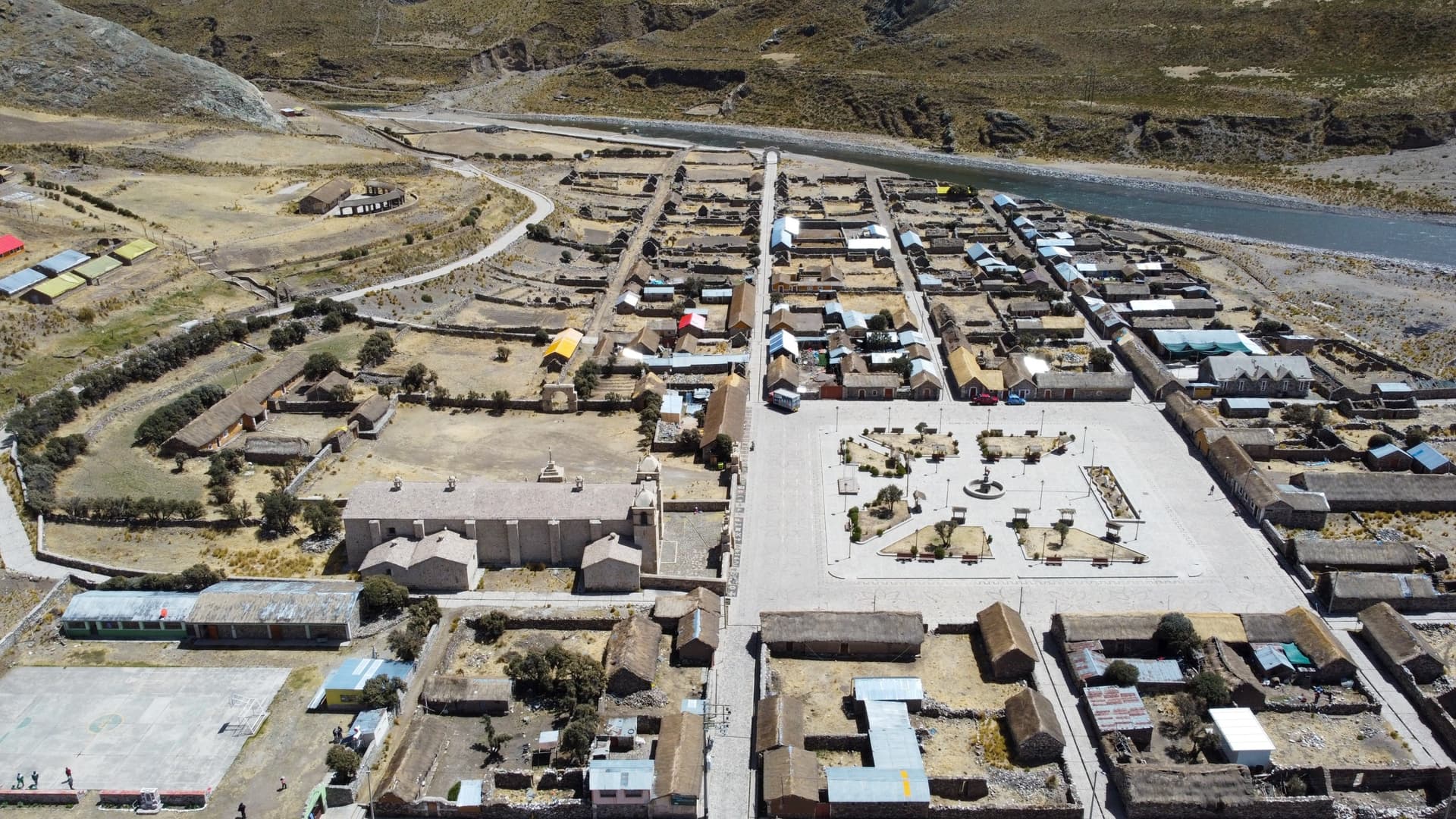
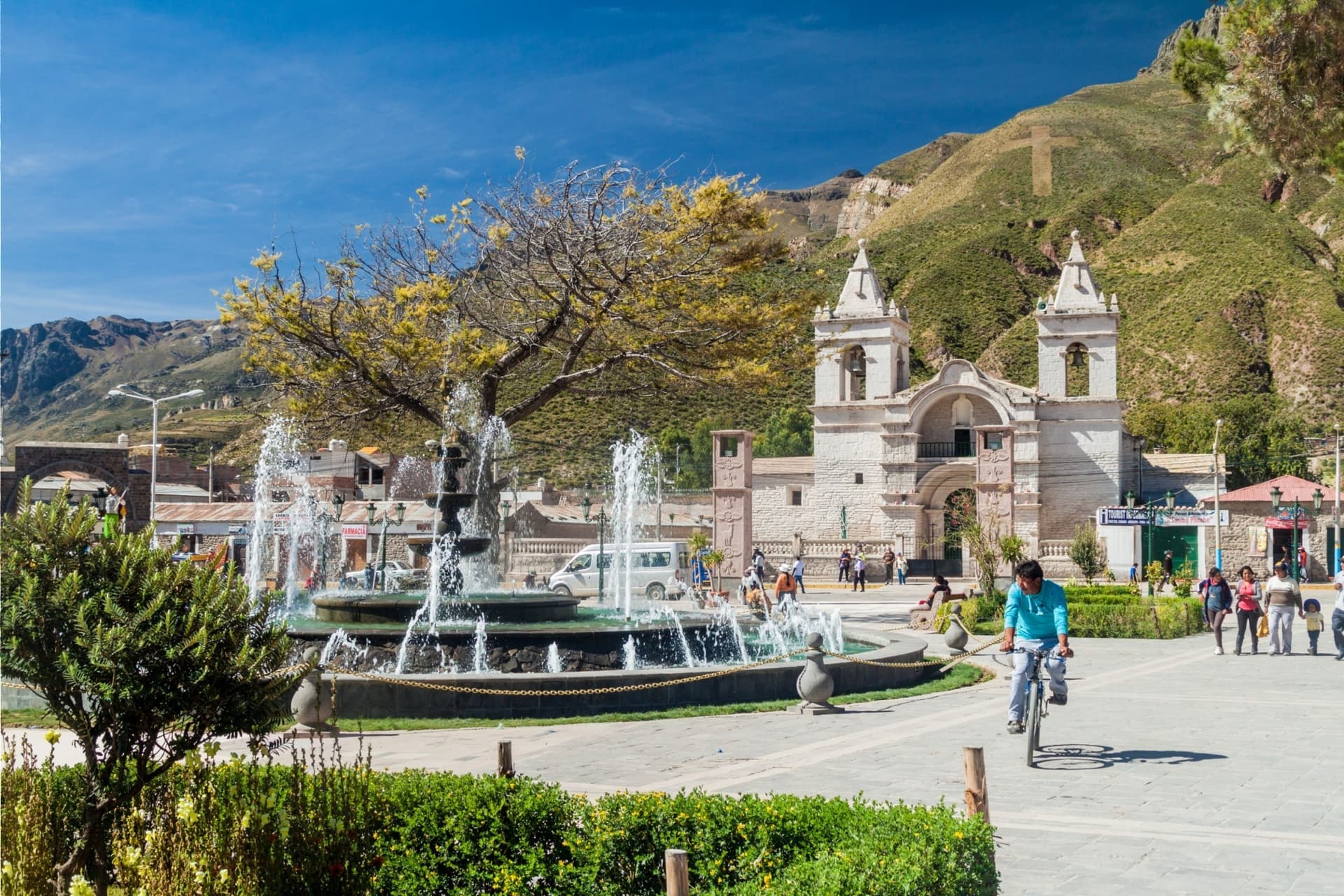
Fourteen villages dot the Colca between Chivay (3,650 m), the valley's gateway, and Cabanaconde (3,287 m) at the other end. Yanque, Coporaque, Maca, Pinchollo preserve their 17th-century baroque churches, rebuilt after the 1991 earthquake. Pre-Inca agricultural terraces, still cultivated with quinoa, corn, and beans, line the slopes for over 1,000 meters of elevation. The Cruz del Cóndor, at 1,200 meters above the river, remains the most reliable observation point for Andean condors (Vultur gryphus), whose wingspan reaches 3 meters. They take flight between 8 and 10 a.m., exploiting ascending thermal currents—the period during which we schedule arrival at the site.
The local economy combines camelid herding (llama, alpaca, wild vicuña protected in the Salinas y Aguada Blanca Reserve crossed on the way), terrace agriculture, and tourism since the asphalt road opened in 2010. The Calera thermal baths, 3 km from Chivay, are fed by hot springs from the Hualca Hualca volcano at 38°C. The Virgen de la Inmaculada Concepción patron festival on December 8 in Chivay, and the Wititi, a ritual courtship dance recognized by UNESCO in 2015, mark the valley's calendar.
To discover
Santa Catalina Monastery in Arequipa. Two hours of walking through a closed city of 20,000 m² with ochre and indigo walls, founded in 1579 and cloistered until 1970.
Condors at Cruz del Cóndor. Observation of Andean condors at 3,200 m altitude between 8 and 10 a.m., when thermal currents lift them level with the cliff face from the canyon floor twelve hundred meters below.
Patapampa Pass at 4,910 m. Stop on the road to Chivay above the Salinas y Aguada Blanca Reserve, with clear views of six volcanoes and likely sightings of wild vicuña herds.
Hiking to Cabanaconde. Descent of 1,200 meters to the Sangalle oasis at the canyon floor, two days minimum round-trip, for hikers accustomed to altitude.
Arequipa cuisine in a picantería. Lunch of rocoto relleno and chupe de camarones in one of the traditional picanterías in the Yanahuara district, recipes inscribed in Pérou's cultural heritage.
When to go
The dry season extends from April to November and is the ideal period for this region. In Arequipa, daytime temperatures hover around 21°C, nights drop to 7-8°C. In Colca, variations are more pronounced: 18°C in the afternoon in Chivay, but 0 to -3°C before dawn between June and August, the coldest period. The sky remains clear, maximizing the chances of observing condors and guaranteeing visibility of volcanoes from the Patapampa pass.
From December to March, the rainy season brings daily afternoon showers, especially in January and February (up to 90 mm monthly in Colca). Secondary trails to Coporaque or Sibayo may become difficult, and morning fog reduces condor flights. Arequipa remains accessible and receives significantly less rain than the Cuzco highlands, but we advise against canyon floor hikes during these two months.
Practical advice
We recommend a minimum of 4 days in the region: 2 nights in Arequipa for the historic center and acclimatization to 2,335 m, then 2 nights in Colca with a stop in Chivay or Yanque the first evening and Cruz del Cóndor the next morning before returning. For hikers wishing to descend to the Sangalle oasis, plan 5 to 6 days total. Arequipa airport (AQP) receives daily direct flights from Lima (1.5 hours) and Cuzco (50 minutes).
The most coherent combination pairs Arequipa-Colca with Lake Titicaca: from Chivay, a direct road reaches Puno in 6 hours via the Patahuasi pass. This connection at over 3,800 m altitude requires good prior acclimatization. The other classic option connects Arequipa to the southern coast (Nazca, Paracas) via the Panamericana. Lodging ranges from simple comfort in Cabanaconde to stone and adobe lodges in Yanque (Colca Lodge, Las Casitas). The region suits the contemplative traveler interested in colonial history and ornithology, as well as the hiker in good physical condition. For families with children under 8, we limit exposure above 4,000 m and prioritize accommodations in Yanque (3,400 m).