The Cajamarca Region
The Cajamarca Region
At 2,700 meters above sea level in the Northern Andes, Cajamarca unveils a little-known side of Peru: Baroque churches, pre-Incan sites and the thermal springs of Atahualpa.
Name: Cajamarca
Status: City
Region: Cajamarca
Population: 283,767 inhabitants in 2012
Area: 392.47 km²
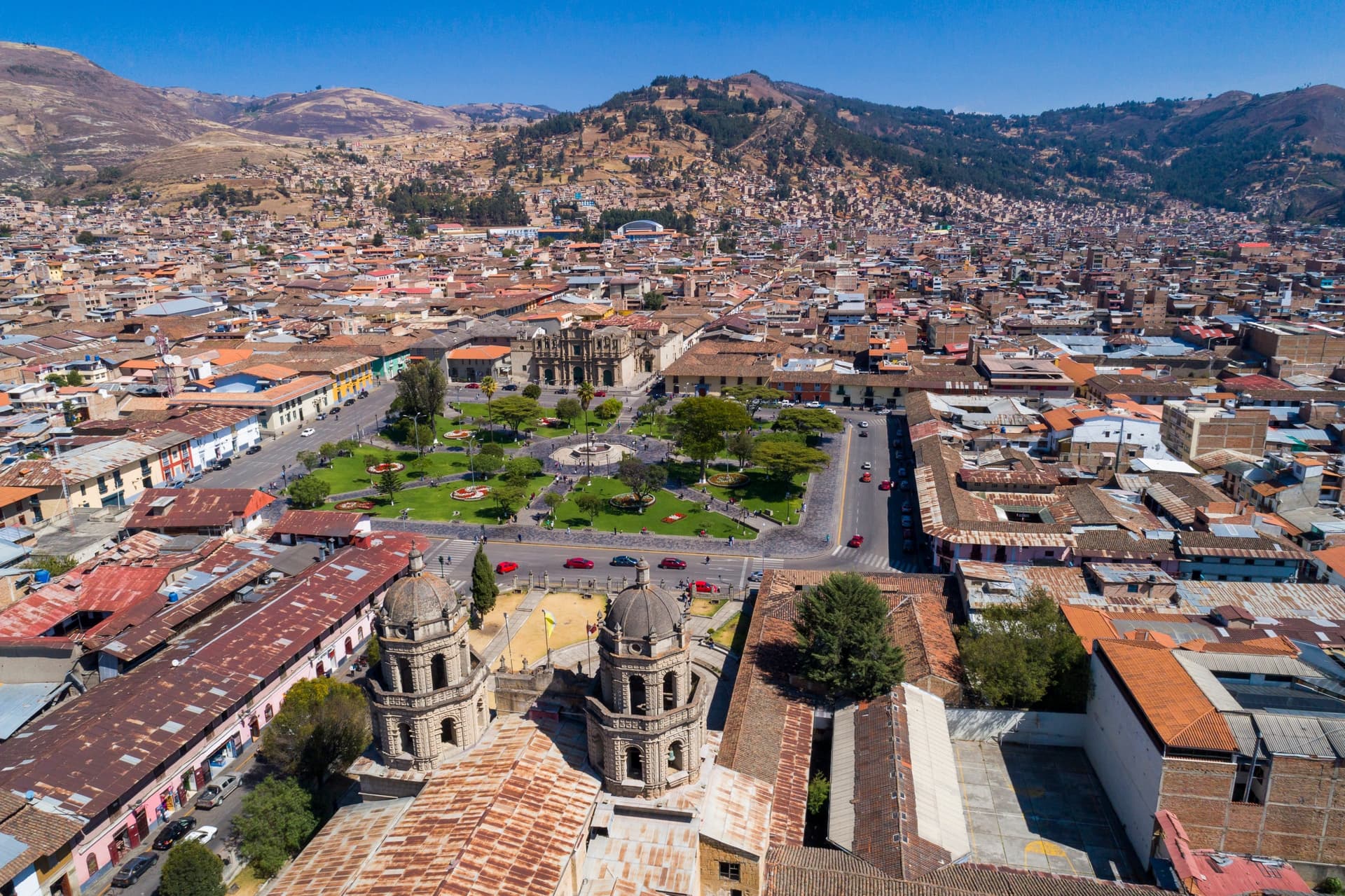
Cajamarca is the capital of the homonymous Peruvian region. It sits on the high plateaus of northern Peru, at 2,700 meters above sea level, in the valley of the Mashcon River. During your stay in Peru, visit this city of great beauty and trace its history through sites reflecting colonial architecture.
History
The traces of the country's first inhabitants were discovered in Cajamarca. The city's caves served as shelter for hunters and indigenous peoples who lived by gathering. The Huari tribe is believed to have previously occupied the region.
For 2,000 years, Cajamarca and its surroundings were home to several tribes, as evidenced by pre-Chavín cultural remains, particularly Cumbe Mayo and Kuntur Wasi, discovered in archaeological sites near the city.
Between 1463 and 1471, Tupac Inca conquered the region and brought the city into the Incan Empire of Tawantinsuyu. In 1532, Inca Emperor Atahualpa was imprisoned in Cajamarca by conquistador Francisco Pizarro. In exchange for his freedom, he offered the explorer a room filled with gold, but Pizarro condemned him in 1533.
In 1980, the Yanacocha mine was discovered 73 km from the city. It is the largest quarry in all of South America. In 1986, the Organization of American States designated Cajamarca as a site of historical and cultural heritage of the Americas.
Today
∙ Geography
As the capital of the homonymous region, Cajamarca is a major cultural and commercial center in the northern Andes. Its territory is bordered to the north by Ecuador, to the south by the La Libertad region, to the east by Amazonas, and to the west by Piura and Lambayeque. With a population of 283,767 inhabitants according to the 2012 census, the city ranks among Peru's largest cities.
∙ Climate
Cajamarca enjoys a mild mountain climate, typical of subtropical highlands, ranging between semi-arid, temperate and semi-cold, allowing it to have fertile soil. Rainfall is much more abundant in spring and summer, between October and March. It rains very little during the rest of the year. Average temperatures are quite varied, pleasant during the day but rather cool at night. January appears as the warmest month, with a maximum temperature of 22°C. June and July, in turn, are the coldest months, occasionally bringing frost.
∙ Architectural style
Cajamarca displays an architectural style known as ecclesiastical, distinguishing it from other Peruvian cities. Colonists used clay from the desert coastal towns for construction. The most famous monuments in Cajamarca are primarily churches, six in total: San José, La Recoleta, La Immaculada Concepcion, San Antonio, the Cathedral and El Belén. Although all were built around the 17th century, the San Antonio Church, the Cathedral and El Belén stand out with their beautiful carved facades and ornate decor.
∙ Culture
Cajamarca is the center of the annual carnival celebration before the start of Lent. The festival features parades, folk dances and other cultural activities. Another local custom has inhabitants splashing each other with water or paint. This takes place around late January to early February. The battle features men and women aged 6 to 25. A few shops sell water balloons during the event. During the festivities, the streets are all wet and young people watch for their targets at every corner.
What to See in Cajamarca
Cajamarca displays numerous examples of Spanish colonial religious architecture, beautiful landscapes, pre-Hispanic archaeological sites, and also hot springs in the neighboring town of Baños del Inca.
∙ Must-see sites in Cajamarca:
- The Los Baños del Inca thermal water spring where you can enjoy a private bath.
- The Cumbe Mayo site dating from the pre-Columbian era. It features a canal, petroglyphs and stunning rock formations.
- The traditional old farm of La Colpa where each cow has its own name.
- The Porcon site where you can visit a zoo, a textile manufacturing factory and a wood industry.
- The Ventanillas de Otuzco necropolis.
- Cerro de Santa Apolonia.
- The Plaza de Armas.
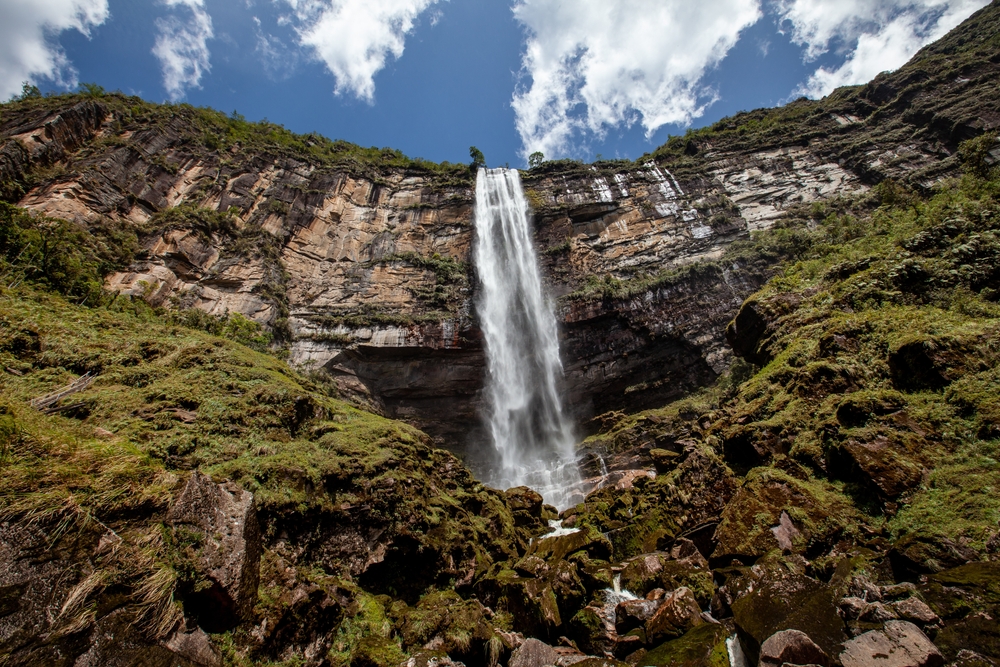
- The stone sculpture manufacturing facility at Catarata de Llanacora, etc.
∙ A closer look at the sites
Plaza de Armas:
This square located north of Santa Apolonia hill marks the place where the Spanish captured Emperor Atahualpa. It is bordered by the Cathedral and the San Francisco Convent, behind which lie the ruins of the former Ransom Chamber, the Emperor's prison.
Belén Church:
The Belén Church stands southeast of the Plaza de Armas. Its interior presents remarkable testimony to Latin American Baroque art. Like the San Francisco Church, it was built from volcanic stone in the 18th century and completed in 1744. The three sections of the façade feature niches housing statues symbolizing the three virtues of Catholic theology: "blind Faith" holding a chalice in hand, "Hope" with an anchor as symbol and "Charity" with a child in her arms.
Cajamarca Cathedral:
The Cajamarca Cathedral is also called Santa Catalina. It stands on the northwest side of the Plaza de Armas. Its construction began in 1665 on the ruins of the old Palace of Justice. It was elevated to cathedral status in 1682. With its Baroque style, it stands out with its three entrance doors supported by columns. Cornices and niches have been finely carved into the volcanic stone. Inside the cathedral, you will find a gilt wood pulpit, above the grand altar, featuring a representation of Santa Catalina.
San Francisco Church:
Facing the Cajamarca Cathedral, the San Francisco Church was completed in 1579, then demolished 108 years later, only to be rebuilt in 1699 in honor of Saint Anthony of Padua. The work lasted 80 years, until 1779. The church inherited the Baroque style. Nearby, discover the sanctuary erected in honor of the Virgin of Sorrows. This building houses the Museum of Religious Art, the Pinacotheca and the Crypts.
Cerro Santa Apolonia:
Previously nicknamed Rumi Tiana, or "stone seat", Santa Apolonia is a fine example of a viewpoint. Cerro Santa Apolonia is located 300 meters southwest of Plaza de Armas, at the foot of the stairs leading to Santa Apolonia Church. The ascent to this site typically continues to the hilltop, at 2,764 meters above sea level. You will discover remains attributed to the Chavín civilization, which inhabited the area between 1200 and 200 BC.
This community transformed the hilltop by carving tombs into the rock and cutting stone blocks, including the "Seat of the Inca".
The city of Cajamarca is located 870 km north of Lima, 250 km from Trujillo and 560 km from Huaraz. The bus journey between Lima and Cajamarca takes between 13 and 14 hours. If you take a flight, the journey takes only 11 hours 20 minutes. Flights are available from Lima, via LC Perú and LAN Perú airlines. Cajamarca's airport is located in the Baños del Inca district.
To reach the city center from the airport, you can take a taxi for an average cost of 13 Soles.
Since Cajamarca is quite a small city, you will have no difficulty reaching its main tourist attractions on foot. However, you can use the various bus lines or rent a taxi (3.5 Soles on average for a trip in the city center).
What to Do in Cajamarca?
- Visit the city's churches and admire their architecture
- Relax and bathe in the thermal spring of Los Baños del Inca
- Admire the beauty of the city and valley from the hilltop leading to Cerro Santa Apolonia
Want to discover this destination?
Our local advisors design your tailor-made trip.