Iquitos
Iquitos
Iquitos, the world's largest city without road access, is the gateway to the Peruvian Amazon: lodges, river cruises, indigenous communities and the floating Belén market.
Name: Iquitos
Status: City (capital)
Province: Maynas
Region: Loreto
Population: 370,962 inhabitants in 2007
Area: 1,213.41 km²
Iquitos is a premier tourist destination on the banks of the Amazon. This striking city is connected to the rest of the continent by rivers. You'll find several historical monuments, museums and countless fascinating sites here. Iquitos also offers authentic local cuisine that you'll delight in discovering.
History
When the Conquistadors sought El Dorado in the 16th century, they passed through Iquitos, founded by Jesuits in 1757. By 1860, the city welcomed numerous settlers. A year later, the creation of the Maritime and Military Department of Loreto, coupled with the rise of steam navigation and improved access to river routes, spurred its growth.
Iquitos gained fresh momentum during the rubber boom of the 1890s. Then in 1910 came the rush for gold and oil. By 1911, the city experienced significant immigration, with the arrival of foreigners from China, Brazil, Spain, Italy, Portugal, France and beyond. This situation resulted from urbanization fueled by regional economic development. Today, Iquitos continues to attract immigrants who bring new practices and traditional beliefs. The city is now home to nearly 380,000 inhabitants.
Today
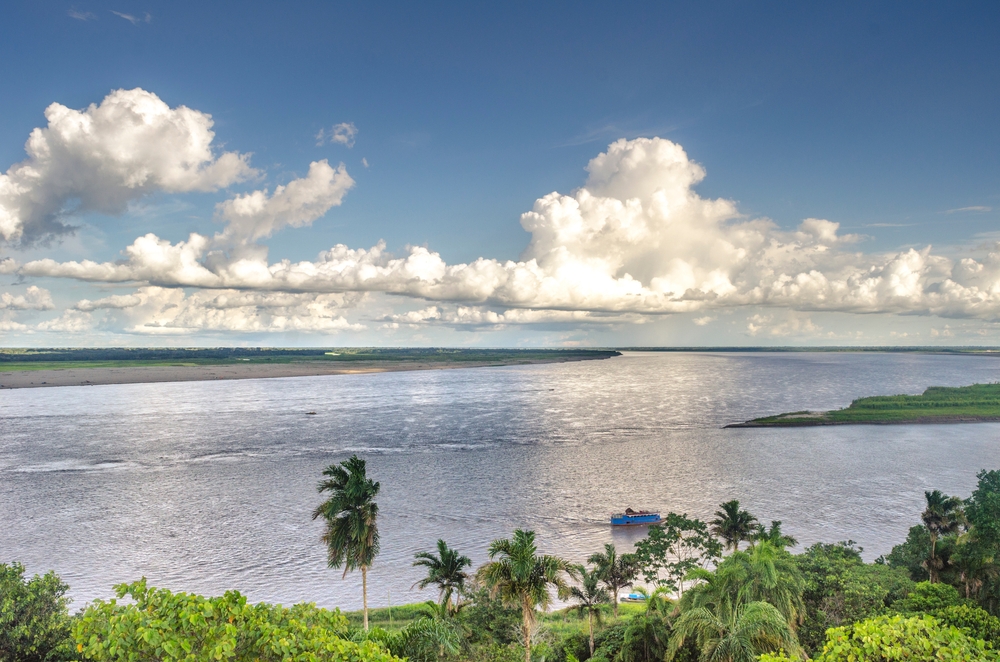
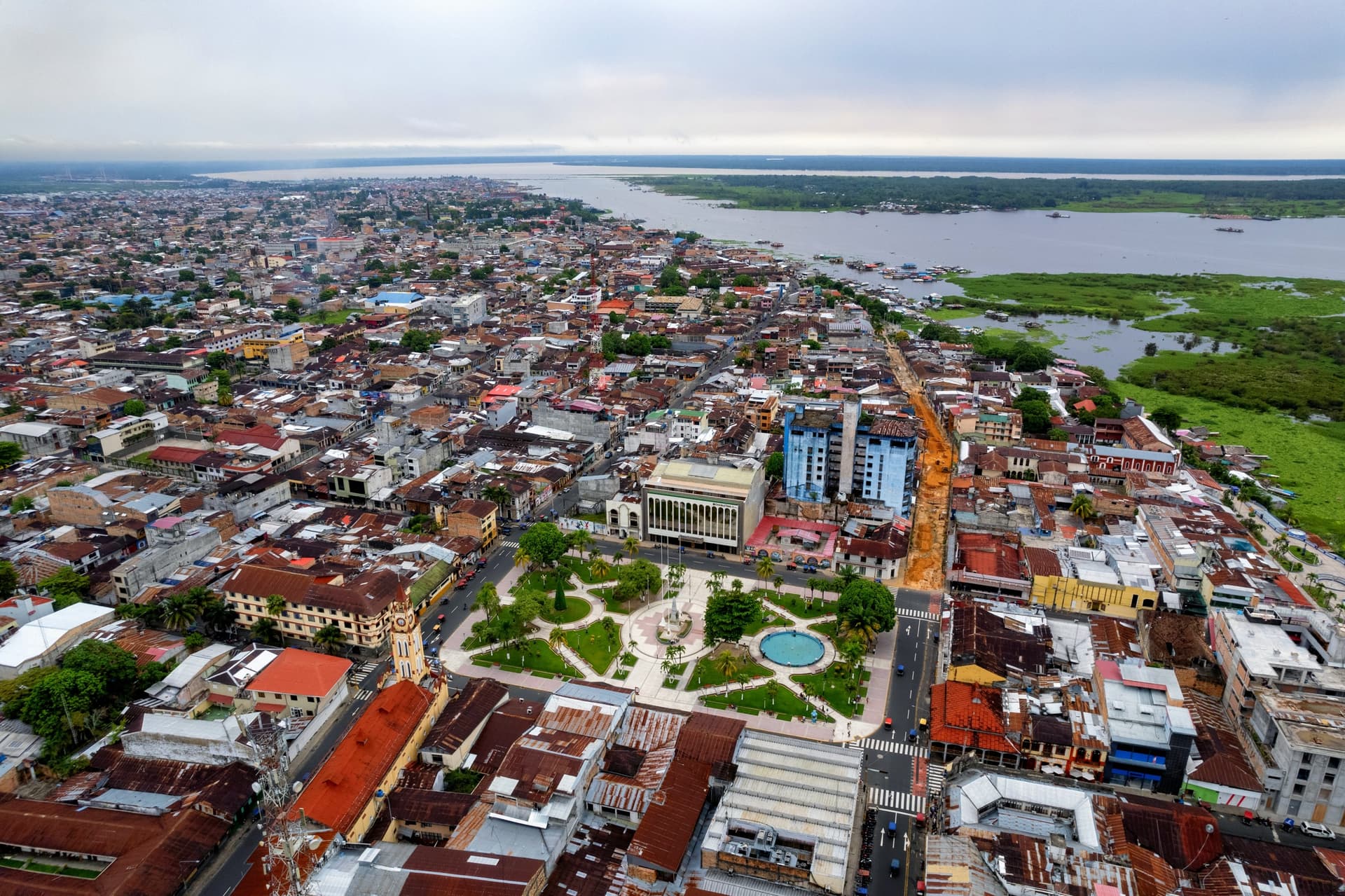
Iquitos sits at the edge of the Amazon rainforest, across the vast plains of the Amazon basin, between the Amazon, Nanay and Itaya rivers. It is the capital of the Loreto region.
Iquitos ranks fifth among Peru's most populated cities. It is also considered the world's largest city inaccessible by road. Today, the city thrives largely on tourism and river commerce. It serves as an important transit hub for the region.
Geography
Iquitos is dotted by the Amazon, Nanay and Itaya rivers, which form the city's primary access routes, aside from air travel. The Amazon's flow is strong enough to allow steamboats to navigate easily.
Gastronomy
Juane
It is one of Peru's signature jungle dishes. Consumed during the San Juan festival on June 24th, Juane—a tribute to Saint John the Baptist—is believed to have pre-Columbian roots as well. It is made with rice, chicken and olives, all wrapped in hoja de bijao leaves (similar to banana leaves).
Tacacho
The word Tacacho, which means "beaten" derives from two Quechua terms: taka and chu. This dish of fried plantain slices mixed with chicharone (crispy pork fat) is enjoyed with chorizo for an explosion of flavor. It is a widely enjoyed dish throughout Peru. In Ecuador's Amazon region, it is called Bolon.
Culture
Local culture is both complex and diverse. Iquitos serves as a meeting point for Amazonian mythologies. Many indigenous people come to the city to perform traditional dances or sell their handcrafted creations. They bring customs and traditions preserved over centuries. Throughout the year, Iquitos hosts numerous festivals blending dance, music and ancestral cuisine.
What to See?
Iquitos is home to numerous tourist sites. Here are a few highlights:
Plaza de Armas
Also called the Plaza del Comercio, this square represents a gathering place for locals and visitors alike. On the southwest side stands the city's Cathedral. At the center, a tall obelisk rises above a circular basin surrounded by gardens. Water jets can shoot up to thirty feet high, accompanied by light shows. On the northeast side, you'll find the Eldorado Hotel, the municipal library and the Casa de Fierro.
Iquitos Cathedral
The Iquitos Cathedral is also known as "Iglesia Matriz de Iquitos." Built in neogothic style between 1911 and 1919, it was completed in 1924. The structure features a 20-meter tower, making it one of the city's tallest buildings. Notably, a Swiss clock has been incorporated into the monument. Unusually, it displays Roman numerals with the number 4 marked as "IIII." Inside, the cathedral showcases ornate decoration, with numerous murals adorning the walls. Above the main altar, you'll discover a fresco executed in Amazonian style by César Calvo de Araujo. At the center, a statue of the Virgin Mary faces the emerging city of Iquitos. In the crypt lie the relics of the city's first bishops.
Casa de Fierro
The Casa de Fierro, or Iron House, stands before the city's main plaza, between Próspero and Putumayo streets. It is a grand iron residence built in the late 19th century during the rubber boom. Architecturally, it ranks among the country's best-preserved monuments. Its walls, ceiling and balcony are covered with rectangular iron plates. Previously, the building belonged to explorer Antonio Vaca Diez.
Bellavista Dock
During your stay in Iquitos, don't miss the Bellavista dock located 5 km north of Plaza de Armas, on the Nanay River. It is the departure point for boats heading to other localities in the region: the Momón river, indigenous Boras communities in San Andrés, Padre Cocha or Manacamiri, and many other destinations along the Amazon. Take a stroll along the Boulevard of San Pedro and San Pablo and then visit the Bellavista market to sample authentic fish-based dishes.
San Juan Craft Market
Situated southwest of Plaza de Armas, near the international airport, the San Juan Craft Market is the perfect place to purchase souvenirs. It hosts a large number of vendors selling handcrafted products from indigenous communities. Discover textiles, traditional clothing made from plant fibers, hand-carved wooden objects, pottery and ceramics featuring typical regional motifs, and more. Also visit the exhibition space to better understand Amazonian culture and admire artistic representations in its grand amphitheater.
Belén Quarter
Nicknamed the "Venice of the Amazon," this neighborhood ranks among the most cherished destinations for travelers during a stay in Iquitos. Belén stands out for its charming neighborhoods connected by delightful alleyways leading down to the left bank of the Itaya River. The quarter divides into two sections. On one side, Alto Belén sits on the heights, housing several tourist attractions such as Belén Market, Passage Paquito, Belén Viewpoint and more. On the other, explore the "Venecia Loretana," a settlement graced with beautiful traditional houses on stilts. Explore this small village by canoe along the Itaya River, crossing small footbridges.
Amazon Museum
The Iquitos Amazon Museum appeals to those interested in indigenous communities. The institution chronicles the history of the Amazon's principal ethnic groups from Peru, Brazil and Venezuela. Discover a collection of 80 life-sized fiberglass sculptures. The museum dates from 1863 and features 2 stories built in neoclassical style. The walls are constructed from carved wood.
Climate
Iquitos enjoys an equatorial climate characterized by warm, humid weather. Rainfall is abundant nearly year-round. The city experiences no distinct dry season, but rather a wet summer. Temperatures range between 21°C and 33°C, averaging 26°C. Annual precipitation reaches 2,616.2 mm.
The rainy summer in Iquitos runs from November to May. Rainfall is particularly heavy in March and April. During the winter season, the city displays a very different climate. The driest months are July and August, though they still receive occasional showers. On sunny days, temperatures can reach 30°C.
Moreover, microclimates develop across the region. At certain times of year, parts of Iquitos are shrouded in mist and rain, while other sectors remain lightly clouded or clear. As a result, temperature varies with a warm urban climate. This phenomenon is called the **"urban heat island effect":" heat in the city center lingers due to large buildings and pavement.
How to Get There?
By Air:
Iquitos is served by air from Lima. Depending on the airline, a ticket costs $80 to $100. The flight lasts approximately 2 hours. Planes sometimes make a stop in Pucallpa or Tarapoto.
By Boat:
Boat travel remains the oldest and most popular transport solution for reaching Iquitos. Vessels depart several times weekly from the village of Yurimaguas, located 6 hours from Tarapoto, or from Pucallpa. The journey takes roughly 4 days from Yurimaguas and slightly longer from Pucallpa. Budget 50 soles for passage and 3 meals per day.
How to Get Around?
Iquitos offers various transportation modes: rickshaws, buses and taxis. While the bus is the most practical way to explore the city, hundreds of rickshaws are also at your service for sightseeing circuits. Moreover, several taxi companies can arrange your transportation throughout Iquitos.
Want to discover this destination?
Our local advisors design your tailor-made trip.