The Sarcophagi of Carajia
The Sarcophagi of Carajia
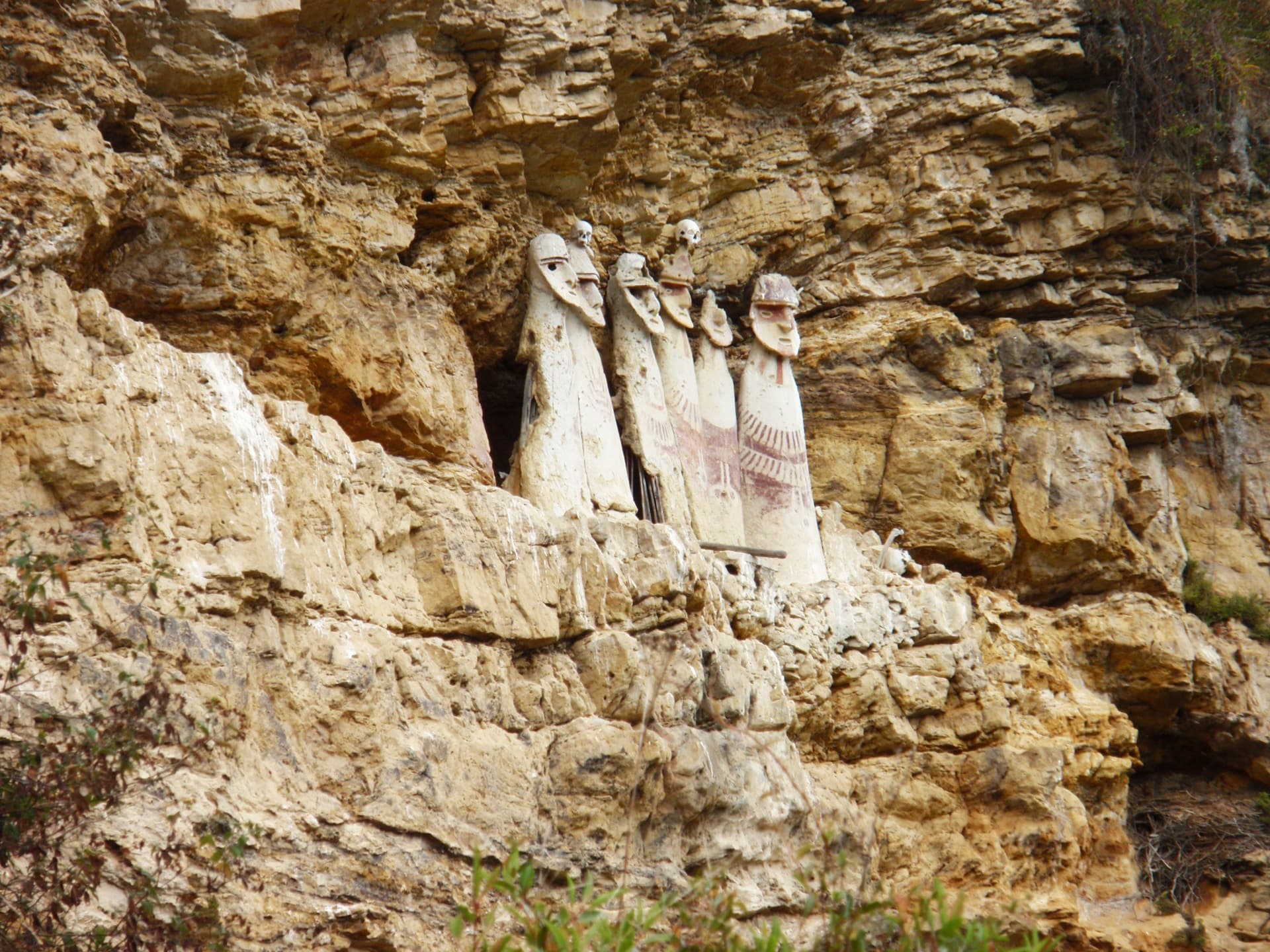
Six Chachapoya funerary statues standing on a cliff in Amazonas, dated 1460–1470 and accessible from Chachapoyas by a short hike.
The sarcophagi of Carajia, sometimes spelled Karajia, rise from a cliff in the district of Luya, in the Amazonas region of northern Peru. These six anthropomorphic funerary statues, perched at 2,072 metres above sea level and roughly 200 metres above the cliff base, stand as testament to the rituals of Chachapoya culture, which predated the Inca conquest. Locals call them Purunmachacos, a term meaning the ancient dead.
Why visit the Carajia sarcophagi
The site offers a rare window into Chachapoya funerary practices: only clan leaders, shamans and high-ranking warriors received this type of burial. Unlike monumental ruins such as Kuelap, Carajia showcases 2.5-metre-tall human figures with painted faces, intact on their rocky perch for over five centuries. The approach hike remains accessible, making it an ideal complement to a circuit through the Amazonas region.
History and significance of the site
The Carajia sarcophagi were discovered in 1985 by Peruvian archaeologist Federico Kauffman Doig, accompanied by guide Carlos Torres Mas. Dating places their construction between 1460 and 1470, shortly before Inca expansion into the region.
Each sarcophagus was sculpted from clay mixed with wood and thatch, then covered with a mud plaster. Inside, a mummy in fetal position lies wrapped in funeral textiles and surrounded by grave goods. The outer form is anthropomorphic, reproducing a human silhouette topped by a massive head representing a funerary mask and headdress. The faces bear red and white paint, while the bodies are adorned with geometric patterns.
What you see on site
Six sarcophagi are visible on the main cliff today. A seventh, situated to the right of the group, likely fell during the 1928 earthquake and has since disappeared. The six remaining figures stand roughly 2.5 metres tall and display a characteristic protruding chin. On two of them, a skull has been placed at the top—a distinctive mark reserved for great warriors.
Other burials hint at their presence around the main group. To the right, an extended mummy appears in an opening carved into the rock. To the left, traces of a sarcophagus looted in the 1980s speak to the site's deterioration before protection measures took hold.
Erosion and weathering remain the primary threats. Peruvian authorities have, with support from international organisations, implemented cliff stabilisation measures and restricted direct access to preserve these fragile structures.
Practical information
The site is open to the public for a modest entrance fee, payable on arrival. The visit itself takes roughly an hour once at the viewpoint, plus hiking time from the car park. Bring water, a hat and sturdy shoes: the trail descends then climbs over rocky terrain. The sarcophagi are viewed from a distance, with no direct access to the cliff face.
When to visit
The region enjoys a subtropical mountain climate with moderate temperatures. The dry season, from May to September, remains most favourable: daytime temperatures between 18 and 25 °C, cooler nights around 10 to 15 °C, and passable trails. Between October and April, the rainy season makes paths slippery and complicates access, though vegetation is lusher and nearby waterfalls more dramatic.
How to get there
The logical entry point is Chachapoyas, capital of the Amazonas region and base for excursions to Carajia.
From Lima
By air, two options: a flight to Jaén followed by around four hours' drive to Chachapoyas, or a flight to Tarapoto with overland connection. By bus, overnight services link Lima to Chachapoyas, though the journey is lengthy (roughly a full day). From Chiclayo, allow about ten hours by bus.
From Chachapoyas to Carajia
Most visitors opt for a day excursion from Chachapoyas, with transport and guide included. Independent travellers can take a colectivo or minibus to nearby villages, then finish by moto-taxi to Cruzpata. Hiring a taxi or four-wheel-drive vehicle is recommended, as mountain roads are winding and sometimes unpaved.
Final approach: on foot or horseback
The trail departs from Cruzpata, roughly two kilometres from the viewpoint. Allow 30 to 45 minutes of hiking depending on pace, along a marked path that overlooks valleys and mountains. For less confident walkers, horses are available for hire in the village; the descent remains steep and rocky nonetheless.
Nearby attractions
The Amazonas region concentrates several major sites accessible from Chachapoyas:
- The fortress of Kuelap, a Chachapoya citadel perched above 3,000 metres.
- The mausoleums of Revash, other cliff burials from the same culture.
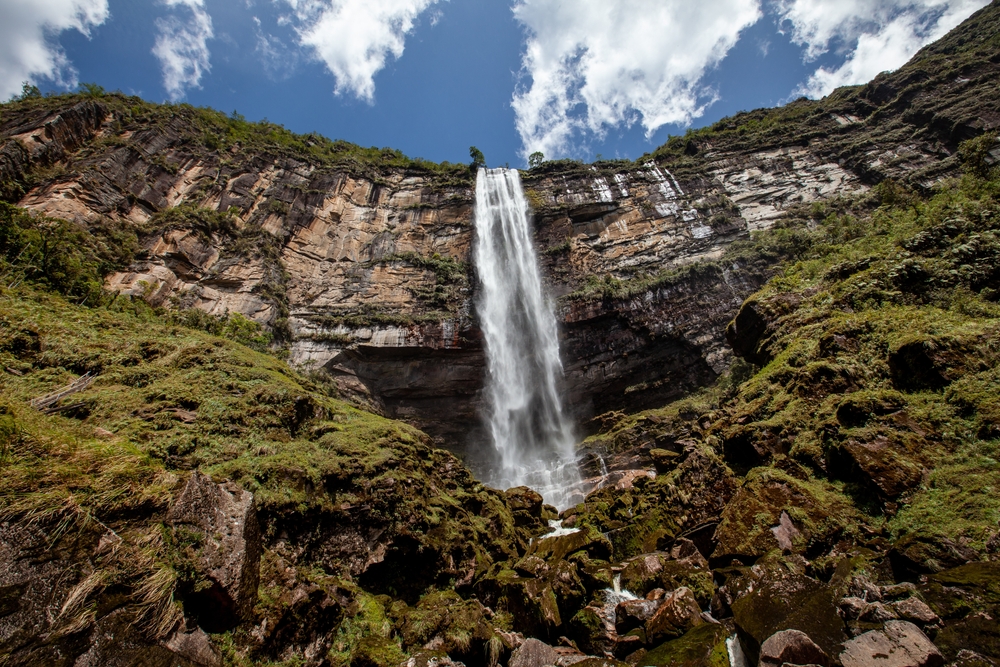
- The Gocta waterfall, among Peru's highest, accessible by hiking.
- The Leymebamba museum, which houses over 200 Chachapoya mummies and funerary objects.
- The village of Luya, its market and colonial church.
To further explore Andean civilisations, you may also consult our guide to the ruins of Ollantaytambo or the ceremonial site of Q'enko, in the Inca Sacred Valley.
Frequently asked questions
Frequently asked questions
No, the 2 km trail from Cruzpata is marked and takes 30 to 45 minutes to walk. The descent is steep and the return climb back up, but no technical sections are required. Horses can be hired on site for visitors preferring to avoid walking.
Starting from Chachapoyas, allow a full day: roughly two to three hours' drive each way, the approach hike, viewing from the viewpoint and return. On site itself, an hour is sufficient to appreciate the location.
Yes, but over two separate days. The two sites lie in opposite valleys from Chachapoyas and each visit requires a full day, including travel.
No. For conservation and safety reasons, viewing takes place from a viewpoint situated below the cliff. Binoculars are useful for distinguishing details on the faces and patterns.
To incorporate Carajia into a complete itinerary, consult our Peru travel ideas.
Nearby
Interested in this visit?
We can include it in your personalised itinerary.