Santa Catalina Convent
Santa Catalina Convent
Founded in 1579 in Arequipa, Santa Catalina Convent unfolds 20,000 m² of alleyways, cells and cloisters in volcanic stone, listed as a UNESCO World Heritage site.
Santa Catalina Convent occupies an entire quarter in the heart of Arequipa. Behind its towering sillar walls, this monastery founded in 1579 operated in near-total self-sufficiency for nearly three centuries, welcoming the younger daughters of great colonial families. With its 20,426 m² of cells, alleyways, cloisters and chapels, it ranks among South America's best-preserved religious complexes, inscribed on the UNESCO World Heritage list.
Why visit Santa Catalina
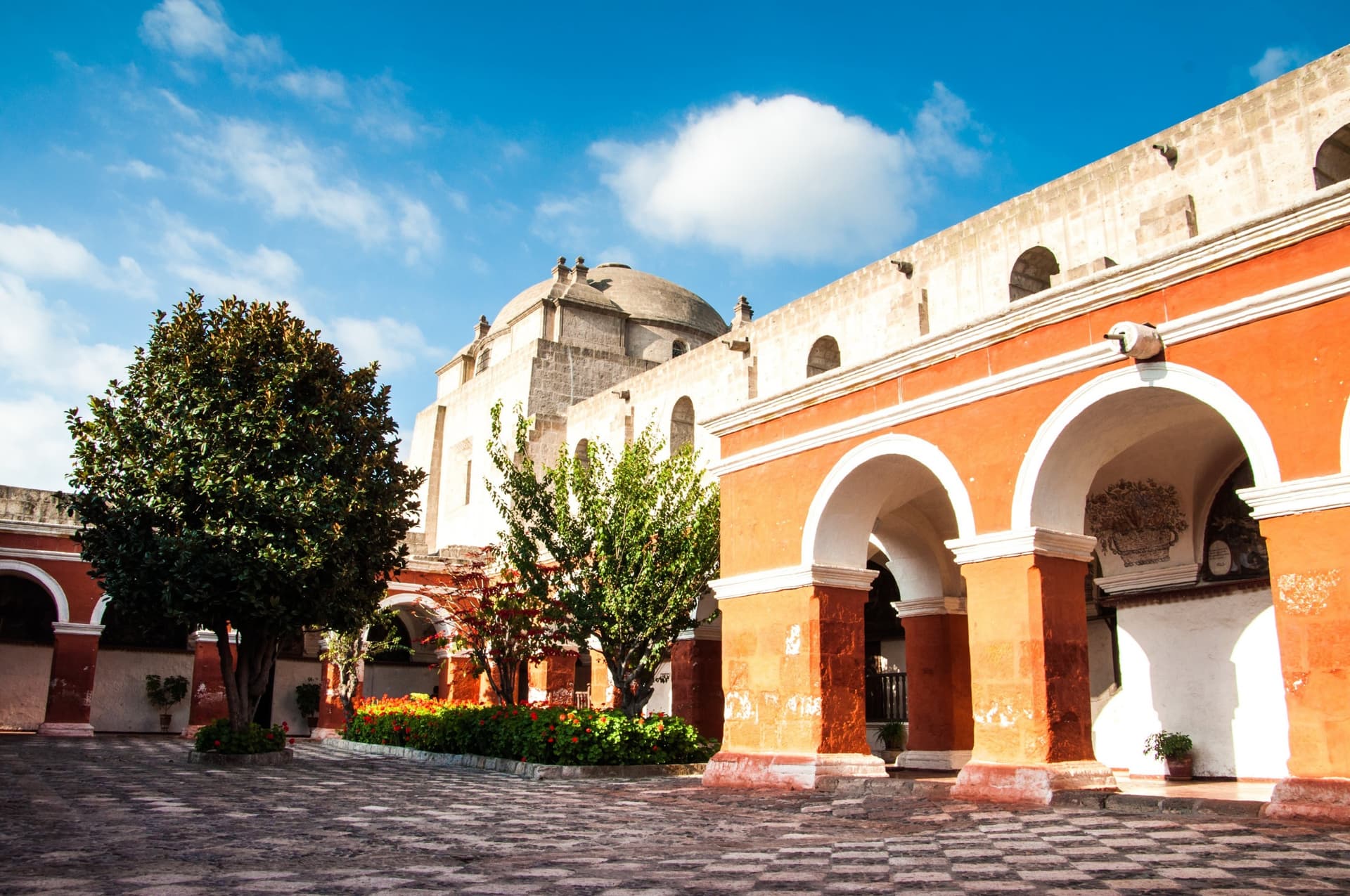
The convent is unlike any other monastery. It's a small enclosed city, organized around five streets bearing the names of Spanish cities: Burgos, Málaga, Córdoba, Sevilla and Granada. Walls in ochre and blue hues, flower-filled courtyards and individual cells tell the story of an unusual religious life, long more worldly than monastic. Volcanic stone quarried from Misti (red) and Chachani (white) gives the entire complex the distinctive mineral character of Arequipa's architecture.
A visit appeals as much for its architecture as for its social history: here you understand how Peruvian colonial high society operated, placing its daughters in a religious setting while reproducing the domestic codes of the outside world within.
History of the convent
The project began with authorization granted by Viceroy Francisco Toledo. Doña Maria de Guzmán, a wealthy Spanish widow without children, financed the foundation by transferring all her assets. Official documents were signed on September 10, 1579, and the convent received its name in reference to Saint Catherine during a Sunday mass on October 3, 1580.
The monastery quickly welcomed daughters of the most distinguished families of the viceroyalty, often the younger siblings. Upon entry, they paid a substantial dowry for the era, which was used to beautify and maintain the buildings. Over time, discipline loosened: nuns occupied spacious cells equipped with individual kitchens, employed servants, and organized banquets and artistic activities. This worldly drift was denounced in 1833 by Franco-Peruvian traveler Flora Tristan, who later informed Rome of it. It was during the papacy of Pius IX, in 1871, that Dominican Sister Josefa Cadena was sent to restore the rule: poverty, silence and prayer became mandatory again.
At its peak, the convent housed between 300 and 450 religious sisters. Today, about twenty nuns live in a private section closed to the public. They venture out only in specific cases, such as voting or consulting a doctor.
What to see inside
The five streets and cloisters
The entrance leads to the Arc of Silence, which opens onto the novices' cloister. Beyond it begin the five colorful alleyways. Each serves cells, oratories, sometimes a private courtyard. Young novices underwent four years of training here before pronouncing their final vows.
The art gallery
Housed in the former common dormitory, the gallery brings together a significant collection of religious paintings from the 16th and 17th centuries, including several works attributed to the Cusco school. Also on display are portraits and scenes from the Peruvian viceroyalty.
The chapel and communal spaces
The main chapel, refectory, communal laundry with its large stone jars, and individual kitchens provide a precise picture of the convent's material organization. Some upper-floor sections remain in ruins, a consequence of the earthquakes that have marked Arequipa's history.
The pre-Columbian civilizations museum
One room is dedicated to Nazca and Chimu cultures, with ceramics and textiles. This usefully complements your understanding of the site's colonial period.
Practical information
The convent is open daily during daylight hours, with a ticket office on-site. Admission rates are moderate and often reduced for students. The service of an English-speaking guide is available as an add-on at the entrance: this is highly recommended to understand how the site is organized. Plan for 1.5 to 2 hours of visiting. Ask for a map at reception to avoid retracing the same alleyways. A café and gift shop are located inside.
When to visit
Arequipa can be visited year-round thanks to its dry, temperate climate, but the dry season (May to October) remains the most comfortable, with clear skies that highlight the sillar's colors. The convent regularly organizes night visits by the light of electric candles: the atmosphere in the alleyways changes dramatically and the experience is worthwhile if your dates align.
How to get there
The convent is a short walk from Plaza de Armas. From the main square, take Santa Catalina street; the entrance is clearly marked. To reach Arequipa from Lima, flying remains the most direct option, with a flight of approximately 2 hours. By bus, the journey takes between 14 and 17 hours depending on the company and route chosen.
What to see nearby
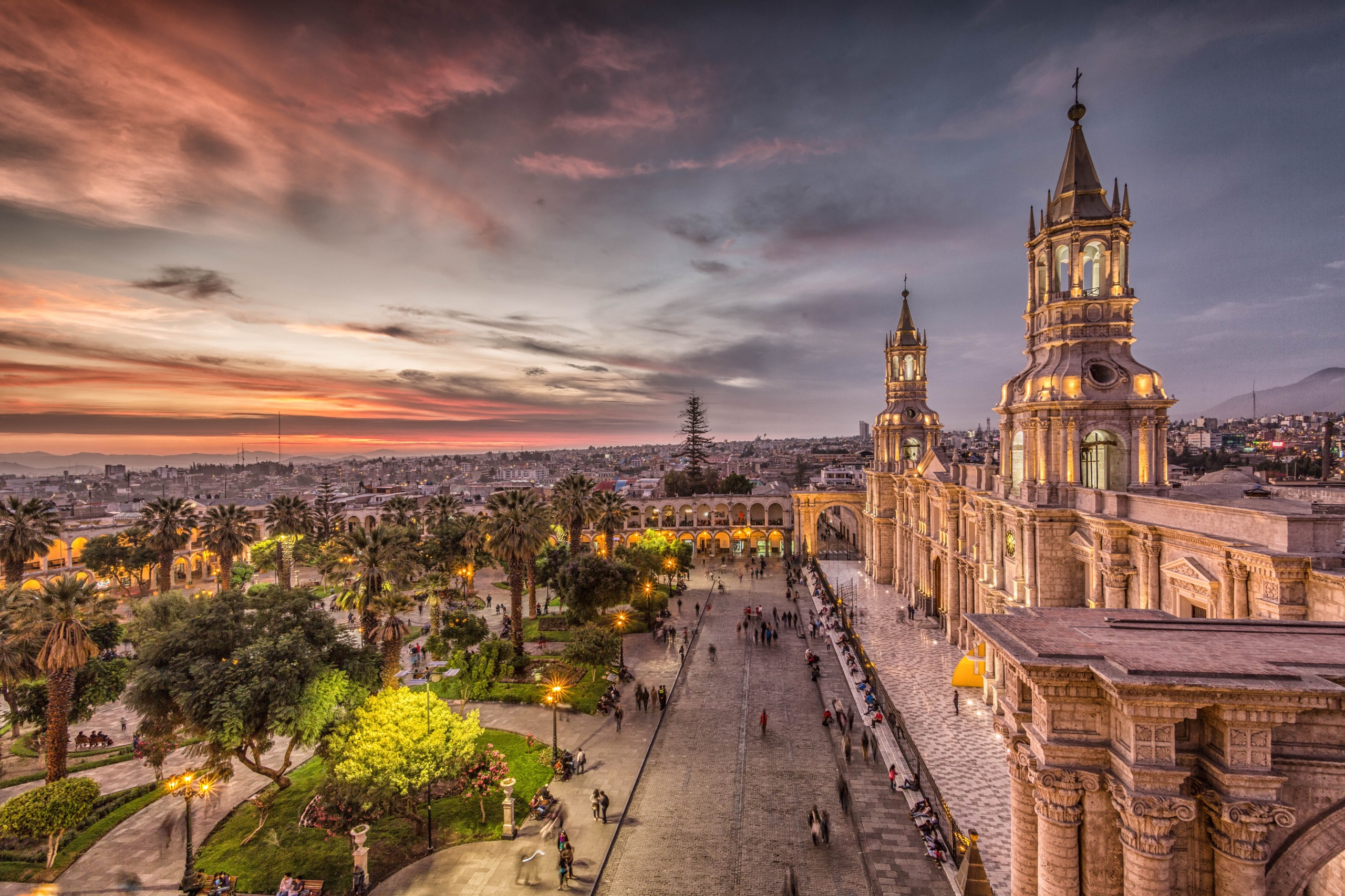
Plaza de Armas, Arequipa Cathedral and Yanahuara Viewpoint round out a day visiting the historic center. To extend your stay in the region, you can visit the Pampa Cañahuas National Reserve on the route to Colca Canyon. Further on, in the Sacred Valley, the ruins of Ollantaytambo and the Q'enko site near Cusco offer another perspective on the Andean past.
Frequently asked questions
Frequently asked questions
Plan for 1.5 to 2 hours to explore the main alleyways, the art gallery and the cloisters. With a guide, allow closer to 2 hours.
It's not mandatory but highly recommended. The site is large and the convent's history, layered with multiple periods, greatly benefits from guided commentary. English-speaking guides are available at the entrance.
Yes, if your schedule permits. The soft lighting transforms the atmosphere of the alleyways and courtyards. Hours vary by season; inquire when you arrive in Arequipa or contact your hotel.
Yes, about twenty Dominican nuns still live in a private section closed to visitors. The area open to the public corresponds to restored historic spaces.
Planning the rest of your trip
Santa Catalina Convent fits naturally into an itinerary combining Arequipa, Colca Canyon and the Cusco region. To build your custom tour, consult our tailored Peru travels.
Interested in this visit?
We can include it in your personalised itinerary.