Witnessing the flight of the Andean condor in the Arequipa region
The condor is a bird living mainly in the mountains of the Andes cordillera. It is a species that has disappeared from certain South American countries. They are now found essentially
Andean Condor
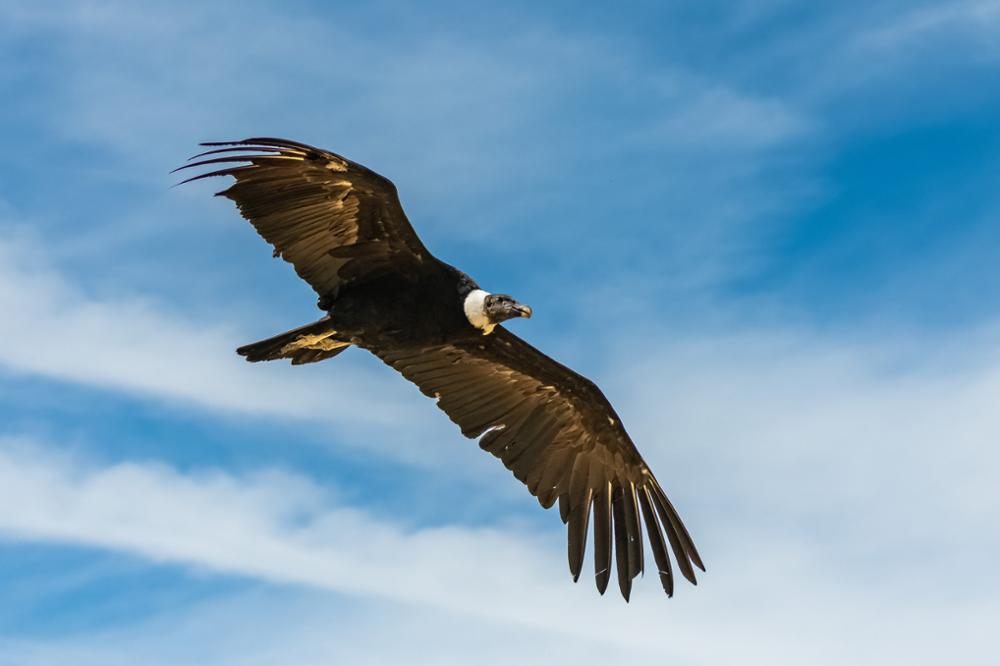
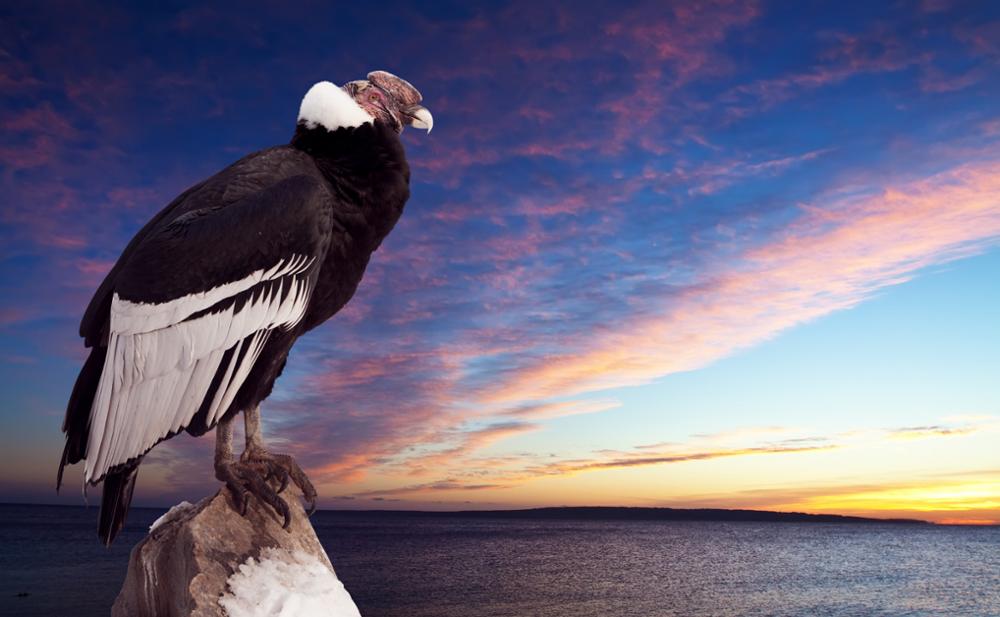
The condor is a bird living mainly in the mountains of the Andes cordillera. It is a species that has disappeared from certain South American countries. They are now found essentially in Pérou, Chile and Argentina. It is the second largest bird capable of flight after the albatross. Its plumage is black and white. Its featherless head gives it a rather repellent appearance. However, its majesty, which has made it a sacred bird for centuries among the inhabitants of South American countries, stems primarily from the beauty of its flight and its wingspan. It is a scavenger that feeds essentially on the carcasses of large mammals but occasionally does not disdain adding eggs to its diet. It is also capable of traveling several hundred kilometers to consume the placenta of sea lions during the breeding season in winter on the beaches of southern Pérou. The Andean condor uses ascending air currents to glide in circles. It is capable of flying thus at more than 6,000 meters. Due to its weight of 11 to 13 kg and its wingspan, it exhausts itself after about thirty wing beats. It sets its nest on steep mountain ledges, thus protecting the single egg that the female lays. The Andean condor lives in a group managed by a dominant male.
Condor: Remarkable Characteristics
In the event of emotional shock, the Andean condor can suddenly change color due to a massive influx of blood. The male is distinguished from the female by the crest it bears on top of its head as well as an excretion on the neck called a caruncle. Unlike most scavengers, the male Andean condor is larger than the female condor. Its life expectancy is 70 years. The condor can easily go two weeks without food during periods when food is scarce. The name condor comes from kundur in Quechua, the language of the Incas, still spoken in many regions of the Peruvian Andes and the second official language of Pérou. The population of the Andean condor is estimated at only 10,000 individuals and this population is only decreasing, making the species considered threatened since 1977.
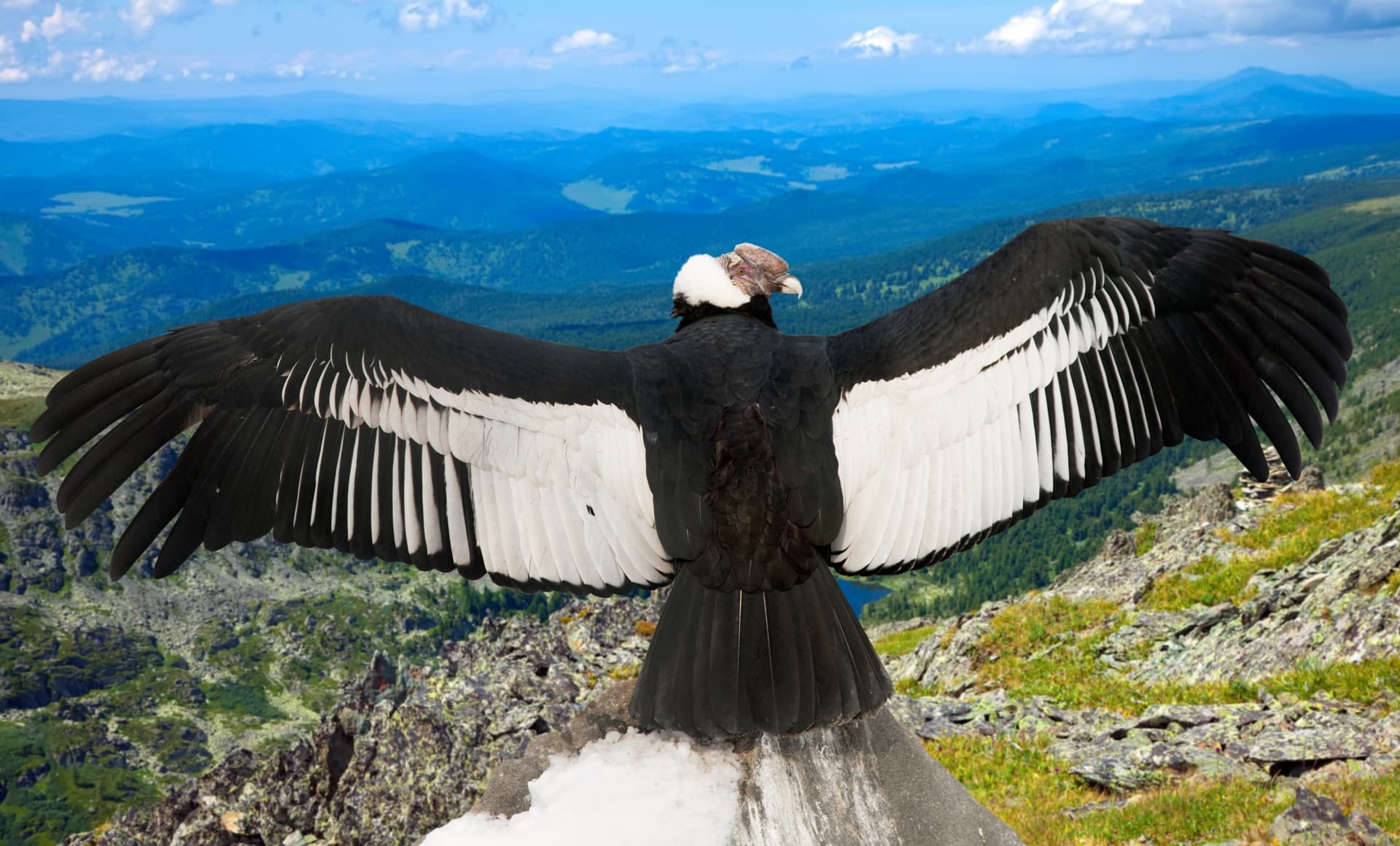
Condor wingspan:
The condor's wingspan is 3.20 m, making it the second largest flying bird after the albatross, which can reach a wingspan of 3.50 m.
The condor: sacred bird of the Incas
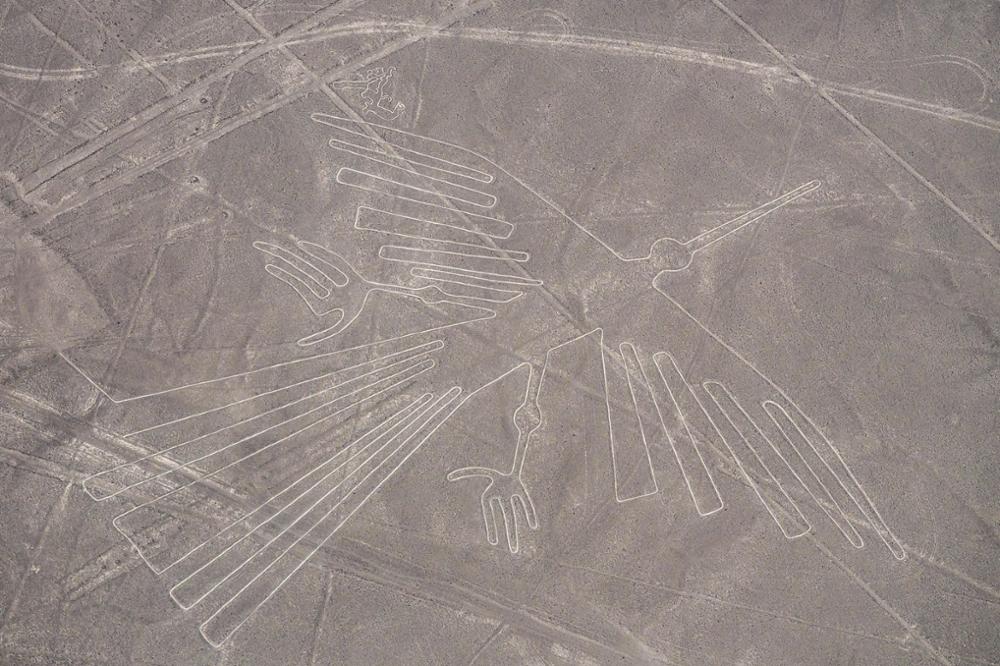
The condor was a sacred bird for the Incas as well as for many civilizations that preceded the arrival of the Incas. Indeed, a gigantic representation of a condor is visible in the Nazca desert with the famous mysterious Nazca lines. Due to its size, this representation of the condor is only visible from the sky. Nowadays, the condor remains a sacred bird for many Peruvians and a national emblem. There was once a ritual practiced in certain villages in the Andes of Pérou. This ritual was practiced during traditional festivals (Yawar Fiesta) and had above all a symbolic scope, which was that of the resistance of Peruvians to the Spanish invader. The men of the village captured a condor after having drugged it. On the day of the Yawar Fiesta festival, they tied the condor, symbol of the Indians living in the Andes, on the back of a bull, symbol of the Spanish occupant. The condor, seeking to detach itself, attacked the bull's neck with its beak, which angered, began to thrash about. A strange combat then ensued between the bird and the bull. Most of the time, victory went to the condor, which eventually killed the bull to the great joy of the inhabitants. However, if the fight ended with the death of the condor, it signified that a great misfortune would befall the village. This violent ritual has been banned for years but is still practiced in certain remote areas.
The flight of the condor
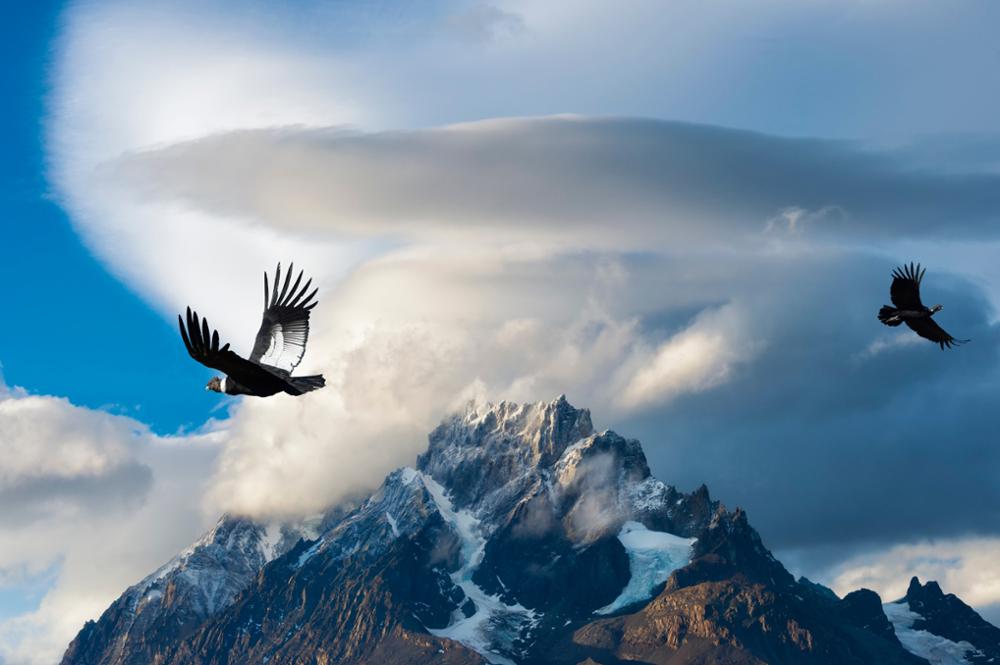
Due to its wingspan, the flight of the condor is of great majesty. Using ascending air currents, its flight is performed in circles. Its flight is completely silent and it is not uncommon to observe several condors flying at the same time.
Where to observe the condor in flight?
Arequipa and its region, due to its particular terrain consisting of mountains, volcanoes, valleys, and especially its very deep Colca canyon, make it a particularly privileged location for observing condors in flight. The Cruz Del Condor viewpoint located 2 hours from the city of Chivay is an ideal place to observe the condor in flight. However, it is necessary to go there early in the morning because between 8 and 10 a.m., the probability of observing a condor's flight is much higher. It is also a perfect viewpoint for observing the splendor of the Colca canyon.
The flight of the condor inspired the music: El condor pasa
The beauty of the condor's flight inspired musicians to create undoubtedly one of the most beautiful traditional music pieces of Pérou: El condor pasa.