Apu Ausangate
Apu Ausangate
A sacred peak at 6,384 m south of Cusco, Ausangate unfolds glaciers, turquoise lakes and the famous Rainbow Mountain on one of South America's most stunning treks.
Located in the Cusco region of Pérou, Apu Ausangate is one of the most iconic and sacred summits in the Andes. Towering at 6,384 meters above sea level, this mountain massif is far more than a simple geological formation. Indeed, Ausangate is revered as a sacred spiritual entity, a divinity or "apu" that protects the surrounding cities. This natural wonder offers breathtaking landscapes that draw tourists and travelers from around the globe.
History
Apu Ausangate ranks as the 5th highest peak in Pérou. Its origins and history are rich and deeply rooted in Andean cultures and the geological phenomena that shaped the region.
According to Inca legend, Ausangate and Salkantay were brothers who inhabited the Cusco region. A devastating drought struck, prompting them to venture in search of unknown lands to save their city from starvation. Salkantay chose to head north, discovered vast forests and fell in love with Veronica. Ausangate, however, chose the south, reaching the high plateaus where he found abundant Andean staples such as potatoes, maize, and camelid meat. He later sent these provisions back to the people they had left behind.
Moreover, Ausangate is part of the Vilcanota range, which formed primarily through the subduction of the Nazca plate beneath the South American plate. This tectonic collision triggered the uplift of the Earth's crust, creating the mountains.
Ausangate and its surroundings were profoundly shaped by glacial periods. Glaciers carved the peaks and valleys, creating spectacular landscapes of alpine lakes, moraines, and glacial cirques.
The Rainbow Mountain, also called Vinicunca, is renowned for its vivid colored strata. These hues are the result of rock mineralization, with deposits of iron, copper and other minerals.
Moreover, Ausangate's history in terms of exploration and mountaineering is equally rich. The first ascents of the mountain were undertaken by local and foreign alpinists in the late 19th and early 20th centuries. These expeditions were often motivated by scientific interests, particularly the study of glaciers and climate conditions.
Apu Ausangate Today
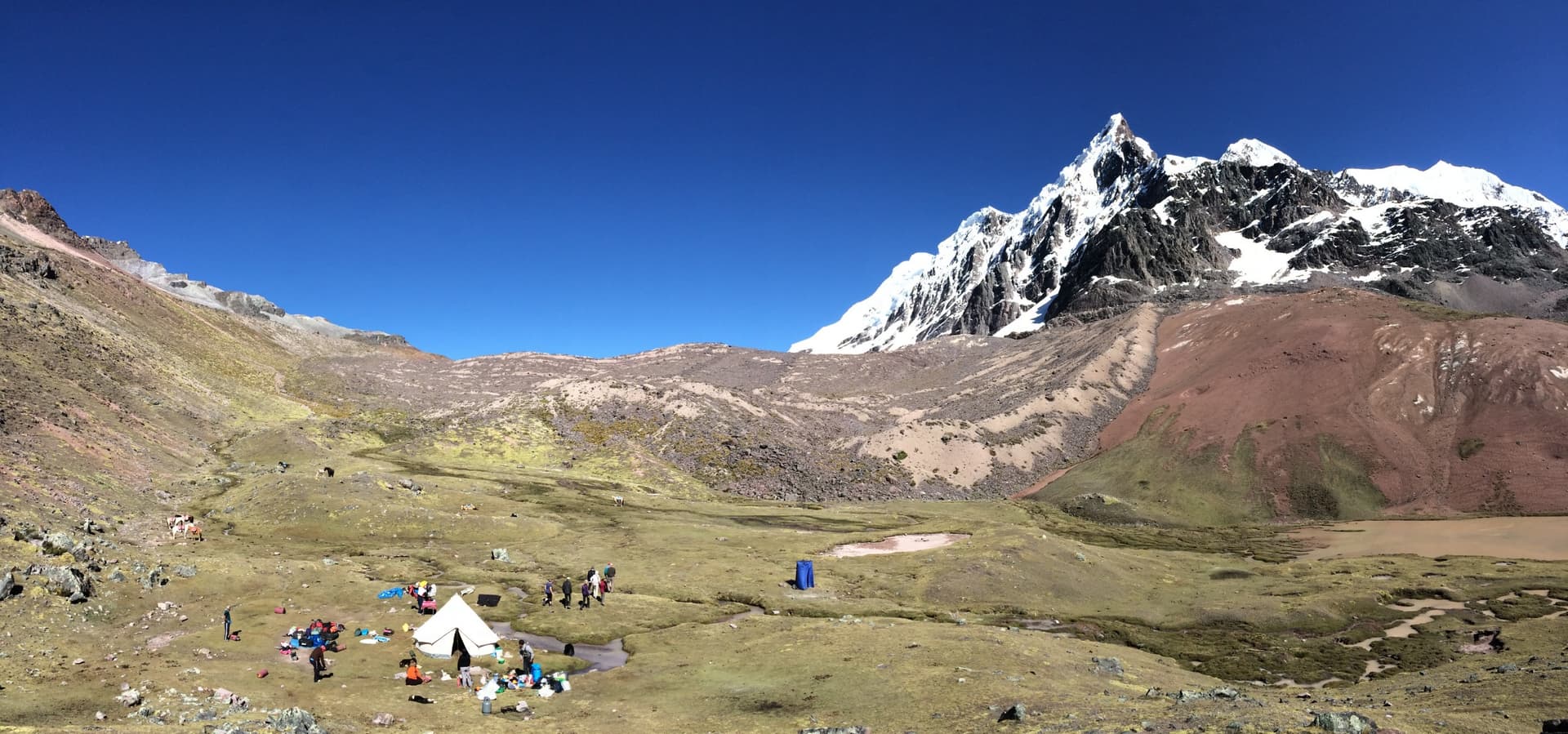
Apu Ausangate is a mountain range situated in the Vilcanota cordillera, extending approximately 80 km southeast of Cusco. It is characterized by shimmering glaciers, turquoise lakes and lush valleys. Composed primarily of alpaca and llama herders, the Chillca community is considered the guardian of the magnificent landscapes offered by Apu Ausangate. Dressed in their colorful traditional garments, these descendants of Incan peoples have managed to protect and maintain respect for the mountain through the years. Indeed, Apu Ausangate provides this community with everything they need to live and work as high-altitude shepherds and farmers.
Each year in June, thousands of pilgrims gather for the Qoyllur Rit'i or Ritti festival, which means "star snow" in Quechua. This is a religious ceremony blending Andean and Catholic traditions. During this celebration, pilgrims climb the slopes of Mount Ausangate to reach the Sinakara temple, where a painting of the crucified Christ is carved into the rock. In fact, this ceremony was inscribed in 2004 on UNESCO's List of Intangible Cultural Heritage of Humanity.
The landscapes around Apu Ausangate are highly diverse. Glacial lakes, such as Lake Sibinacocha, add serene beauty to the environment. Multicolored rock formations such as the famous Vinicunca mountain or the Rainbow Mountain offer breathtaking vistas.
Furthermore, the Apu Ausangate region is rich in biodiversity and home to various animal and plant species adapted to the rigorous high-altitude conditions. Among the fauna, you can see llamas, vicuñas, alpacas, and more. Plants such as yaretas (cushion plants) and ichus (Andean high-altitude grasses) have adapted to the cool, dry climate of the region around the mountain.
Apu Ausangate is a mountain of great geological, cultural and spiritual significance. Its history is intimately linked to the beliefs and lifestyles of Andean peoples, while serving as testament to the natural forces that have sculpted the Andes.
Today, the Apu Ausangate circuit is considered one of the world's most beautiful treks, attracting hikers from around the globe. As environmental challenges threaten the region, the preservation of this mountain is essential to maintain its legacy for future generations.
Climate
The region is characterized by a typically Andean climate. Apu Ausangate presents an extreme climate. Temperatures range from 0°C to 23°C during the day with gentle and swift winds. In general, the weather is sunny and dry. From December to March marks the rainy season, less conducive to hiking due to heavy precipitation.
The best period to visit the Apu Ausangate region is the dry season, typically extending from May through September. During this time, weather conditions are generally stable, with sunny days and cold nights. However, it's important to note that weather remains unpredictable with occasional rain and fog.
Air
Most tourists begin their adventure to Apu Ausangate from Cusco, the main departure point for exploring the Andes region.
To reach Cusco, it's possible to take a domestic flight from Lima. The journey takes approximately 1 hour and 30 minutes.
Bus
The next step is to reach the village of Tinke, located 100 km southeast of Cusco. This is the primary starting point for treks to Ausangate. Local buses are available for this journey. The trip takes approximately 3 to 4 hours.
Private Transport
Taxis and private shuttle services can also provide transport from Cusco to Tinke. The journey takes approximately 3 hours.
The most common way to explore Apu Ausangate is on foot, by joining an organized trek with a local guide, or solo for the more experienced.
Furthermore, for those who prefer or need additional assistance, it's possible to rent pack animals such as mules or llamas to carry gear.
What to Do at Apu Ausangate?
Hiking and trekking are among the primary activities to enjoy at Apu Ausangate. These are opportunities for visitors to explore valleys, meadows, and remote villages. Hikers can also discover the lifestyle of indigenous communities, local craftsmanship and ancestral customs.
Travelers can also engage in other activities such as:
- Rock climbing
- Ice climbing
- Excursions to the 7 lakes
- Visit to the Pacchanta hot springs
Want to discover this destination?
Our local advisors design your tailor-made trip.