Apu Ausangate and the Qoyllur Rit'iy Festival
Some events and festivals represent more than others the heritage of the past or a culture. The Qoyllur Ri'tiy pilgrimage brings together tens of thousands of people each year
The Greatest Pilgrimage of the Andes: Qoyllur Ri'tiy, near Apu Ausangate
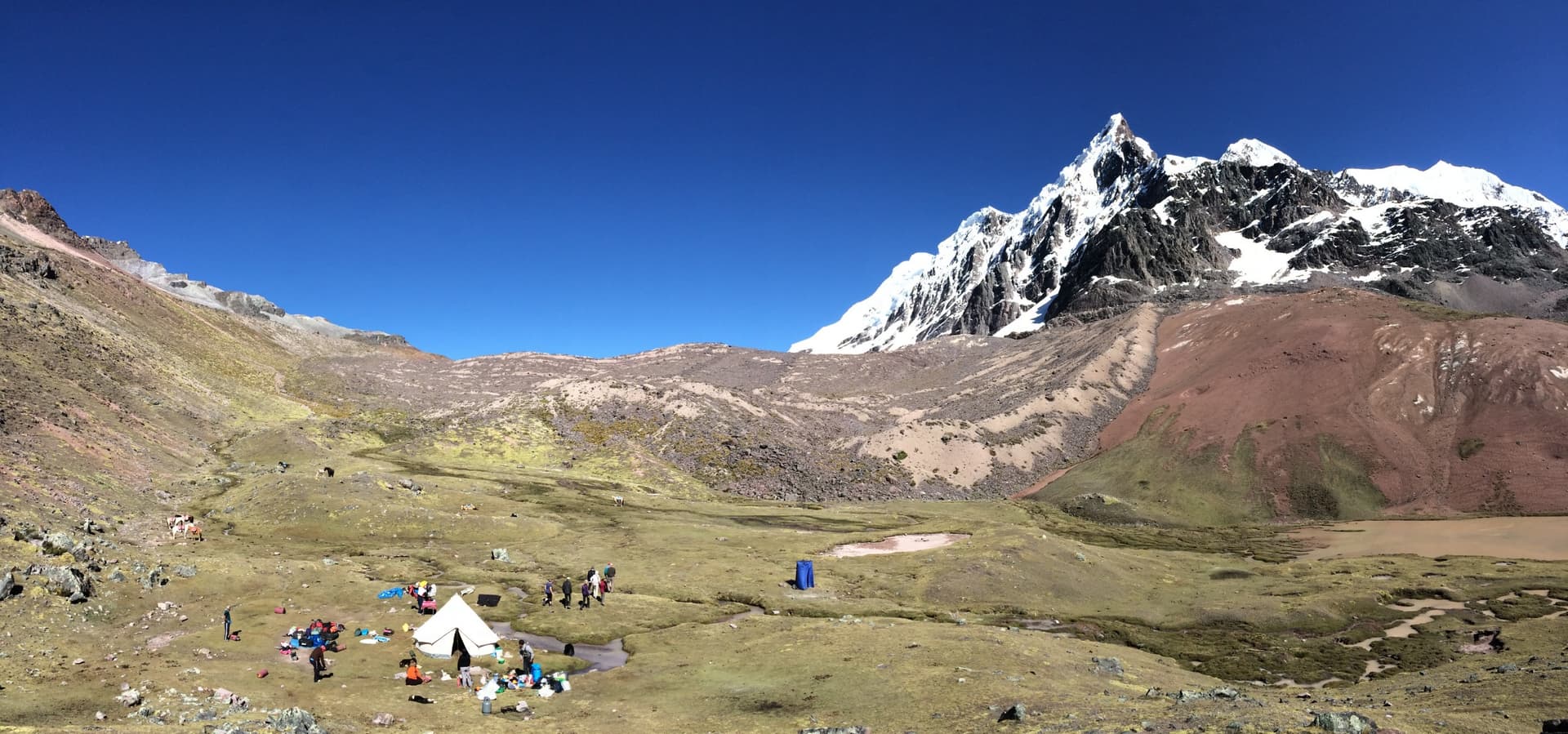
Some events and festivals represent more than others the heritage of the past or a culture. The Qoyllur Ri'tiy pilgrimage brings together tens of thousands of people each year at the foot of Apu Sinakara (apu means "lord" in Quechua, the term applied to mountains), at 4,800 meters altitude and not far from the tutelary Apu of the region: Ausangate, which rises to 6,375 meters.
For indigenous peoples, the Apu (mountain) is a divinity. Mountains are therefore venerated. They are the mountains that distribute resources across their slopes—here the pastures, there the glaciers that are the fathers of water. These mountains also bring rain or punish humans with illness when they endanger the natural balance.
The Qoyllur Rit'iy Festival attracts over 70,000 people and only a few foreign visitors.
The Qoyllur Ri'tiy festival, meaning "star of the snow" in Quechua, takes place at the end of May or beginning of June according to the lunar calendar. Nearly 70,000 people make their way up the high valley of the sanctuary along a path of stations in an animated human transhumance. For several days, men and women sing and dance, dressed in traditional costumes, a tradition that has continued since 1783, when Christ was said to have appeared at the top of the glacier. Each brotherhood is accompanied by its own orchestra and represents a character from Andean culture: the "Capacc Qolla," herders of the altiplano, the "Ukukus" or "Pablitos" who are guardians of the sanctuary, and many others.
It is an unreal spectacle, truly very impressive, because during Qoyllur Ri'tiy, files of pilgrims wind as far as the eye can see across the mountain, and despite 70,000 Peruvians being present for this enormous pilgrimage—both festive and religious—very few foreign visitors attend.
Custom holds that if a person attends the Qoyllur Ri'tiy festival more than three times, their most cherished wish will come true! It is in this spirit that people come with a miniature representation of their dream (called an "alacita" in Spanish), so pilgrims arrive with miniature houses, small cars, toy trucks, some with a fake driver's license, a diploma, etc. They must then walk step by step to the church to have their wishes blessed and leave them on a dedicated esplanade: Pucllanapata (the "game terrace").

The Incredible Pilgrimage Where an Ephemeral City Emerges at the Foot of the Glaciers
The pilgrimage is fantastic for the particular atmosphere that reigns there (costumes, music, songs, etc.) but also for the breathtaking landscapes that punctuate the journey. The climb to the sanctuary at 4,750 meters, an altitude where temperatures are particularly cold since glaciers are not far away, transports us into a magical world, into a different and strange rationality, far from usual urban conventions. As for comfort, there is almost nothing… a gigantic encampment in nature without electricity, but where you can find small temporary restaurants, shop tents occupied by "temple merchants," all of this forming a gigantic temporary city where, apart from the temple, the only solid buildings are the recently constructed toilets thanks to a regional government project.
An Amazonian Pilgrimage!
As incredible as it may seem, the Qoyllur Ri'tiy pilgrimage contains many elements and cultural traits from the Amazon, such as the feathered headdresses of the Wayri Ch'unchus, a brotherhood of dancers representing Amazonian warriors. In conversation with a documentary filmmaker from Cusco, we learned that the musical air that fills the valley during the pilgrimage is in every way similar to a traditional Amazonian song of a people (the Hark'mbut) who live in the forest at the foot of the Sinakara mountain range. He recounts that it is possible that during a small ice age, several Amazonian peoples may have moved up into the Andes along rivers whose levels had dropped to reach the "fathers of water," the glaciers of the Andes. According to him, this event could have taken place in the valley of Apu Sinakara.
The Qoyllur Ri'tiy pilgrimage is at the crossroads of two religions, blending Christianity with Andean religion!