Paracas National Reserve
Paracas National Reserve
Located 250 km from Lima, Paracas Reserve combines coastal desert, Ballestas Islands and pre-Incan heritage across 335,000 hectares of protected coastline.
Paracas National Reserve stretches along the southern coast of Perú, 250 km south of Lima in the Ica region. Founded on September 25, 1975, it covers nearly 335,000 hectares, of which 35% are terrestrial zones and 65% are marine zones, making it one of the vast protected areas along the Peruvian coastline. Coastal desert, cliffs, beaches and islets here harbour marine fauna of rare density, shaped by the cold waters of the Humboldt Current.
Why visit Paracas Reserve
Paracas combines three attractions that few Peruvian sites bring together: exceptional marine biodiversity, a coastal desert with rock formations sculpted by erosion, and archaeological heritage linked to the pre-Incan culture of the same name. Its proximity to Lima (3.5 to 4 hours by road) makes it an accessible stop, often integrated into an itinerary towards Ica, Huacachina and Nazca. Bird enthusiasts observe over 200 species of seabirds, while the Ballestas Islands, nicknamed the "Galápagos of the poor," concentrate the most spectacular colonies.
History and cultural heritage
The Paracas Peninsula saw a pre-Columbian civilization flourish between 800 BCE and 100 CE, renowned for its funerary textiles and cranial trepanation practices. The archaeological site was unearthed in 1925 by Peruvian archaeologist Julio C. Tello.
The Julio C. Tello Site Museum, created in 1964, was rebuilt in 2012 and reopened in 2016 following damage from the 2007 earthquake. It presents a collection of approximately 120 artifacts dating to year 200, including mummies, textiles, ceramics and human remains. A portion of the excavations was later conducted by archaeologist Frédéric Engel, who helped enrich the collection.
What to see in the reserve
Ballestas Islands
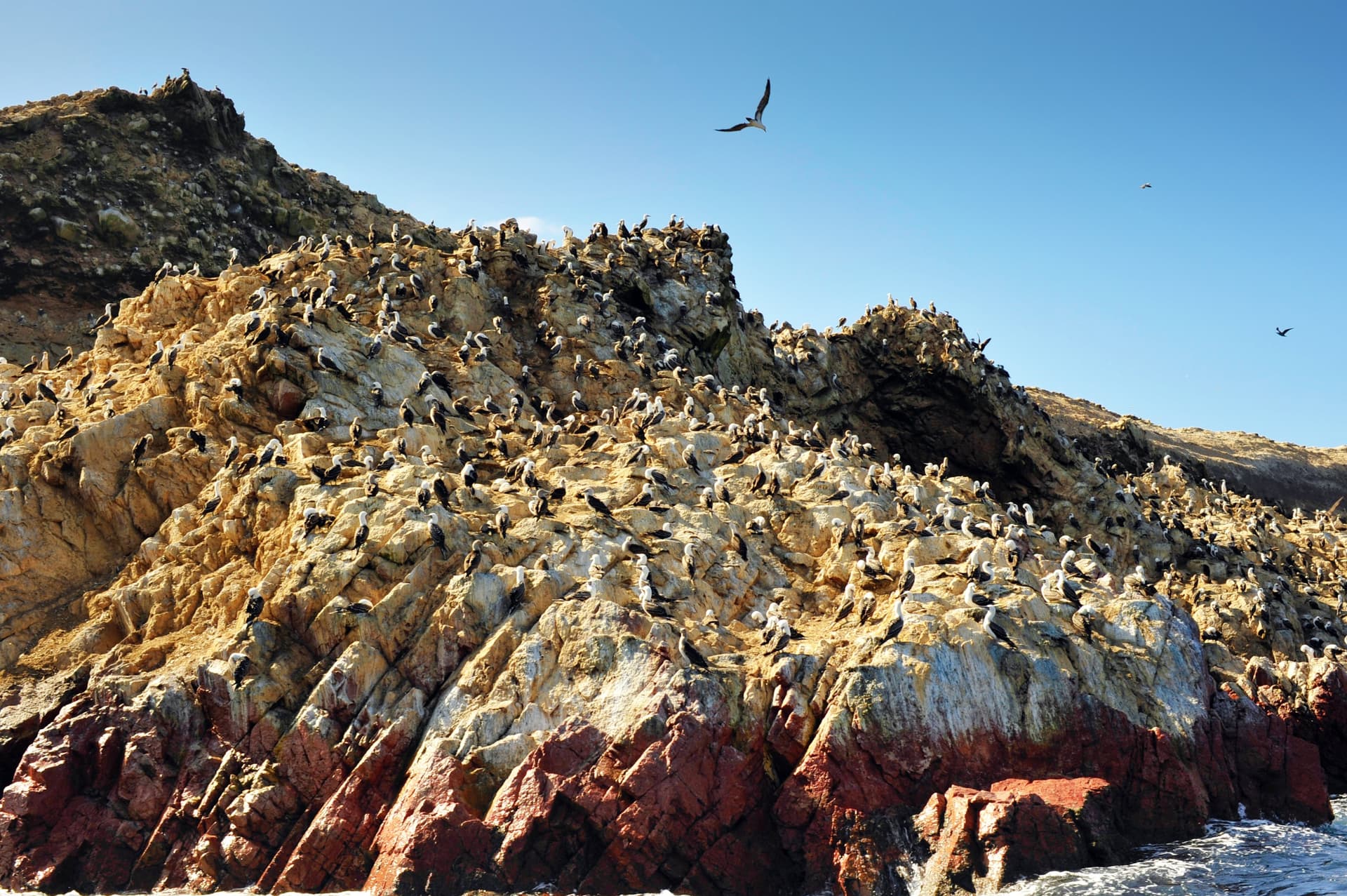
Accessible only by boat from Paracas port, the Ballestas are observed during an excursion of approximately 2 hours. You encounter maned sea lions (Otaria flavescens) and South American fur seals (Arctocephalus australis), Humboldt penguins (Spheniscus humboldti), variegated boobies (Sula variegata), guanay cormorants, Peruvian pelicans and terns. Landing is not permitted to preserve the colonies.
The Candelabra
On the side of a hill overlooking the bay, this geoglyph approximately 150 m long by 50 m wide remains of uncertain origin. Visible from the sea, it is observed at the beginning of excursions to the Ballestas. Its possible connection to the Nazca lines continues to fuel hypotheses.
The Cathedral
This arch-shaped rock formation, long a symbol of the reserve, partially collapsed during the 2007 earthquake. The viewpoint today allows observation of what remains, set against a jagged coastline.
The beaches
The reserve has several beaches with contrasting atmospheres: La Mina and Lagunillas, more sheltered, El Raspon, El Chucho, Mendieta and Caclio along the rocky coast, as well as Yumaque, Playa Roja (reddish sand due to ferrous minerals) and Supay. Swimming is rarely practicable due to currents and winds, but the landscapes lend themselves to walking and photography.
Fauna and flora
Besides iconic marine species, the waters harbour 193 fish species, 250 varieties of algae, dolphins, sea turtles and, more rarely, humpback whales during migration. The Chilean flamingo (Phoenicopterus chilensis) frequents the bay in austral winter. On land, you sometimes observe Andean foxes, vicuñas and reptiles. The presence of fish meal factories near the buffer zone reminds of the conservation challenges the reserve faces.
When to visit
The climate is arid year-round, with no rainy season, and temperatures ranging from 15°C to 22°C. The so-called "paracas" winds blow strongly in the afternoon, especially between August and October. The period from May to November offers the best conditions for observing Humboldt penguins and sea lions during breeding season. From December to March, the sky is clearer and temperatures slightly milder, but tourist numbers increase.
Practical information
- Allow 2 to 3 days to combine the Ballestas, the land circuit and the beaches.
- Reserve entry and Ballestas boarding are paid separately; moderate rates.
- Boats to the Ballestas generally depart in the morning, calmer seas.
- Bring sunscreen, sunglasses, windbreaker and closed-toe shoes: wind and sun are intense.
- Bike rental allows you to explore marked trails at your own pace, accounting for afternoon wind.
- Quad or car remain the quickest options for connecting different viewpoints and beaches, staying on authorized paths.
How to get there
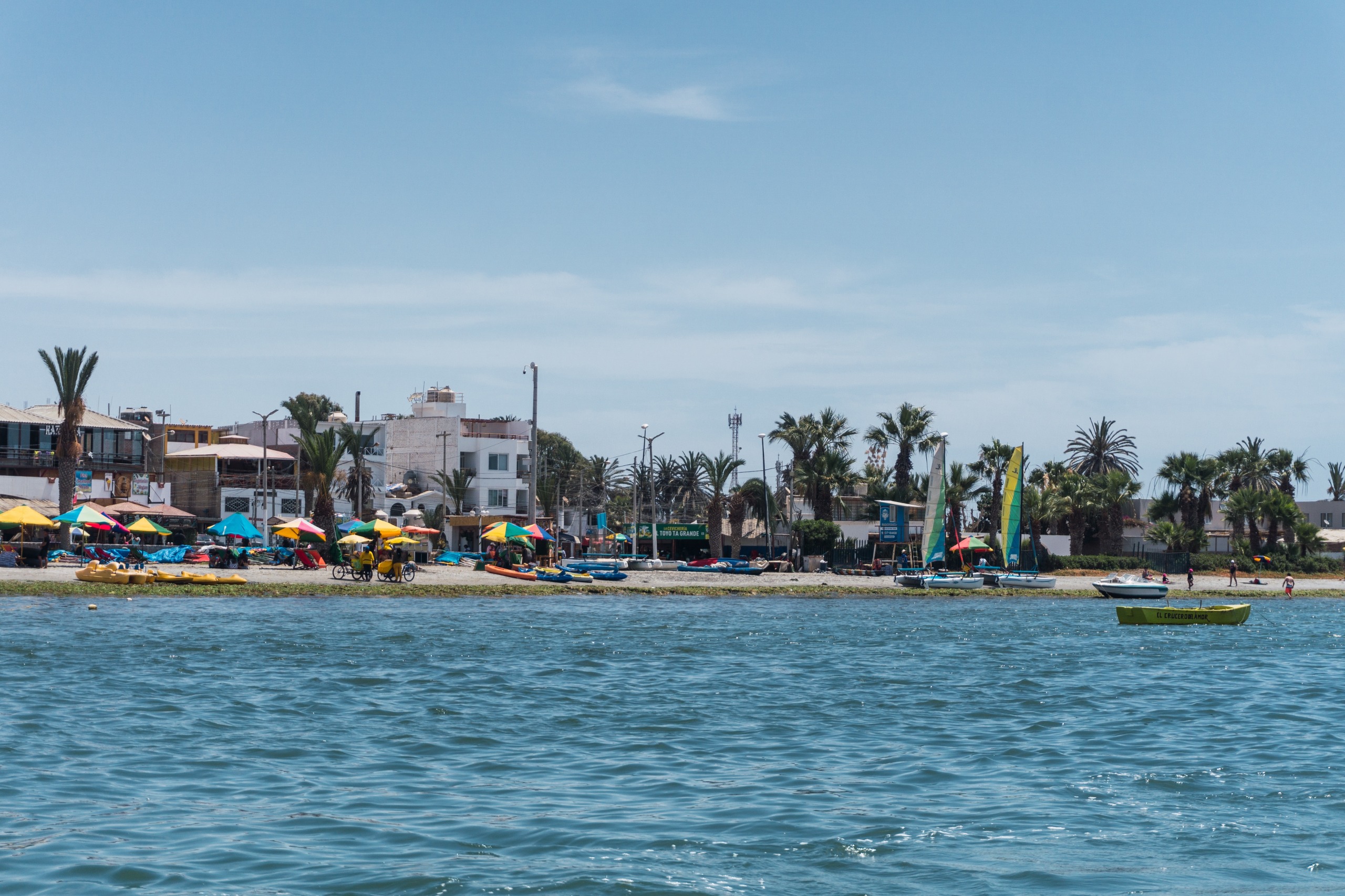
From Lima, allow 3.5 to 4 hours by road via the southern Panamericana. Several long-distance bus companies serve the Paracas village daily. From Ica or Huacachina, the journey takes approximately 1 hour 15 minutes. Most accommodation is concentrated in El Chaco, at the entrance to the reserve, from where excursions depart.
What to see nearby
Paracas naturally fits into a southern Peruvian circuit. The Paracas oasis serves as a base to explore towards Ica and its pisco wineries, the Huacachina oasis and its dunes, then Nazca and its lines. Further south, travellers often continue towards the Salinas and Aguada Blanca reserve near Arequipa, or the Pampa Cañahuas reserve. For contrasting high-altitude landscapes, Vinicunca and the Q'enko site near Cusco complete an Andean itinerary.
Frequently asked questions
Frequently asked questions
Two full days allow you to combine a morning excursion to the Ballestas Islands and a land circuit in the reserve (Julio C. Tello museum, viewpoints, beaches). Three days provide more time for the most remote beaches like Mendieta or Supay.
Swimming is discouraged on most beaches due to currents and winds. La Mina and Lagunillas are the most sheltered, but the water remains cool year-round.
From May to November, the breeding season for sea lions and period of Humboldt penguin presence. Chilean flamingos are observed mainly between June and August in the bay.
No. To preserve the colonies, boats circle the islands without docking. Observation is done from the vessel, at close distance from the cliffs and caves.
The land circuit can be done independently by car or bike, following marked trails. Excursions to the Ballestas are compulsory with an authorized operator departing from El Chaco port.
Prepare your trip
Paracas easily fits into an itinerary along the coast and southern Andes. To build a coherent circuit combining desert, archaeological sites and high plateaus, consult our trips to Perú.
Interested in this visit?
We can include it in your personalised itinerary.