6 things you didn't know about llamas!
Every traveler who ventures into the remote corners of the Andes will have the chance to encounter numerous animals, including the famous llama! Famous because absolutely every tourist is
The llama: 6 things to know about this charming Peruvian animal
Every traveler who ventures into the remote corners of the Andes will have the chance to encounter numerous animals, including the famous llama! Famous because absolutely every tourist is searching for this charming creature to snap a photo with it—so much so that it could almost be considered a symbol of Pérou.
During your trip to Pérou, you may strike up a conversation with fellow travelers about llamas and can impress them by sharing some facts about llamas that they likely won't know!
6 facts to know about the llama
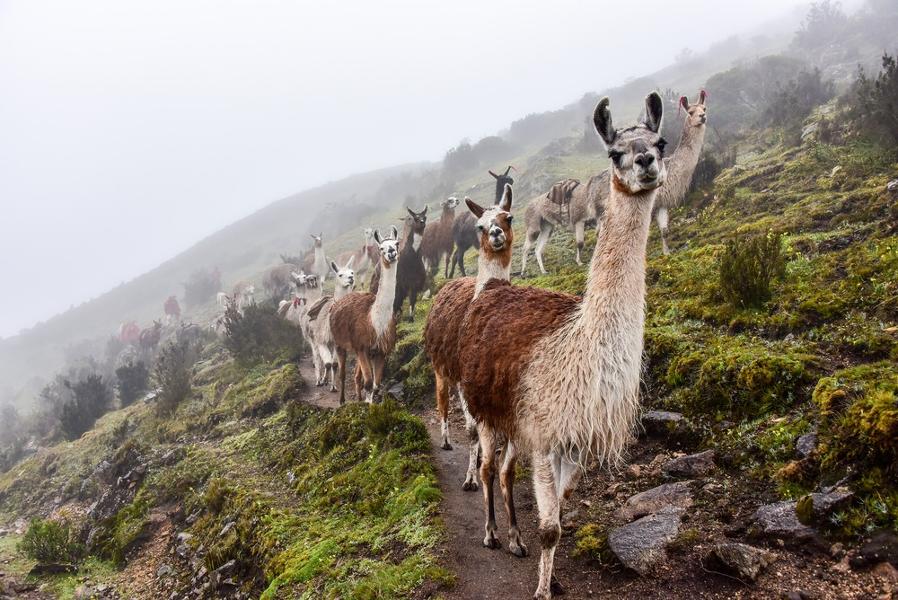
1. Llamas and alpacas are very docile, contrary to the reputation created by images of "spitting llamas." They are intelligent and were quickly domesticated, unlike vicuñas and guanacos which live wild in vast plains or in the Andean mountains.
2. A llama can live between 10 and 20 years and belongs to the camelid family, the same branch as camels. Looking more closely, it's true they resemble dromedaries quite a bit!
3. We often think the llama is a South American animal because it is currently present in the Andes mountains, but in reality it originated in North America. Three million years ago the species migrated to South America, and fossil remains show that llamas were present in the southern United States.
4. Evidence of herding practices shows that Andean peoples domesticated the llama 5,000 years ago, for its fleece and meat.
5. Llama wool is very often white or beige, but you can find black, brown, and gray fleece. Llama and alpaca wool are quite resistant to water, and some say even to fire.
6. In certain regions of Pérou and other countries, herders have noticed that llamas are perfect protectors of sheep, cattle, and other livestock flocks against predators. Indeed, it appears their sense of smell and other senses are extremely keen, and they detect the arrival of pumas—the main predators of the Andes—from very far away.