The Great Lakes
The Peruvian Andes region is a territory of exceptional natural beauty and immeasurable cultural richness. Home to some of the world's most spectacular landscapes, this mountainous zone is dotted with great lakes that offer not only breathtaking scenery but also unique biodiversity and living ancestral traditions.
The Peruvian Andes region is a territory of exceptional natural beauty and immeasurable cultural richness. Home to some of the world's most spectacular landscapes, this mountainous zone is dotted with great lakes. These bodies of water offer not only breathtaking scenery but also unique biodiversity and living ancestral traditions. Here are some examples of great lakes to discover during a stay in Pérou.
Lake Titicaca
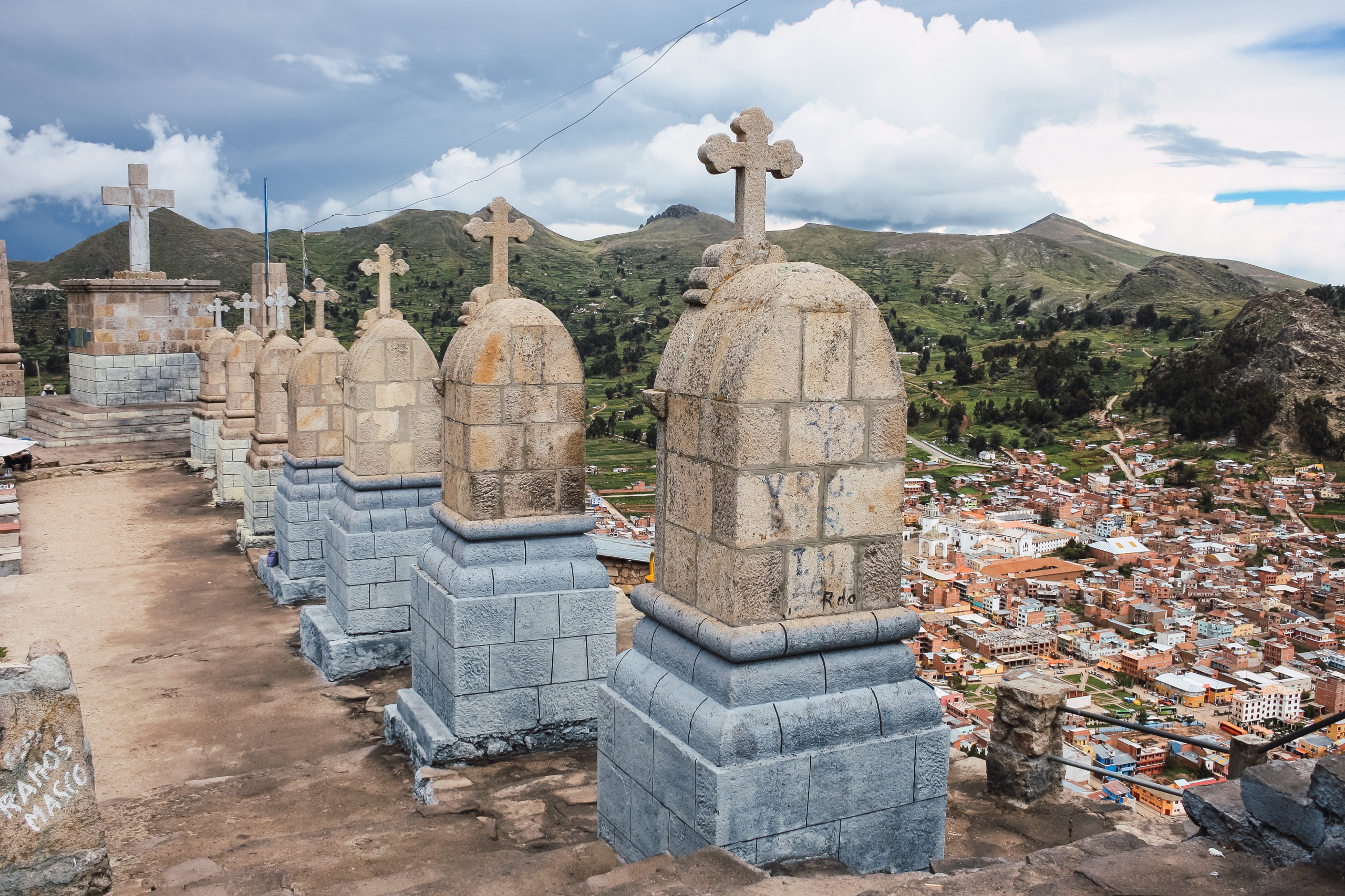
Lake Titicaca is undoubtedly the most famous of the Andean lakes. Located at 3,812 meters above sea level, it is the world's highest navigable lake and the largest in South America in terms of water volume. Shared between Pérou and Bolivia, it covers an area of approximately 8,372 km². The Peruvian portion is located in the Puno region and extends over 3,232 km².
Lake Titicaca is considered the cradle of Inca civilization. According to legend, the creator gods Inti and Viracocha fashioned Manco Cápac and Mama Ocllo, the first Incas, who emerged from its waters to found the Inca empire. Another myth reveals that there once existed a prosperous valley where inhabitants lived in peace. They could do everything except climb a sacred mountain, protected by gods called Apus. One day, the devil, jealous of their tranquility, incited the inhabitants to retrieve the sacred fire from the mountain under threat of misfortune. Out of fear, some men defied the prohibition. They were subsequently attacked by pumas sent by the Apus, plunging the valley into chaos. The sun god, Inti, wept for 40 days, forming Lake Titicaca. Only a man and a woman survived. The pumas turned to stone, thus giving the lake its name "el lago de los pumas de piedra" or the lake of the stone pumas.
Today, the floating islands of the Uros, crafted from totora reeds, constitute a unique attraction, offering a glimpse into traditional life on the lake. The islands of Amantani and Taquile, also situated on the lake, are known for their ancestral traditions, particularly in textile craftsmanship.
The lake possesses a rich ecosystem, harboring an impressive diversity of fauna and flora. It is home to over 530 aquatic species, some of which are endemic, such as the giant frog. Several migratory bird species have also found refuge at Lake Titicaca. Fishing is furthermore an important activity for local populations, with fish such as the iseño, mauri, and Titicaca lake trout.
Lake Junin
Also called Chinchaycocha in Quechua, meaning the northern lake, Lake Junín is Pérou's second largest lake, covering 530 km². Located at an altitude of 4,082 meters in the Junin region, it is surrounded by vast marshlands and grasslands.
The lake is a national reserve due to its ornithological richness. Indeed, it is home to more than a hundred bird species. Several are endemic, such as the Junín grebe. The lake is essential for migratory birds and endangered species, offering a safe habitat and ideal breeding conditions.
The shores of Lake Junín offer numerous exploration opportunities for nature lovers. Visitors can, for example, observe birds, hiking, fish for various species, and discover local villages.
Lake Parón
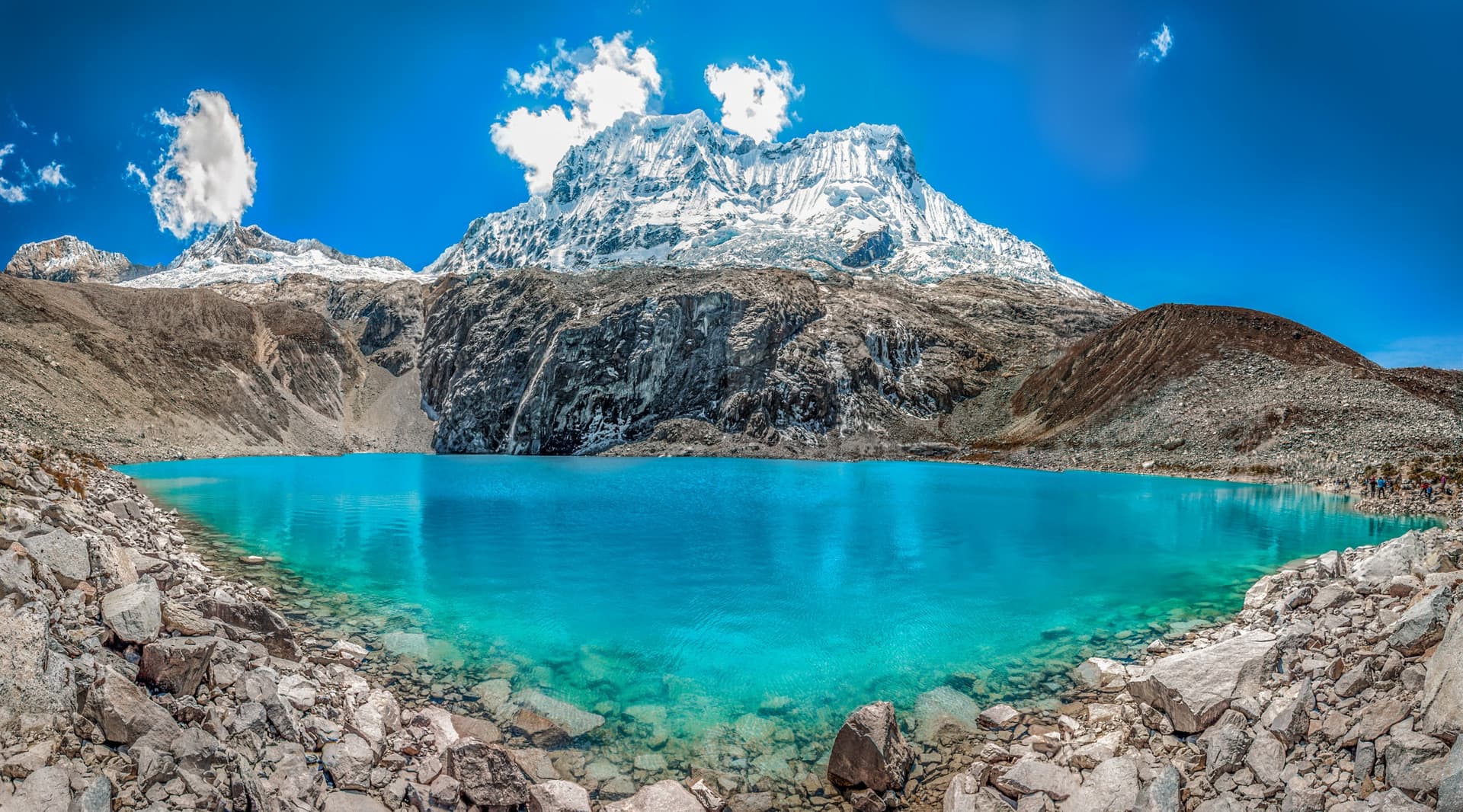
Considered the largest lake in the Cordillera Blanca, Lake Parón is located in the Ancash region. It is famous for its turquoise blue waters and breathtaking landscapes. Located at approximately 4,155 meters altitude, it is surrounded by majestic snow-capped mountains and glaciers. It is possible to observe Chacraraju, Nevado Huandoy, Nevado Pisco, and even the Garcilaso pyramid from Lake Parón. The latter can be reached from the small town of Caraz, 32 km away.
Lake Parón measures:
- 700 meters in width
- 3.7 km in length
- 75 meters in depth.
It extends over an area of 44.3 km², with a volume of 55 million m³. It is moreover a natural reservoir that plays a crucial role in supplying water to surrounding valleys.
This lake is an ideal starting point for hikers and mountaineering enthusiasts. The surrounding trails offer incredible panoramas and lead to other points of interest such as Laguna Artesoncocha and neighboring glaciers.
Lake Lauricocha
Located in the Huánuco region, Lake Lauricocha is less well-known but possesses great historical and cultural importance. Extending over 8.2 km² and located at an altitude of 3,845 meters, it is surrounded by mountains and archaeological sites.
Lake Lauricocha offers a peaceful setting for visitors wishing to immerse themselves in nature and history. Activities include hiking and observing local wildlife. Reeds cover certain parts of the lake. Fishing is also popular, with trout being the most prized fish species. You can also see near Lake Lauricocha other animals such as:
- Mammals (skunks, foxes, vizcachas, tarucas, etc.)
- Birds (falcons, nothptocta, wild ducks, etc.)
It is an ideal place for those seeking to escape the crowds and discover a quieter aspect of the Peruvian Andes.
Lake Llanganuco
Located in Huascarán National Park, in the Cordillera Blanca, Lake Llanganuco is composed of two lakes: Chinancocha and Orconcocha.
The first lake is located at 3,850 meters altitude and measures:
- 393 meters in width
- 1,450 meters in length
- 28 meters in depth.
The second lake is located even higher and is not easily accessible. Lake Orconcocha extends over:
- 390 meters in width
- 910 meters in length
- 7 meters in depth.
Lakes Chinancocha and Orconcocha appeared thanks to the melting of surrounding snow-capped peaks. However, their origin is quite different according to a local legend: A soldier and a princess fell in love, but their love was forbidden. The gods took pity on them and transformed them into two mountains (Huandoy and Huascarán). The lakes of Llanganuco appeared because of the tears of the two lovers.
Located at approximately 3,850 meters altitude, these lakes are famous for their crystal-clear and turquoise waters. They harbor several fish species and are a crucial habitat for various bird species. Moreover, these lakes serve as starting points for exploring nearby summits such as Huascarán, the highest peak in Pérou, Yanapaccha, Pisco, Huandoy, and others.