Lake Titicaca
Lake Titicaca
Amid Incan myths, reed-woven islands and Quechua communities, Lake Titicaca reveals the Andean soul at 3,812 meters above sea level. Our complete guide.
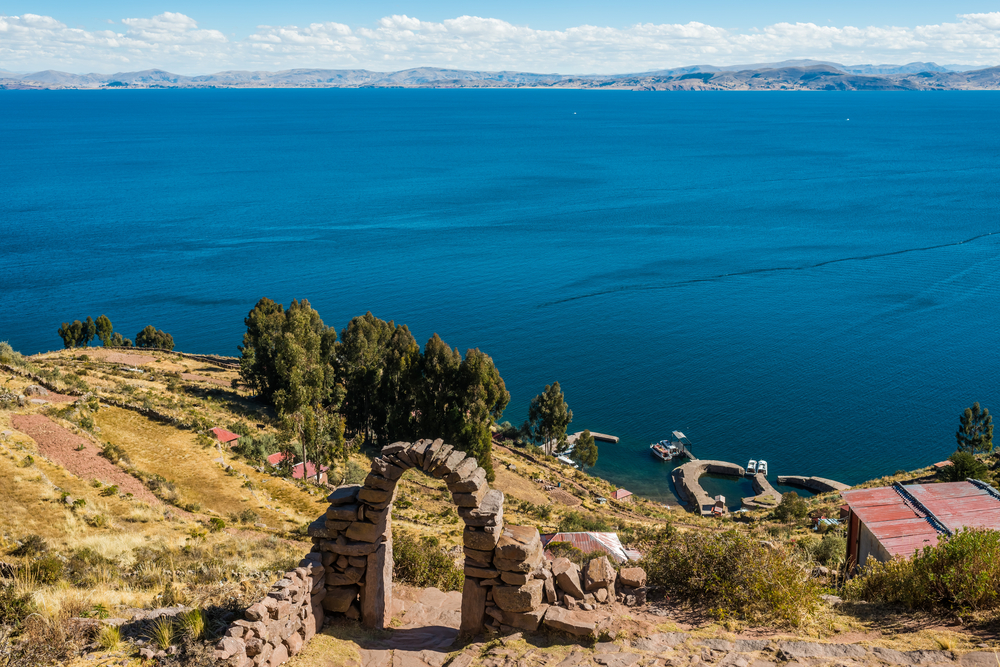
Situated at 3,812 meters above sea level, Lake Titicaca stands as one of South America's most captivating natural treasures. Located in the Andes on the border between Pérou and Bolivia, this lake is celebrated not only for its majestic setting but also for its profound cultural and historical significance. Recognized since 1870 as the world's highest navigable lake, Titicaca overflows with ancient myths, living communities, and breathtaking landscapes.
Myths and Origins
Titicaca holds a central place in the cosmogony and mythology of Andean peoples. According to Incan legend, the lake is the birthplace of the Incan empire. It is said that the sun god, Inti, sent his two children, Manco Cápac and Mama Ocllo, to the shores of Titicaca to found the city of Cusco and establish Incan civilization. The lake is thus viewed as the place of origin of the Incan empire, conferring upon it unparalleled spiritual importance.
Another myth suggests that there once existed a prosperous valley where inhabitants lived in peace. However, in this sacred place, they were forbidden from ascending the mountain, protected by divine beings, the "Apus." One day, the demon, jealous of their tranquility, incited them to seek the sacred fire, threatening misfortune. Terrified, some inhabitants disobeyed and were attacked by pumas released by the Apus, plunging the valley into turmoil. Inti, the sun god, wept for 40 days, creating Lake Titicaca, while only a man and a woman survived in a reed boat.
Another tale that has captivated adventurers and treasure hunters is that of El Dorado, the lost city of gold, supposedly swallowed by the waters of Lake Titicaca. According to traditional accounts, the Incas allegedly cast immense riches of gold and silver into the sacred waters to protect them from Spanish conquistadors.
Geography and Geology
Lake Titicaca covers an area of approximately 6,900 km², with roughly 60% located in Pérou and the remainder in Bolivia. It stretches 190 km in length, with widths varying between 50 and 80 km. Its maximum depth reaches approximately 280 meters, making it an immense body of water at high altitude.
The survival of various communities around Lake Titicaca is entirely due to its existence. This vast body of water makes the climate bearable at such an altitude. Temperatures rarely drop below −10°C during the cold season between June and September. Moreover, Lake Titicaca is fed by 25 rivers in total. However, the majority of its waters disappear principally through evaporation.
From a geological perspective, the lake was born from complex tectonic processes that shaped the Andes. It forms part of the endorheic basin of the Altiplano plateau, a flat zone situated between two mountain ranges. Scientists estimate that Lake Titicaca is what remains of a much larger inland sea, called Lake Ballivián, which existed approximately three million years ago. Over time, evaporation and climatic changes reduced this vast expanse of water to its current size.
Biodiversity
Titicaca harbors remarkable biodiversity despite its extreme altitude and cold temperatures. Its waters contain several aquatic species, including varieties of fish such as trout. The lake also provides habitat for several bird species, including pink flamingos and indigenous ducks. Local communities depend on this biodiversity for their food and sustenance.
By Air
If traveling from Lima, one should take a flight to Inca Manco Cápac International Airport in Juliaca, located approximately 50 km from Puno. Direct flights last approximately 1 hour and 30 minutes. Upon arrival in Juliaca, you can then take a taxi or bus to Puno. The journey takes 1 hour.
By Bus
Long-distance buses connect Lima to the city of Puno. The journey lasts approximately 20 to 24 hours, but it traverses magnificent Andean landscapes.
If traveling from Cusco, buses are also an option to reach Puno. The drive takes 7 to 8 hours. Additionally, tourist bus services make several stops along the route, allowing visits to archaeological sites and Andean villages. In this way, the journey becomes a full-day excursion.
Moreover, buses regularly depart from Arequipa to reach Puno. The journey lasts approximately 6 to 7 hours and is relatively easy. It's also an opportunity to traverse spectacular landscapes, with views of mountains and volcanoes.
By Train
From Cusco, the Andean Explorer train, operated by PeruRail, offers one of the most luxurious railway experiences in South America. The journey to Puno lasts approximately 10 hours. Far more expensive, the journey offers a unique experience, complete with gourmet meals and spectacular views.
Lake Titicaca Today
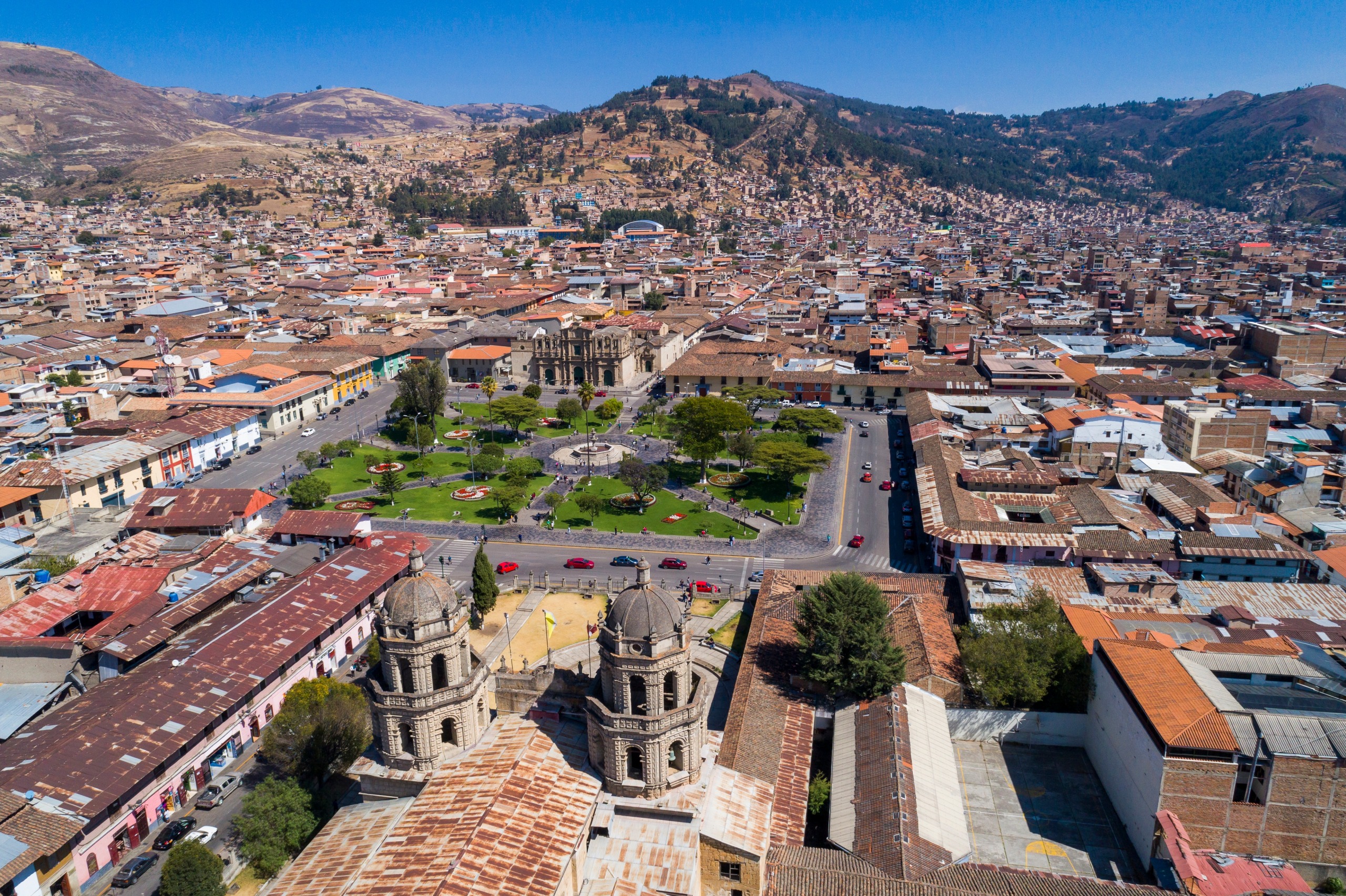
Tourism is a major source of income for populations around Lake Titicaca. Each year, thousands of visitors come to discover the lake's natural beauty, its emblematic islands, and its rich cultural heritage. The city of Puno, on the Peruvian shore, often serves as a starting point for lake excursions.
Titicaca plays an essential role in the lives of surrounding communities. Beyond fishing and tourism, agriculture around the lake benefits from fertile lands. Inhabitants cultivate crops adapted to the cold climate and high altitude, such as:
- Potatoes
- Quinoa
- Oca (an Andean tuber)
However, like any popular tourist destination, Titicaca faces significant environmental challenges. Mass tourism can disrupt local habitats, particularly on the Uros floating islands, where the balance between preserving traditions and welcoming visitors must be carefully maintained.
Furthermore, pollution from wastewater and waste from surrounding cities, notably Puno, along with increased human activity, threatens the lake's fragile ecosystem. Conservation efforts are underway to protect this natural wonder, but they require cross-border coordination between Pérou and Bolivia.
Attractions
The Uros Floating Islands
One of Lake Titicaca's most remarkable attractions is undoubtedly the dozens of Uros floating islands. These are artificial islands constructed from totora reeds and serve as home to an ancient ethnic group that has preserved a distinct culture despite external influences. The Uros have lived on these islands for centuries, and they continue to build, maintain, and rebuild their homes and islands using this natural material.
The Uros use totora for everything, from boats to dwellings to food. The reeds are layered in successive layers to form a stable surface. However, they must be regularly replaced due to their rapid decomposition in contact with water. Visitors can explore these floating islands, interact with inhabitants, and learn more about their unique way of life.
Taquile
Taquile is a permanent island particularly renowned for its exceptional textile craftsmanship. The men are celebrated for their ability to weave high-quality garments and accessories. Indeed, this is a tradition that has been recognized by UNESCO as intangible cultural heritage of humanity. Island culture is also highly communal, with a rotation system in the management of lands and resources.
Amantani
Amantani is a peaceful island known for its pre-Incan archaeological sites and temples dedicated to the deities of Earth (Pachamama) and fertility. It offers visitors the opportunity to stay with local families, a unique experience for those wishing to immerse themselves in local culture.
Suasi
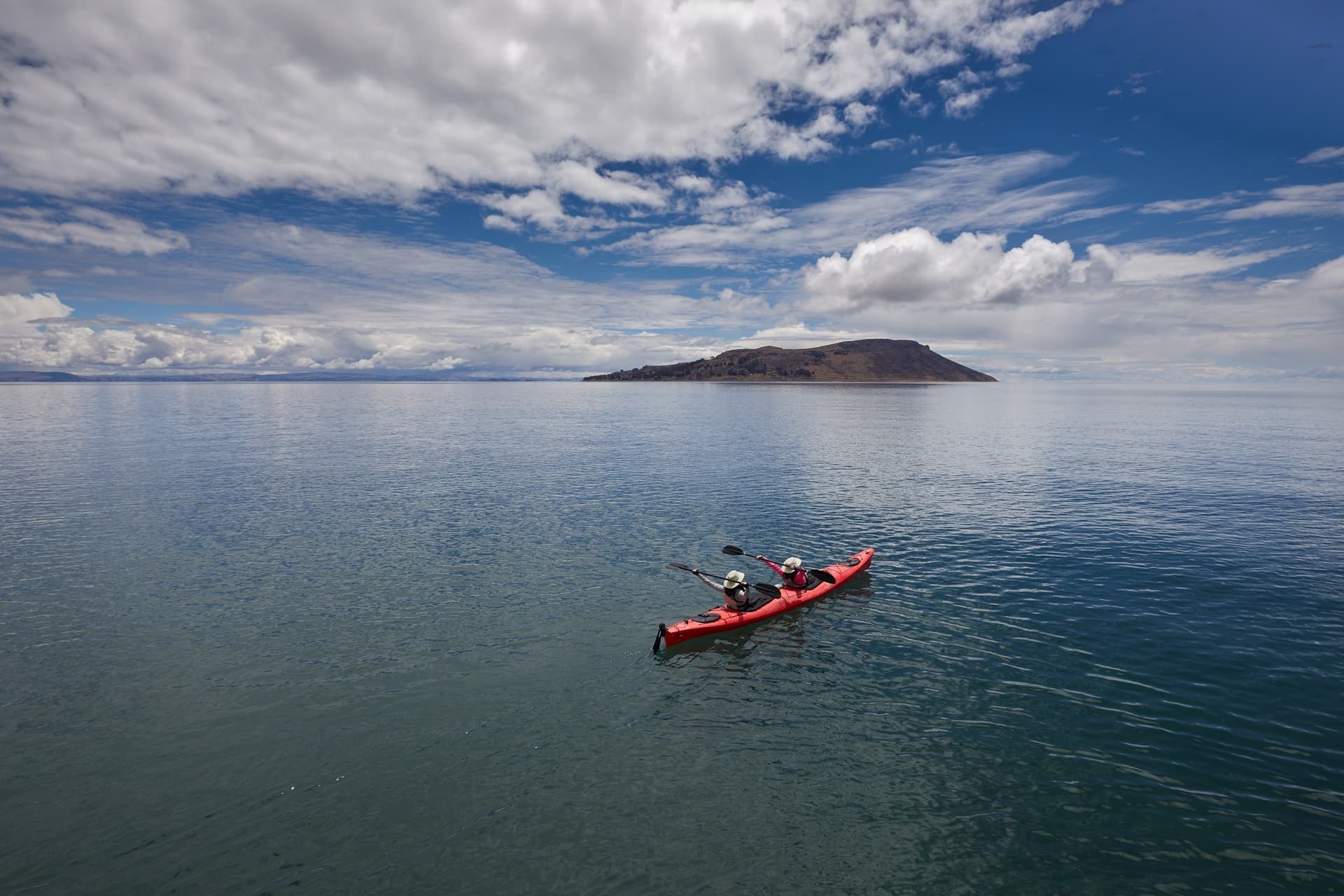
This small island on Lake Titicaca covers only 44 hectares. It is less known than other islands and little developed. However, it features an eco-tourism oriented hotel where guests have the opportunity to snorkel, fish, or sail.
Activities
Upon arriving in Puno, you can choose from various options to explore the lake:
- Boat excursions: These are among the most popular activities for discovering its treasures. Visitors can tour the surrounding islands.
- Organized tours: Many local travel agencies offer one-day or multi-day circuits. These excursions typically include cultural visits and home stays, allowing travelers to immerse themselves in local life.
Want to discover this destination?
Our local advisors design your tailor-made trip.