Vinicunca
Vinicunca
Located 100 km from Cusco, Vinicunca reveals its colorful mineral bands at the end of a trek at 5000 m altitude. History, access and practical advice.
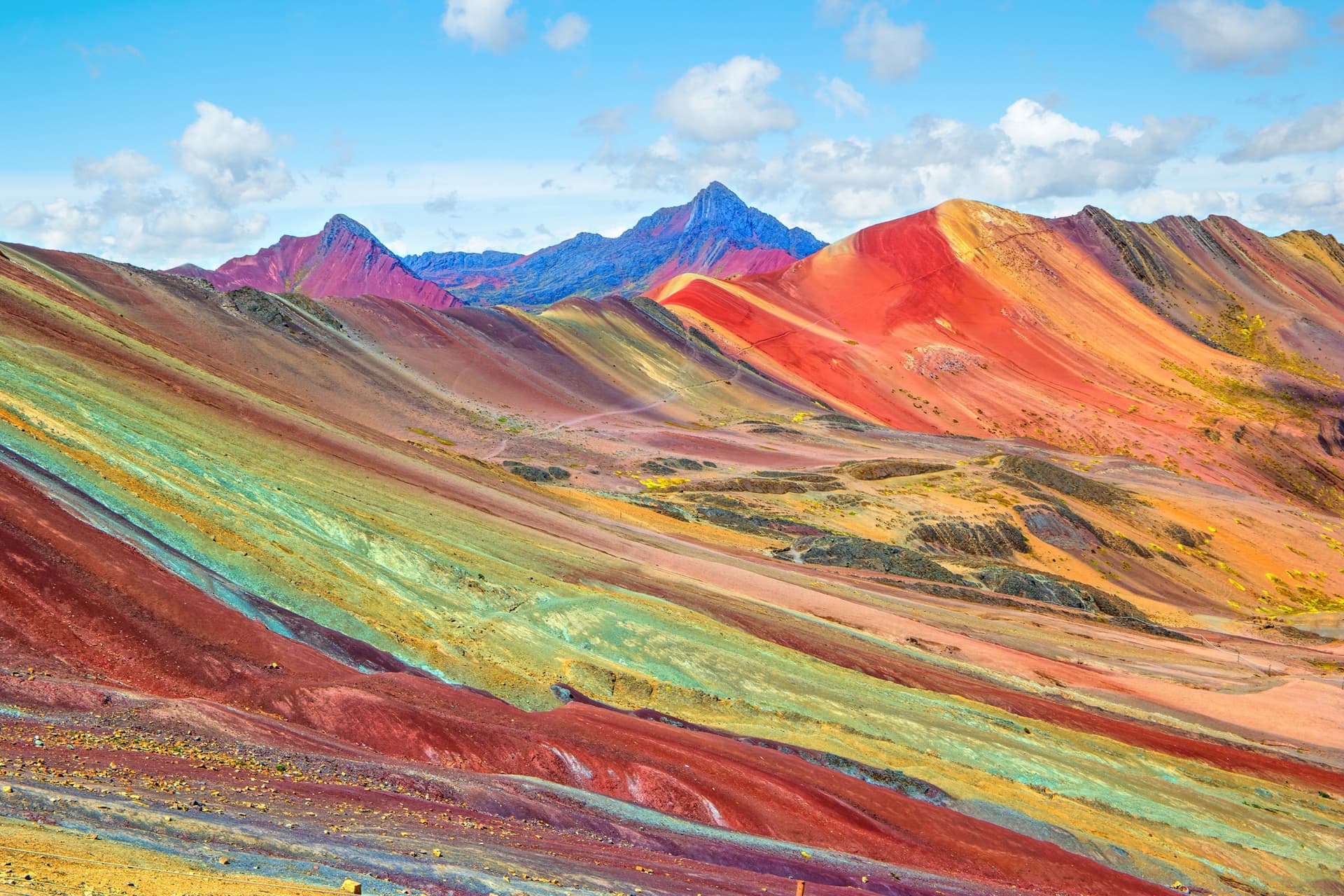
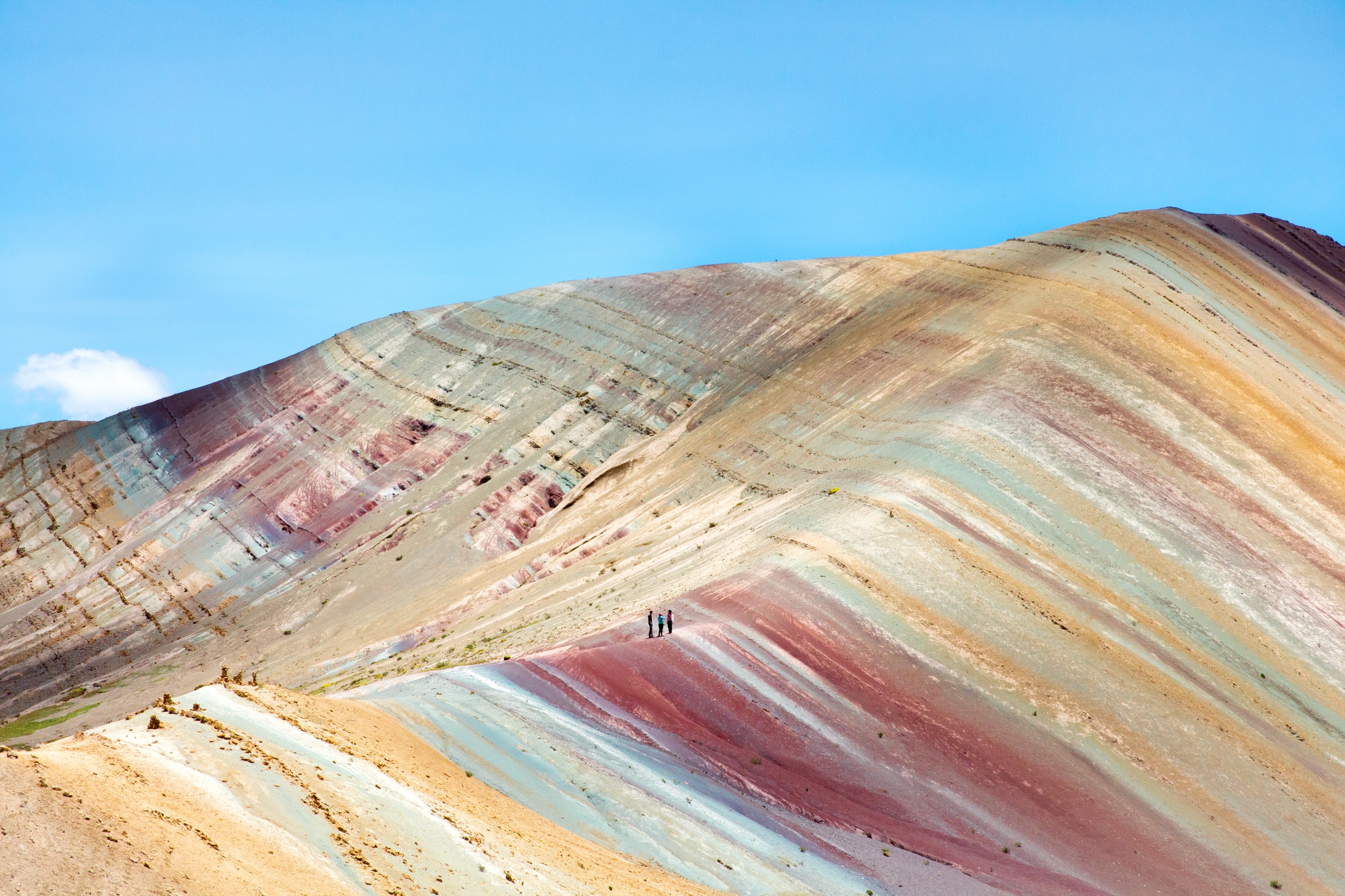
Vinicunca, nicknamed the rainbow mountain of Peru, sits approximately 100 km from Cusco, in the Andes mountain range. The site, which features on the 100 Places to Visit Before You Die list published by National Geographic, owes its fame to colored mineral bands that stripe its slope to over 5000 m altitude.
Why visit Vinicunca
The summit, also called Montaña de Siete Colores ("mountain of seven colors"), displays hues resulting from millions of years of mineral sedimentation. Green comes from copper sulfate, red from iron oxide and yellow from sulfur, complemented by other ocher and violet tones. Beyond the landscape, the trek crosses a high mountain environment home to foxes, deer, skunks, osqollos, vizcachas, and an array of birdlife including condors, partridges and huallatas. Local pastoral communities raise alpacas and llamas here, sometimes used as pack animals.
History and significance
Vinicunca is a sacred place for the Quechua people of the Peruvian Andes. The mountain embodies the symbol of masculinity and fatherhood, fertilizing Pachamama (Mother Earth). It is considered a spiritual protector of indigenous communities.
The name comes from the Quechua language: wini refers to the black stones covering the territory, and kunca evokes the shape of the ridge, similar to a necklace. For centuries, the multicolored landscape remained hidden beneath snow and glacial caps. During the 2010s, with climate warming and glacial melting, the stripes gradually revealed themselves, opening the way to tourism in the area.
Each year, the week preceding Corpus Christi (around May 31st), thousands of Quechua pilgrims converge on the region to celebrate Qoyllur Rit'i, or "Festival of the Star Snow", one of the most important Andean religious gatherings.
What to see and do
The main trail climbs gradually to approximately 5000 m, where views open onto Vinicunca's colored bands. The hues stand out more in sunny weather and fade under cloudy skies. In the background, the Nevado Ausangate, a snow-capped peak exceeding 6000 m, completes the panorama.
Route options
- On foot: approximately 4-hour round-trip ascent from Phulawasipata.
- On horseback: rental available at the starting point to reduce effort.
- By mountain bike: practiced by some experienced travelers on adjacent trails.
- Nevado Ausangate Trek: multi-day circuit departing Cusco, which can include Vinicunca.
Practical information
Prior acclimatization in Cusco (3400 m) is strongly recommended. Mountain sickness can occur at altitude (generally from 2500-3000 m onwards) in the form of headaches, nausea or fatigue. The activity is not recommended for people with asthma or heart conditions. Prior trekking experience is useful, as certain sections become slippery in wet weather.
Recommended equipment:
- Hiking boots with ankle support
- Walking poles
- Waterproof jacket or poncho
- Hat or cap, gloves
- Sunglasses and high-protection sunscreen
- Water, snacks, coca leaves for altitude
A modest entry fee (in soles) is collected at Phulawasipata, the trekking starting point. Rates evolve: check before departure.
When to visit
The dry season, April to September, offers the best visibility conditions, with sunny days that highlight the mountain's colors. July and August are peak tourist months: plan an early morning departure to avoid crowds and afternoon clouds. The rainy season (December to March) makes the trail slippery and colors often appear dull under overcast skies.
How to get there
Most visitors opt for a day excursion organized from Cusco, departing before dawn and returning in the evening. For independent travelers, the classic itinerary breaks down as follows:
- Cusco → Cusipata: regular bus on the Cusco-Sicuani line.
- Cusipata → Phulawasipata: local transport to the trekking starting point.
- Phulawasipata → summit: on foot, on horseback or by mountain bike.
Allow a full day round-trip from Cusco.
Nearby
The Cusco region groups several major sites that combine well with a Vinicunca visit:
- Palccoyo, a less-crowded alternative with three colored mountains and a shorter walk.
- Andahuaylillas and its "Sistine Chapel of the Andes", on the route between Cusco and Cusipata.
- Pisac, in the Sacred Valley, for its Inca site and market.
- Moray, circular agricultural terraces of Inca origin.
- Sacsayhuamán, megalithic fortress overlooking Cusco.
Frequently asked questions
Frequently asked questions
The main viewpoint peaks at approximately 5000 m. The trekking start at Phulawasipata is already above 4600 m.
Allow approximately 4 hours of walking round-trip from Phulawasipata, at a pace suited to the altitude.
Yes. Spending at least two to three days in Cusco (3400 m) before the climb significantly reduces the risk of acute mountain sickness.
Yes: horses are available for rental at the starting point, and mountain biking is practiced by some experienced visitors.
The dry season, April to September, most often guarantees clear skies. July and August are the busiest months.
Palccoyo offers a similar landscape, more accessible and far less crowded than Vinicunca.
Include Vinicunca in your trip
Vinicunca naturally fits into an itinerary around Cusco, the Sacred Valley and Machu Picchu. To build a custom itinerary incorporating acclimatization and associated sites, consult our Peru travel suggestions.
Interested in this visit?
We can include it in your personalised itinerary.