The ruins of Ollantaytambo
The ruins of Ollantaytambo
An Inca fortress in the Sacred Valley at 2,792 m, Ollantaytambo reveals an unfinished Temple of the Sun, spectacular terraces, and the memory of a rare victory against the Spanish.
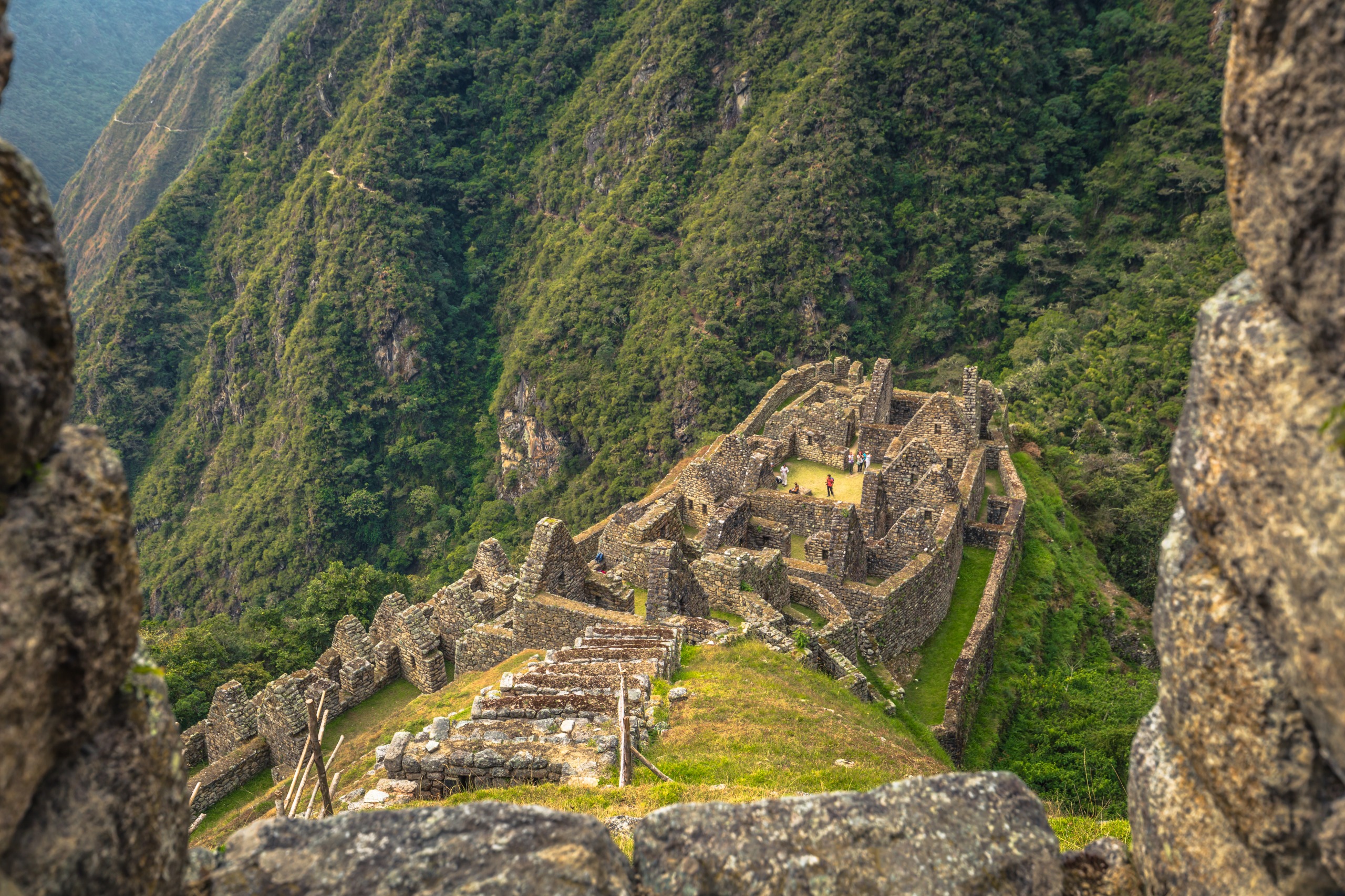
A major archaeological site in the Sacred Valley of the Incas, the ruins of Ollantaytambo overlook an inhabited Andean village at approximately 2,800 meters altitude. An ancient military, religious, and agricultural complex built in the 15th century, the ensemble brings together terraces, an unfinished Temple of the Sun, and a hydraulic system still in operation.
Why visit Ollantaytambo
Three reasons make this stop essential in a Peruvian itinerary. First, it is one of the few sites where the Incas defeated Spanish conquistadors in battle, in 1536. Second, the complex provides concrete evidence of Inca construction methods: stones carved with hematite, bronze cramps, transport ramps still visible. Finally, the village below preserves its original Inca urban layout, with its famous herringbone streets and irrigation canals still flowing with water.
Ollantaytambo naturally falls between Cusco and Machu Picchu, and often serves as the penultimate stop before the lost city.
History of the site
Ollantaytambo, abbreviated to "Ollanta" by locals, was constructed in the 15th century under emperor Pachacútec's reign. The site served simultaneously as an administrative center, fortress, temple, and agricultural zone. Its strategic position allowed control of the Urubamba valley and organization of expeditions toward the Amazonian foothills.
After the defeat at Sacsayhuamán, Manco Inca took refuge at Ollantaytambo. In 1536, he repelled a Spanish force of 70 cavalry and numerous infantry, commanded by Hernando Pizarro, half-brother of Francisco Pizarro. From the heights of the terraces, the Incas unleashed an avalanche of boulders, spears, and arrows, preventing the conquistadors from reaching the fortress. Manco Inca had also diverted part of the Urubamba river to flood the plain and impede the cavalry.
The victory was short-lived. Shortly after, the Spanish returned with quadrupled cavalry. The Incas had to abandon the site and retreat into the jungle at Vilcabamba, where they resisted for several more decades.
What to see on the site
The fortress and its terraces
Main access is via a monumental staircase serving seventeen superimposed terraces. These agricultural terraces, among the best preserved in the region, fulfilled several functions: cultivating at high altitude, preventing erosion, managing runoff water, and stabilizing the mountainside. They also formed a formidable natural defense, as attested by the 1536 events. From the summit, the view encompasses the Urubamba river, three valleys, and the village below with its herringbone-patterned streets.
The Temple of the Sun
The most remarkable structure on the site remains unfinished. Its main wall consists of six pink porphyry monoliths arranged in a geometry that researchers suggest evokes the cycle of life. The stone comes from a quarry located about 6 km away, on the slope of the opposite mountainside. One of two gigantic lintels is still fixed to the ramp that served to hoist it, rare testimony of a construction site interrupted by the arrival of the Spanish.
Mortarless assembly
The Inca construction technique remains partially enigmatic. The blocks are fitted with such precision that a sheet of paper cannot be inserted between them. Builders carved the stone with hematite tools and used T-shaped bronze cramps to solidify certain blocks, a technique inherited from the pre-Inca civilization of Tiwanaku. On several stones, protrusions or projections are still visible: they served to anchor the lifting ropes and had not been polished, a sign that the work site was incomplete.
Transport of blocks
The Cachicata quarry, on the opposite slope, provides concrete clues about Inca logistics. Ramps still visible descend toward the valley. To cross the Urubamba, the Incas had diverted part of the river's course. Several "tired stones," abandoned along the way because they were too heavy or damaged, still dot the route.
The Temple of Water and the fountain of the Ñusta
The hydraulic system still functions and supplies fountains, ritual basins, and irrigation canals. The fountain of the Ñusta ("princess" in Quechua), carved from a single block of stone, is integrated into the Temple of Water. The canals follow the natural contours of the terrain, with a slope that maintains regular flow without erosion.
Pinkuylluna and the colcas
On the mountain opposite, the colcas (or qolqas) form a four-story agricultural storage building. Natural ventilation preserved grains and tubers for long periods. The Pinkuylluna site is freely accessible from the village and offers a complementary perspective of the complex, with a sweeping view of the fortress.
Astronomical alignments
Several structures on the site are aligned with solar events. These astronomical markers allowed the fixing of planting and harvest dates in a society where the agricultural calendar was inseparable from the ritual calendar.
Practical information
- Ticket: access to the site is through the Cusco boleto turístico (general or partial pass). Purchase it in Cusco or directly at the entrance.
- Duration of visit: allow 1.5 to 2.5 hours for the fortress alone, longer if you include Pinkuylluna.
- Hours: daily opening during daytime, closing in late afternoon. Check local hours before departing.
- Altitude: 2,792 m. Plan acclimatization time in Cusco (3,400 m) before visiting.
- Tips: hiking shoes, water, hat, and sunscreen. Stairs are steep and terraces are exposed.
When to go
The dry season, from May to October, offers the best visiting conditions: clear skies, manageable trails, mild daytime temperatures but cool nights. The rainy season, from November to March, makes stairs slippery and limits visibility from the heights, but the site is quieter. Avoid mid-day during peak tourist season (July-August): arrive early morning or late afternoon to minimize crowds.
How to get there
Ollantaytambo is located about 75 km from Cusco in the Sacred Valley. Three main options:
- By colectivo: shared minibuses departing from Cusco (Pavitos terminal), with a change at Urubamba. The most economical solution, count on 2 hours.
- By private taxi or organized tour: numerous "Sacred Valley" excursions include Ollantaytambo, Pisac, and Chinchero in a single day.
- By train: Ollantaytambo is the main departure station for trains to Aguas Calientes (Machu Picchu) with PeruRail and Inca Rail. Many travelers visit the ruins before taking their train.
Nearby
The Sacred Valley concentrates several must-see sites in a Pérou trip. From Ollantaytambo, you can reach Q'enko, a sacred rock sanctuary near Cusco, or continue south with Vinicunca, the mountain of seven colors. Further afield, the Pampa Cañahuas national reserve and Salinas and Aguada Blanca offer another face of the Peruvian Andes, between vicuñas and volcanoes.
Frequently asked questions
Frequently asked questions
Allow 1.5 to 2.5 hours for the main fortress. If you add Pinkuylluna on the opposite slope and a stroll through the Inca village, plan for a full half-day.
Access is included in the Cusco boleto turístico, a combined ticket covering several sites in the region. There is a general formula and partial formulas. No single-entry tickets are sold at the entrance.
The main ascent features many steep steps at 2,792 m altitude. Unacclimatized visitors may experience shortness of breath. Climb at your own pace and hydrate regularly.
Yes. The Ollantaytambo station is the main departure point for trains to Aguas Calientes. Many travelers visit the ruins in the morning and take an afternoon train to sleep at the foot of Machu Picchu.
No. Several clues confirm this: a lintel still fixed to its installation ramp, "tired stones" abandoned along the route, and unpolished lifting bosses on the Temple of the Sun's blocks.
Organize your trip
Ollantaytambo fits into most itineraries combining Cusco, the Sacred Valley, and Machu Picchu. To build a customized circuit including these Andean stages, consult our Pérou trips designed with our local teams.
Nearby
Interested in this visit?
We can include it in your personalised itinerary.