Tambopata National Reserve
Tambopata National Reserve
In the heart of Peruvian Amazonia, Tambopata National Reserve protects exceptional biodiversity accessible from Puerto Maldonado.
Tambopata National Reserve spans over 270,000 hectares in the Madre de Dios region, southeastern Peru. Accessible from Puerto Maldonado, it protects one of the richest ecosystems in the Amazon basin and concentrates a diversity of birds, mammals, and insects documented by biologists since the 1970s.
Why visit Tambopata Reserve
Tambopata stands out for the density of its biodiversity: jaguars, giant river otters, caimans, howler monkeys, and more than 600 bird species have been recorded here. The reserve also hosts the Macaw Collpa, a clay cliff visited each morning by macaws, parrots, and parakeets that come to absorb minerals necessary for their digestion.
The territory combines primary forest, horseshoe-shaped lakes (cochas), and rivers with dark waters. This variety of habitats explains the faunal richness and allows for several angles of exploration: observation from a viewpoint, slow navigation on a lake, forest walks, or nighttime excursions.
A history tied to ecotourism
In the 1970s, a ban on hunting large game in the Peruvian jungle opened the way for another use of the forest. Two entrepreneurs, Max Gunther and Pepe Rada, identified the zone's potential for nature-oriented tourism. They founded Explorer's Inn in Puerto Maldonado in 1976, one of the first ecotourism lodges in Peruvian Amazonia.
Scientific studies conducted there from 1977 onward documented the biodiversity of the sector and supported protection initiatives. After several successive classification stages, Tambopata National Reserve was officially created in 2000 in its current form.
The reserve today faces multiple pressures: illegal gold panning, deforestation, and agricultural expansion at its edges. Governance involves the State, local communities, and environmental NGOs. A reforestation program was launched in 2019 to restore degraded areas, alongside strengthened control over extractive activities.
What to see and do at Tambopata
The Macaw Collpa
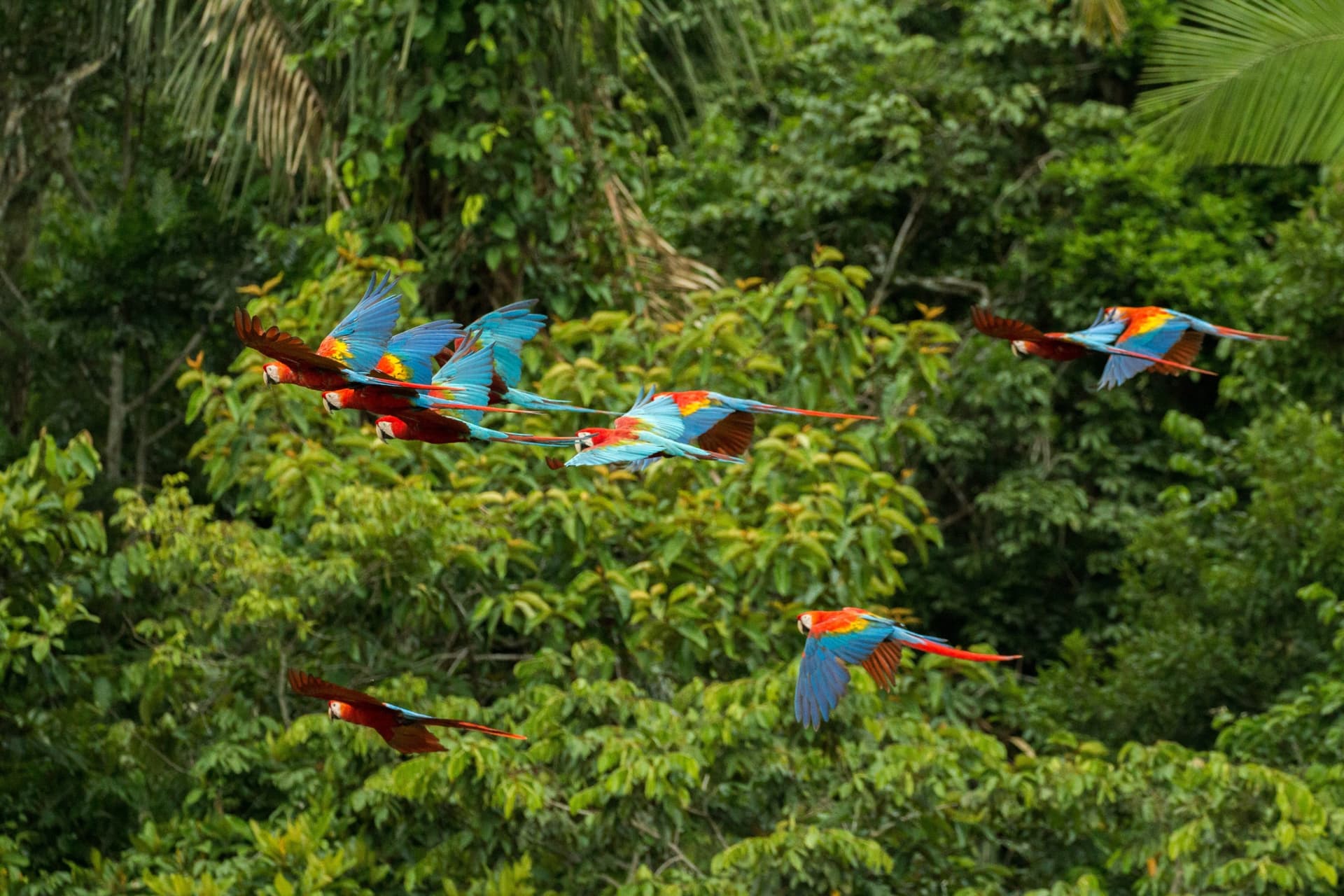
This clay lick ranks among the most visited in Amazonia. At dawn, dozens of red and blue macaws, accompanied by parrots and parakeets, gather on the cliff. Observation takes place from a prepared blind, at a distance to avoid disturbing the birds. Plan for a very early departure from your lodge.
Sandoval Lake
An emblematic cocha of the reserve, Sandoval Lake is reached after a forest walk followed by a canoe crossing. You can observe hoatzins, caimans, piranhas, and, with luck, a family of giant river otters, an endangered species. The lower water level between May and October facilitates boat outings and access to the nearby Monkey Island.
Fauna and guided outings
The forest is home to jaguars, tapirs, sloths, anteaters, several monkey species, and a wide variety of reptiles and amphibians. Nighttime boat excursions allow spotting caimans by the red reflection of their eyes. Enlisting a qualified naturalist guide is essential: they identify tracks, listen for calls, and lead to discreet observation points.
Exchange with communities
Several lodges work with native Ese'Eja or Infierno communities and offer visits to their villages, presentations on medicinal plants, and demonstrations of traditional forest uses.
When to visit
The dry season, from May to October, offers the most favorable conditions: passable trails, clearer skies, easier wildlife observation, and appropriate water levels for the cochas. Temperatures remain warm and humid year-round.
The rainy season, from November to April, transforms the forest: denser vegetation, swollen rivers, some trails become muddy. It is also the period when the jungle is most active in terms of plants and insects. Showers are generally short but intense.
How to get to Tambopata
Access is in two stages from Lima.
- Lima – Puerto Maldonado: direct flight of approximately 1 hour 40 minutes, sometimes with a stop in Cusco. This is the simplest solution.
- By road: buses connect Cusco to Puerto Maldonado via the Interoceanic Highway (approximately 10 hours). Long journey but scenic.
- Puerto Maldonado – lodges: approximately 2 hours by all-terrain vehicle to the banks of the Tambopata River, then 2 hours by boat for lodges deeper in the reserve.
Practical information
- Recommended duration: 3 to 4 days minimum to make the most of travel time and multiply outings.
- Accommodation: only in ecotourism lodges, to be booked in advance with transfers included.
- Difficulty level: accessible to all in reasonable physical condition. Walks are not technically challenging but can be long and wet.
- Equipment: long light-colored clothing, high-cut hiking boots, rain poncho, headlamp, binoculars, strong mosquito repellent, antimalarial treatment according to medical advice.
- Vaccines: yellow fever vaccination is mandatory for the Amazon zone.
- Money: withdraw in Puerto Maldonado; lodges rarely accept cards.
To see in the surrounding area
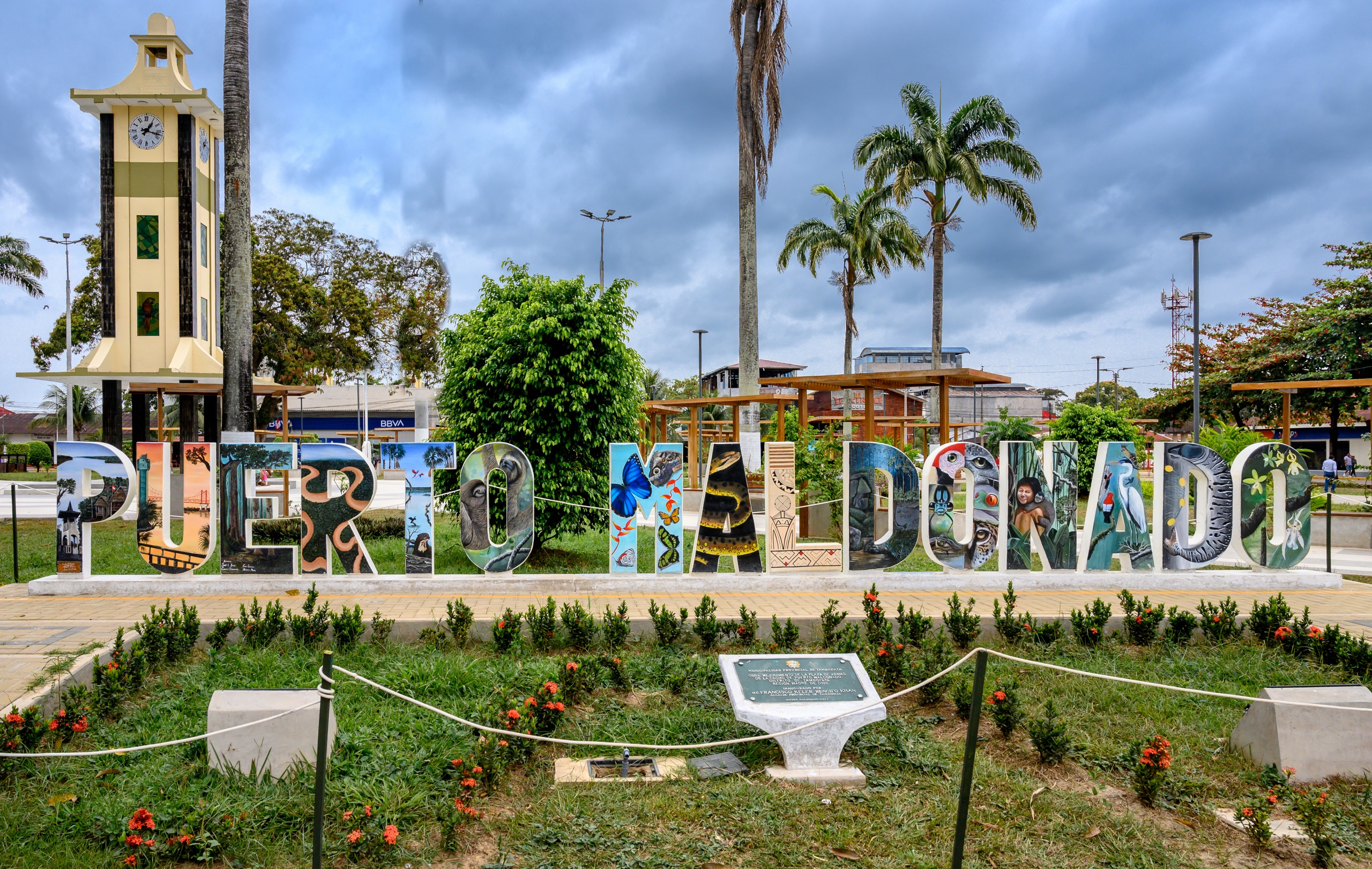
- Puerto Maldonado: gateway to the reserve, a river town at the confluence of the Tambopata and Madre de Dios rivers.
- Pampa Cañahuas National Reserve: another Peruvian protected area, in a very different high plateau environment.
- Vinicunca: the seven-color mountain, to combine with a stay in Cusco before or after the Amazon.
- Salinas and Aguada Blanca: high-altitude reserve near Arequipa, interesting for Andean fauna.
Frequently asked questions
Frequently asked questions
Planning your trip
Tambopata National Reserve naturally fits into a circuit combining the Amazon and the Andes. To build your itinerary and choose a lodge suited to your needs, consult our custom Peru travel suggestions.
Interested in this visit?
We can include it in your personalised itinerary.