Pachacamac
Pachacamac
Located 40 km from Lima, the Pachacamac sanctuary encompasses over a thousand years of Andean history: temples, stepped pyramids and Inca vestiges facing the Pacific Ocean.
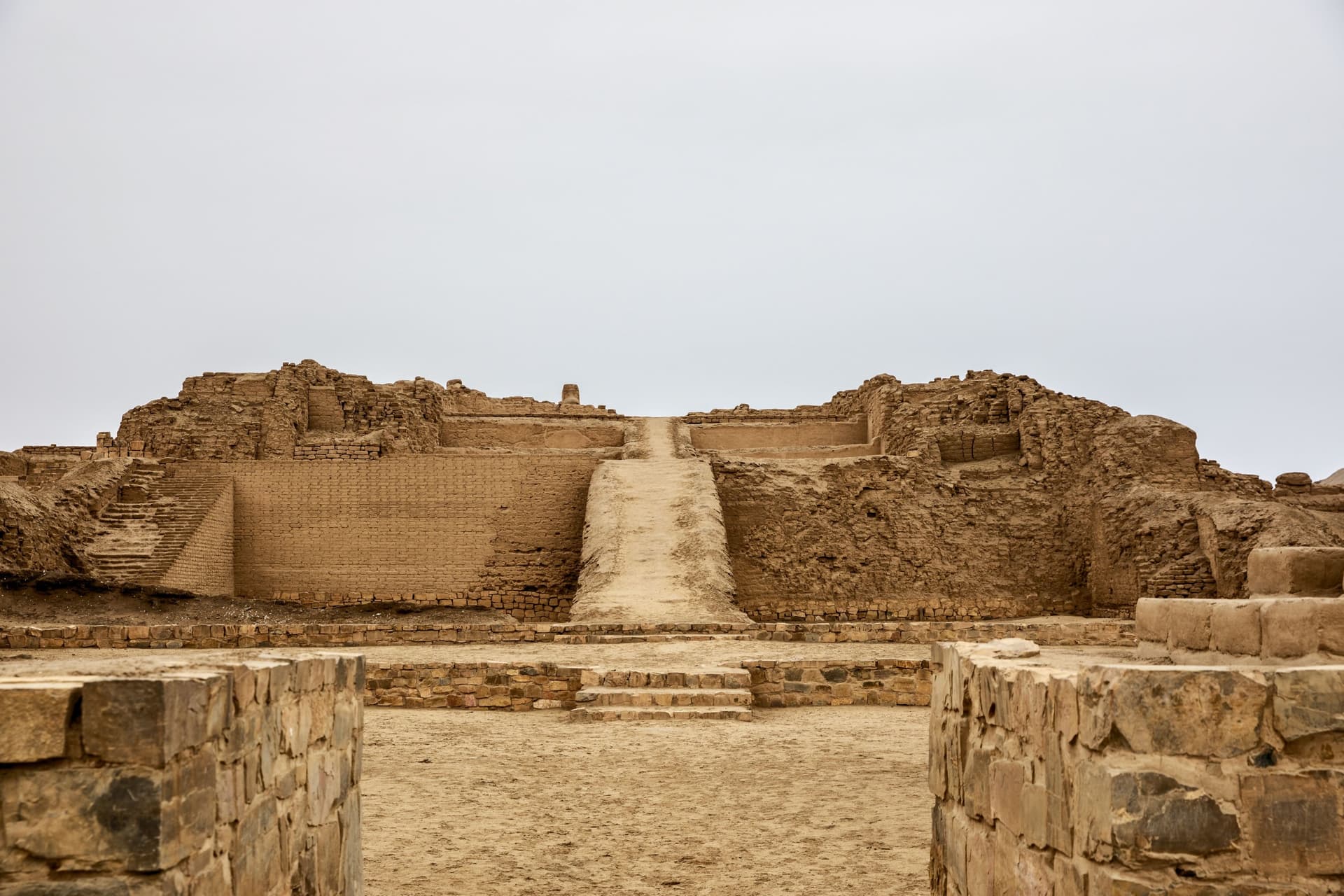
About forty kilometers southeast of Lima, in the Lurín valley, the Pachacamac sanctuary brings together over a thousand years of pre-Columbian history on a single site. Temples, stepped pyramids, cemeteries and ceremonial residences extend along the Pacific Ocean, bearing witness to a succession of cultures that made this place one of the main religious centers on the Peruvian coast.
Why visit Pachacamac
The site offers a rare reading of Andean history: four successive cultures (Lima, Wari, Ychma, Inca) left their mark across nearly 600 hectares. Unlike Machu Picchu, Pachacamac remains relatively uncrowded, allowing for a peaceful visit to the remains and the site museum, renovated in 2016. Its proximity to Lima makes it an ideal half-day excursion for those wishing to understand pre-Hispanic occupation of the coast before heading toward the Andes.
History of the sanctuary
The site takes its name from the god Pachacamac, a deity associated with earthquakes and fertility whose oracle attracted pilgrims from throughout the Andean world. The earliest traces of human occupation date back to around 200 BC, with the Lima culture.
Around 600 AD, the sanctuary became a spiritual center of considerable importance under Wari influence, who built several ritual structures there. The Ychma, from the 13th century onward, significantly expanded the complex by adding characteristic stepped pyramids. In the 15th century, the Incas integrated Pachacamac into their empire and associated their own solar cult with it, without dismantling local rites.
The arrival of Spanish conquistadors in the 16th century ended the sanctuary's religious role: Hernando Pizarro reached it in 1533, and the idol of Pachacamac was destroyed shortly after. Modern excavations, notably those led by Belgian archaeologist Peter Eeckhout since the 1990s, continue to clarify the site's chronology and organization.
What to see on site
The visitor route traverses several distinct complexes, separated by ceremonial pathways.
Temple of the Sun
Built by the Incas and dedicated to Inti, the sun god, this terraced temple dominates the site. Its elevated position offers a clear view over the Lurín valley and the Pacific Ocean.
Painted Temple (Ychma)
Built by the Ychma, this temple once housed the idol of Pachacamac, a wooden carved statue now preserved in the site museum. Fragments of colorful frescoes are still visible on its walls.
Mamacona or Acllawasi
This Inca residence accommodated women dedicated to solar worship, the acllas. The cut-stone architecture contrasts with the surrounding adobe structures and illustrates imperial investment in the site.
Stepped pyramids
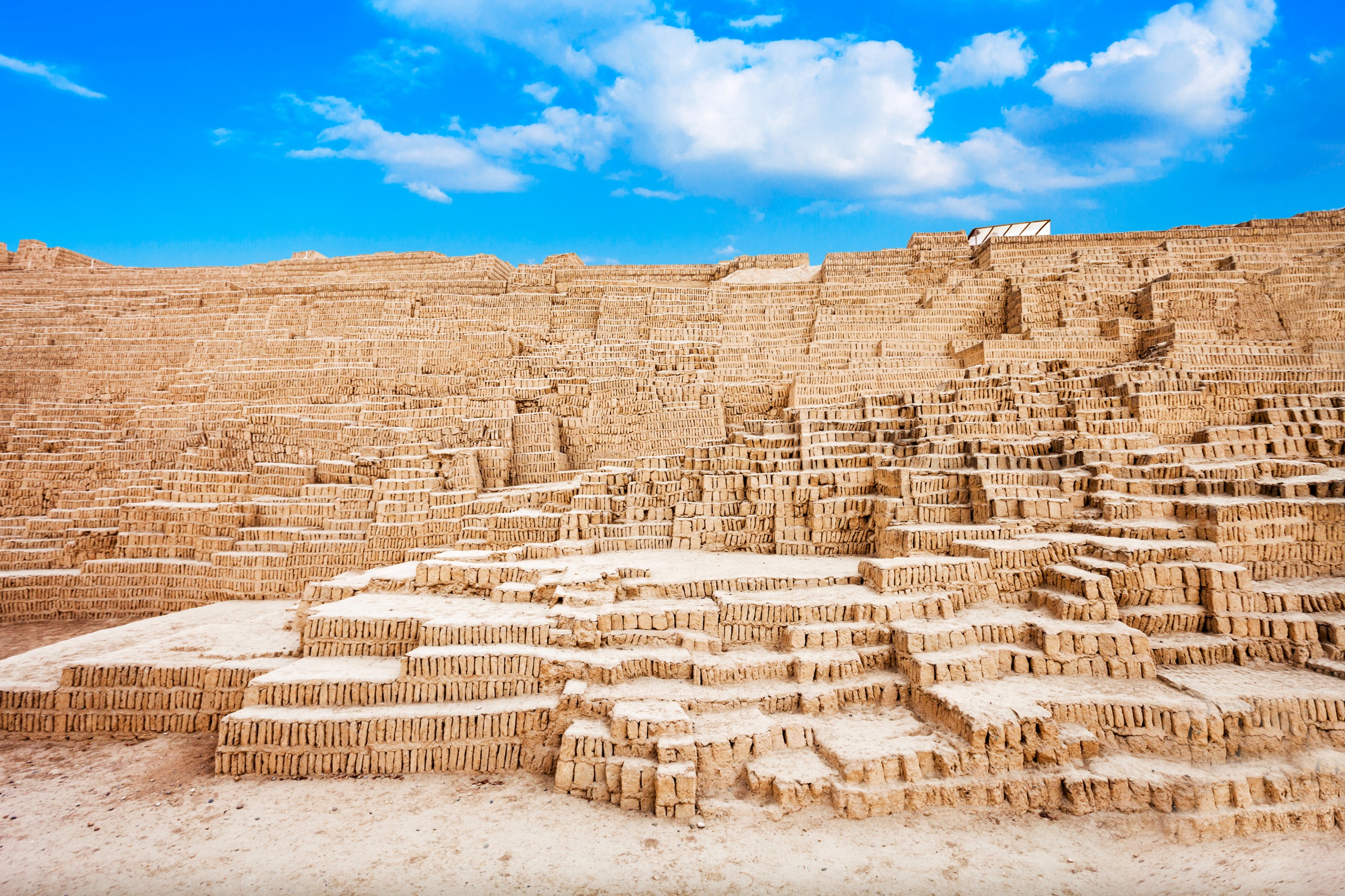
About fifteen stepped pyramids, attributed to the Ychma period, structure the central zone. Their function remains debated: administrative palaces, regional sanctuaries, or embassies of vassal lordships.
Max Uhle Cemetery
Named after the German archaeologist who worked there in the late 19th century, this necropolis has yielded complex burials, some associated with elaborate funeral rites. Recent excavations have uncovered tombs of young women interpreted as ritual offerings.
Tauri Chumpi Residence and House of Quipus
These two buildings illuminate the administrative dimension of the site during the Inca period, particularly through the discovery of quipus, knotted cords used for record-keeping.
Practical information
The site is open Tuesday through Saturday as well as the first Sunday of each month, in the morning and early afternoon. Ticket windows close approximately 30 minutes before site closure. Entrance fees are modest, with discounts for students, school groups and seniors. Plan 2 to 3 hours for a complete visit including the museum. Bring a hat, water and closed-toe shoes: the site is extensive, sparsely shaded and has sandy ground.
When to visit
The climate of Peru's central coast is desert-like, with very low precipitation year-round. The most pleasant season runs from December to April, with clear skies and mild temperatures. From May to November, the garúa (coastal mist) frequently covers Lima and its surroundings: the light is dimmer but temperatures remain moderate, which is well-suited to visiting the ruins.
How to get there from Lima
- By taxi or ride-sharing: from Miraflores or San Isidro, expect approximately 45 minutes depending on traffic. This is the most direct option.
- By bus: local buses serve the area from southern Lima; an economical option but more time-consuming, best suited if you're comfortable with Peruvian urban transport.
- By guided tour: many Lima travel agencies offer half-day excursions departing from Miraflores, with transportation and English-speaking guides.
To see in the surrounding area
Pachacamac fits naturally into a broader exploration of Lima and its region. In Lima itself, the pre-Hispanic site of Huaca Pucllana, right in the Miraflores neighborhood, offers an urban complement to discovering Pachacamac. For a seaside stroll, El Malecón runs along the cliffs of Miraflores. Travelers continuing toward Cusco should not miss Machu Picchu, the classic culmination of an archaeological itinerary in Peru.
Frequently asked questions
Frequently asked questions
Plan 2 to 3 hours to explore the main ruins and site museum. With a detailed guided tour, budget a full half-day.
The site is well-marked and the museum provides essential context, but a guide significantly enriches the visit, especially for understanding the layering of Lima, Wari, Ychma and Inca cultures.
Yes, local buses connect Lima to the area, but the most convenient option for visitors remains taxi, ride-sharing or an organized excursion from Miraflores or San Isidro.
Yes, a well-organized day allows you to visit Pachacamac in the morning and explore Huaca Pucllana or Lima's historic center in the afternoon.
Preparing your Peru trip
Pachacamac fits easily into a broader itinerary blending coast, highlands and Amazon. To build your custom itinerary, consult our Peru travel suggestions.
Interested in this visit?
We can include it in your personalised itinerary.