Andahuaylillas
Andahuaylillas
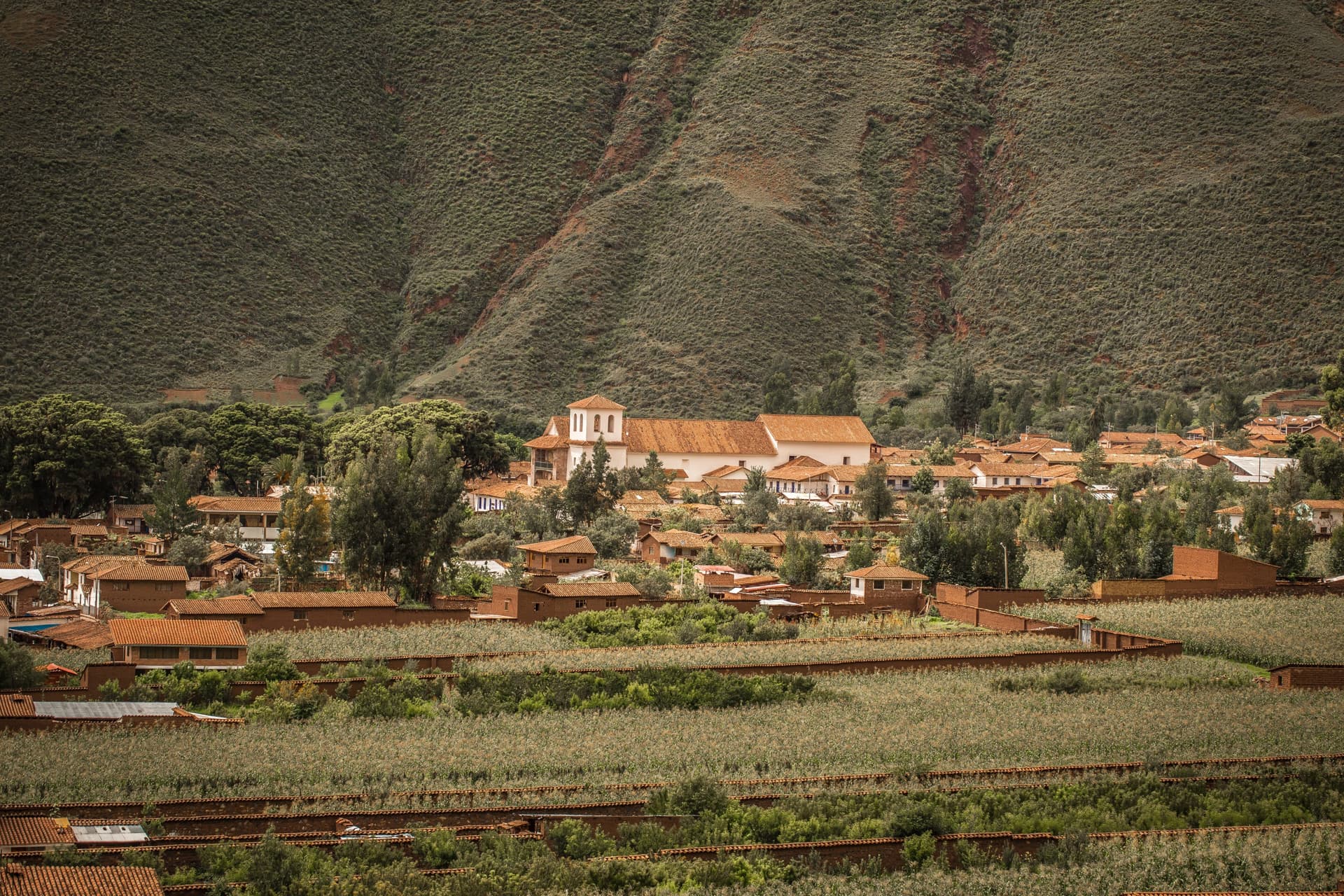
A colonial village located 40 km from Cusco, Andahuaylillas is renowned for its San Pedro Apóstol Church, nicknamed the Sistine Chapel of the Americas.
Andahuaylillas is an Andean village situated roughly 40 km southeast of Cusco, in Quispicanchi Province. The capital of its namesake district, it is celebrated for its San Pedro Apóstol Church, nicknamed the Sistine Chapel of the Americas due to the richness of its interior decoration.
Why visit Andahuaylillas
The village makes for a logical stop on the route connecting Cusco to Puno via the Southern Valley (Ruta del Sol). Travelers come here for three main reasons:
- To explore the Baroque interior of San Pedro Apóstol Church, one of the most comprehensive painted collections of South American colonial art.
- To stroll through a colonial plaza lined with historic homes and pisonay trees, whose distinctive red flowering is characteristic of the region.
- To combine the visit with other Southern Valley sites: Tipón and its Inca agricultural terraces, or Oropesa, renowned for its traditional bakeries.
The stop is brief (roughly 1 hour on-site) yet rewarding, and easily fits into a day trip from Cusco.
History of the village and its church
Andahuaylillas developed around a Jesuit doctrina in the late 16th century. San Pedro Apóstol Church was constructed between the late 16th and early 17th centuries, during the period of evangelization of Andean populations. The Jesuits engaged local painters and artisans trained in the Cuzco school to adorn the interior, explaining the singular blend of Christian symbols and motifs drawn from Quechua culture.
The edifice combines two registers: a sober exterior of adobe (earth and straw mixture) and andesite stone, Renaissance-inspired; and a Baroque interior saturated with murals, canvases, and gilding. This contrast between modest shell and exuberant décor is typical of rural Andean churches from the colonial period.
In 2011, the discovery nearby of a remarkably small mummy (roughly 50 cm tall) with unusually large eye sockets briefly drew the attention of researchers and the press. Subsequent analyses ruled out any extraordinary claims, yet the episode contributed to bringing wider recognition to the village beyond the standard tourist circuit.
What to see in Andahuaylillas
San Pedro Apóstol Church
It is the heart of the visit. Inside, you will observe:
- A cycle of murals covering the walls and ceiling, sometimes compared in its density to the frescoes of the Sistine Chapel.
- A collection of canvases from the Cuzco school, displayed in cedarwood frames covered with gold leaf.
- A Baroque altar, silverware and gold pieces.
- Two organs among the oldest in Latin America, preserved in the nave.
Photography is generally prohibited inside. Allow 30 to 45 minutes for a thorough visit.
The main plaza
Lined with low colonial homes and planted with pisonay trees, it remains a living space for locals. A few craft and local product stalls set up around the plaza on certain days.
Practical information
- Duration of visit: 1 to 2 hours on-site; half a day if combined with Tipón or Pisac.
- Church entrance fee: paid admission at a moderate rate; included in some combination tickets covering multiple Southern Valley churches.
- Altitude: approximately 3,100 m; plan for acclimatization before or upon arrival in Cusco.
- To bring: a light jacket (the church interior is cool), water, local currency in soles for tickets and crafts.
When to visit
Andahuaylillas enjoys an Andean mountain climate with an average annual temperature of around 12.3 °C. The warmest month is November (~13.5 °C), the coldest July (~10.3 °C). Rainfall concentrates during the wet season, peaking in January (~146 mm).
The dry season, from May to September, offers the most comfortable conditions: clear skies, passable roads, and better light on the plaza. June and July are the driest but also the coldest in the mornings. If traveling between May and June, you may sample huatia, a dish of potatoes and tubers cooked in an earth oven, traditionally prepared during harvest season.
Nearby attractions
Andahuaylillas lends itself well to a combined day along the Southern Valley:
- Tipón: Inca agricultural terraces and a remarkable hydraulic system.
- Oropesa: a village known for its traditional wood-fired bread.
- Q'enko (Qenqo): an Inca ceremonial center near Cusco, on the return route.
- The ruins of Ollantaytambo and Pisac, in the Sacred Valley, to extend your exploration of Inca heritage.
How to get there
The gateway is Cusco, served by Alejandro-Velasco-Astete International Airport, roughly 32 km from Andahuaylillas. From Cusco, you have several options:
- By private car or taxi: approximately 1 hour via the Urcos road. The most flexible option if you're combining multiple Southern Valley sites.
- By colectivo: shared minibuses departing Cusco toward Urcos or Sicuani, which drop off at the village entrance. Budget-friendly fares.
- By organized tour: "Southern Valley" circuits including Tipón, Andahuaylillas, and sometimes Pikillaqta over a half or full day.
FAQ
Frequently asked questions
The nickname refers to the density of painted decoration covering walls and ceiling, as well as the quality of canvases from the Cuzco school and gilded elements. The comparison is symbolic: it underscores the iconographic richness of a rural building erected during the evangelization of the Andes.
Allow 1 to 2 hours on-site: 30 to 45 minutes for the church interior, the rest for the plaza and surroundings. A half day is sufficient if you combine it with Tipón or Oropesa.
Photography is generally prohibited inside to preserve the murals and canvases. Check on-site: conditions may change.
Independent visiting is possible, but the church's iconography gains considerably from expert commentary. Local guides offer their services at the entrance, and tours departing from Cusco typically include detailed explanations.
The dry season, from May to September, provides the finest conditions. June and July are the driest; November through March correspond to the rainy season, with a peak in January.
Planning your trip
Andahuaylillas fits naturally into an itinerary combining Cusco, the Sacred Valley, and the route toward Lake Titicaca. To build a tailor-made journey including this village and other regional sites, explore our Peru travel ideas.
Interested in this visit?
We can include it in your personalised itinerary.