Santiago de Chile
Santiago de Chile
An Andean capital nestled between vineyards, snow-capped peaks, and bohemian quarters: everything you need to know to explore Santiago, Chile.
Santiago de Chile, often simply called Santiago, is the capital and largest city of Chile. Nestled at the foot of the majestic Andes mountain range, this dynamic metropolis is the political, cultural, and economic heart of the country. With a population exceeding 7 million in its metropolitan region, Santiago is a city of many facets. It blends modernity with tradition, where history harmoniously intertwines with urban development.
History
According to certain archaeological research, the passage of nomadic peoples through the Santiago region dates back to around 10,000 BCE. The first inhabitants of this area were the Mapuches, Picunches, and Promaucaes.
Less than a century after the Inca dominated the region, Spanish explorer Pedro de Valdivia founded the city of Santiago on February 12, 1541. The city was born under the name "Santiago del Nuevo Extremadura." It was chosen for its strategic location, proximity to water, and protection by mountains. However, its early years were difficult, marked by conflicts with indigenous peoples, particularly the Mapuches, and natural disasters such as earthquakes.
Over the centuries, Santiago evolved, becoming the administrative and cultural center of the country. Its development accelerated in the 19th century with Chile's independence in 1818, then in the 20th century with rapid industrialization and urbanization.
Later, central Santiago became the setting for the events of the military coup on September 11, 1973. An end to these difficult years came in the early 1990s with the restoration of democratic rule in Chile.
Climate
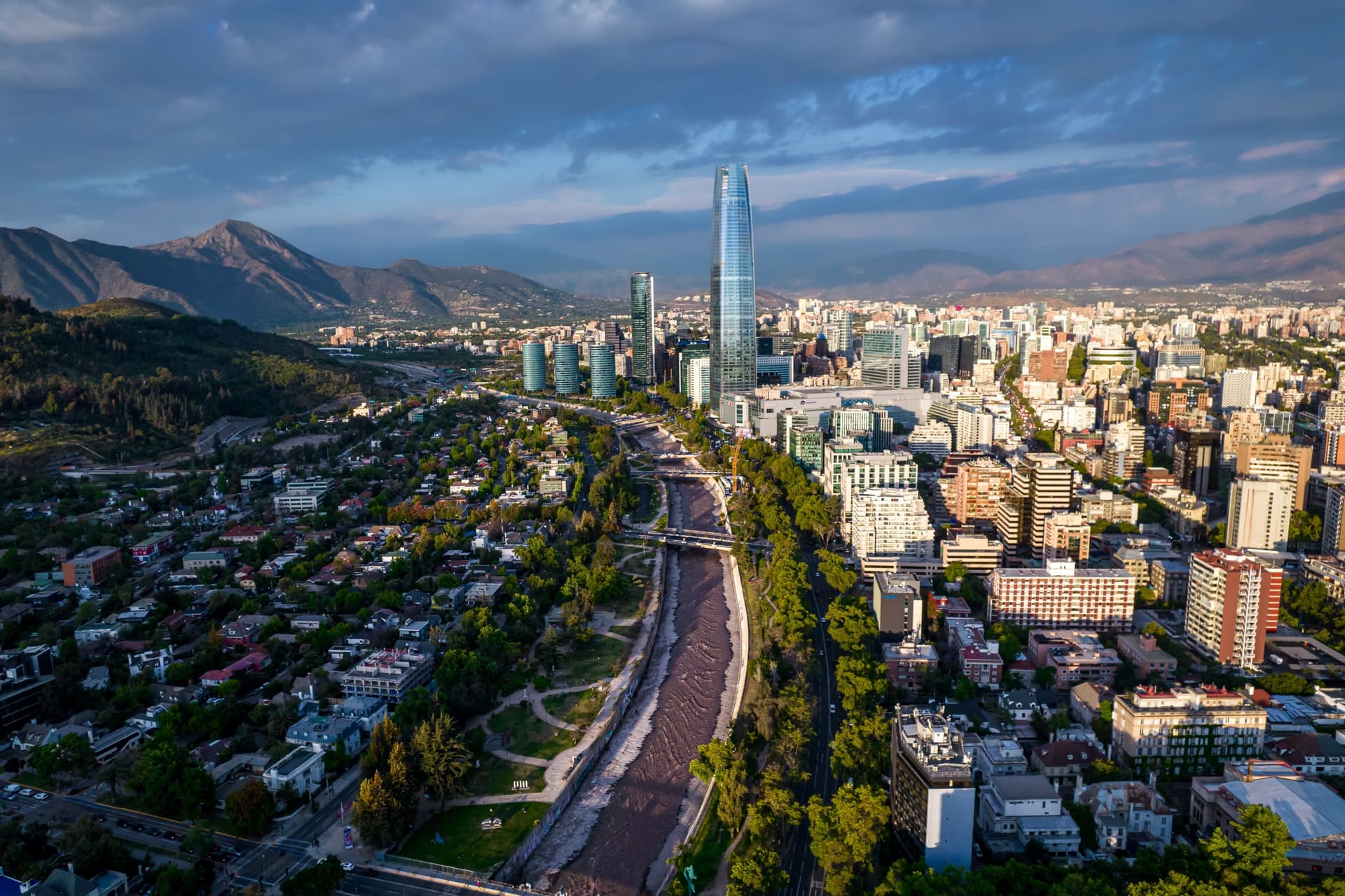
Santiago is located in Chile's central valley. The city is surrounded by the Andes Mountains to the east and the Chilean coast range to the west. It enjoys a spectacular view of snow-capped peaks, visible for most of the year. This geographical position gives Santiago, Chile a Mediterranean climate with hot, dry summers. Temperatures can reach 30°C (86°F). Winters are cool and humid, with temperatures sometimes dropping below 0°C (32°F).
Culture and Heritage
Santiago, Chile is a true cultural crossroads where art, music, and literature hold a special place. The city is home to numerous museums, theaters, and art galleries, some of the most important being:
- The National Museum of Fine Arts
- The Museum of Contemporary Art
- The Museum of Memory and Human Rights
Santiago's historic center, with its well-preserved colonial buildings, bears witness to Spanish heritage. The Plaza de Armas, the historic heart of the city, is surrounded by iconic monuments such as the Metropolitan Cathedral and the Palacio de la Moneda, seat of the Chilean government. On this square, you can also see statues, including ones dedicated to indigenous peoples and to Pedro de Valdivia.
Moreover, the Lastarria neighborhood is another point of interest, renowned for its cobblestone streets, charming cafés, and artisan shops.
How to Get There
By Air
Comodoro Arturo Merino Benítez International Airport is Chile's main gateway, connecting Santiago to major cities around the world. It is located about 15 km from the city center.
By Bus
If you are in one of Santiago's neighboring countries such as Argentina, Perú, or Bolivia, it is possible to reach this city by bus. This mode of transport is quite lengthy, but can be an economical or interesting option for exploring border regions.
By Car
If you are already in South America, you can also drive to Santiago, Chile. The main roads are in good condition, notably the Panamerican Route (Route 5 in Chile), which connects Santiago to other major cities.
By Boat
It is also possible to arrive in Santiago by cruise ship. Simply dock at the port of Valparaíso and take a ground transfer of approximately 1.5 hours to the capital.
Santiago, Chile Today
Santiago, Chile is the economic engine of the country. The city is the financial center of Chile, housing most banks, financial institutions, and headquarters of major national and international companies. The finance, commerce, and services sectors dominate the city's economy. However, the city is also an important hub for Chile's mining industry, especially copper, of which the country is one of the world's leading producers.
The city has experienced rapid growth over the past decades, with urban development marked by the construction of skyscrapers, particularly in the Sanhattan business district. Built in 2014, the Torre Sky Costanera, with its Gran Torre Santiago tower, is the tallest building in Latin America, standing 62 stories high.
Despite its many assets, Santiago, Chile faces several challenges, particularly air pollution. This reaches concerning levels in winter due to thermal inversion, a phenomenon accentuated by the city's encirclement by mountains. Managing rapid urbanization and demographic growth is also a major issue for the metropolis's sustainable development.
In response, efforts are being made to improve air quality, notably through the promotion of public transportation and renewable energy. Santiago, Chile is also engaged in urban reforestation and green space protection initiatives.
Santiago, Chile has a well-developed transportation network, with a modern metro system considered one of the best in Latin America. This network extends across several lines, covering much of the city and facilitating daily commutes for Santiaguinos (Santiago residents). Santiago, Chile is also served by a public bus system integrated with the metro, as well as by a network of well-maintained roads and highways.
Furthermore, it is possible to opt for taxis to move through the city. You can also rent a car to visit various sites independently. Note that roads and streets are well-maintained, allowing for safe driving.
Attractions and Activities
To discover Santiago's attractions, you can explore the streets and many neighborhoods of the city, such as:
- The Italian Quarter
- The Franklin Quarter
- The Yungay Quarter
- The Providencia Quarter
- The Las Condes Quarter
- The Brasil Quarter
- The Vitacura Quarter
Santiago is also renowned for its gastronomy, which reflects the country's cultural diversity. Traditional markets, particularly the Mercado Central, offer an immersion into Chilean cuisine. Neighborhoods like Bellavista are known for their lively nightlife, with bars, restaurants, and clubs attracting a varied clientele.
Visitors can also visit the city's other museums, including:
- La Chascona (the house of poet Pablo Neruda)
- The Chilean Museum of Pre-Columbian Art
- The Museum of Visual Arts (MAVI)
- The Gabriela Mistral Museum of Education (or Chile's Pedagogical Museum)
- The Artequin Museum
- The Railway Museum
- The Natural History Museum
Santiago, Chile has several urban parks such as:
- Cerro San Cristóbal
- Cerro Santa Lucia
- Quinta Normal Park
- Metropolitan Park
- Cerro Los Gemellos
- Araucano Park
- O'Higgins Park
- Cerro Chacarillas
- Forestal Park
- Vespucio Oriente Park
- Almagro Park
- Bicentennial Park
Throughout the neighborhoods, it is also possible to visit interesting sites such as:
- The planetarium
- The municipal library
- The Bá'Haí Temple of South America
- The Fantasilandia amusement park
For winter sports enthusiasts, they can hit the slopes at El Colorado and Farellones ski centers to the east of the capital. Valle Nevado is also the country's most famous winter resort and boasts the largest ski area in Latin America. It is equipped with tourist infrastructure and offers various services.
Hiking and trekking enthusiasts will enjoy a trip to the Río Clarillo National Reserve. Exploring the trails of this protected area allows you to discover breathtaking landscapes and enjoy the refreshing, cold waters of the mountain range. It is also an opportunity to go rafting down the Clarillo River. During a hike around Santiago, visitors can visit mountain villages and engage in other activities such as rock climbing, horseback riding, cycling, and more. If you have time, be sure to take a break and relax at the hot springs of Baños Colina and Baños Morales.
Want to discover this destination?
Our local advisors design your tailor-made trip.