Huaraz and the Cordillera Blanca
Huaraz and the Cordillera Blanca
At the foot of the Cordillera Blanca, Huaraz is the base for Peru's most spectacular treks: Lake 69, Santa Cruz, Pastoruri and Chavín de Huántar.
City: Huaraz
Province: Huaraz
Region: Ancash
Country: Pérou
Area: 2,492 km²
Population: 131,377 inhabitants
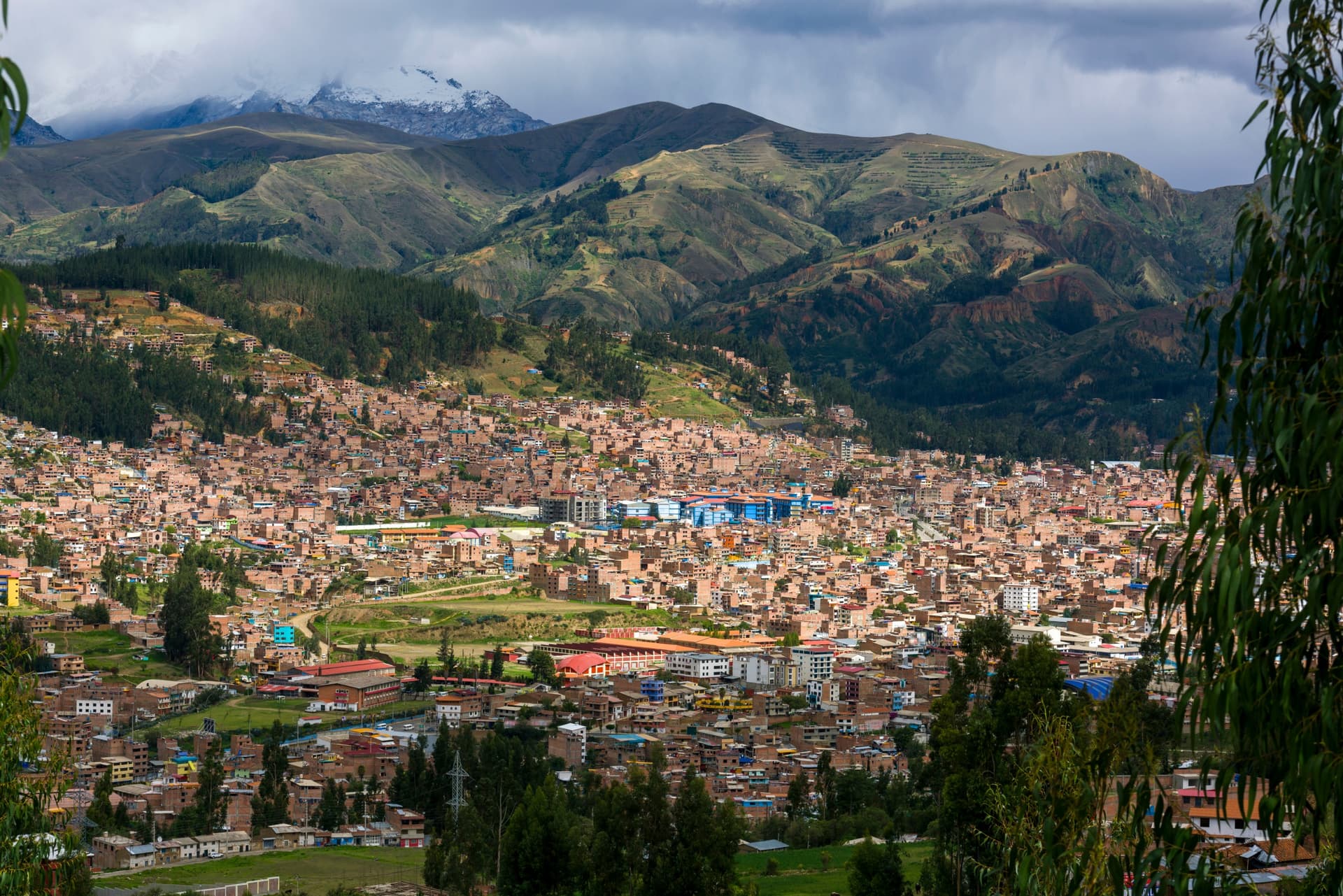
The Switzerland of the Andes, the Chamonix of the Andes, a mountain paradise surrounded by the world's highest tropical mountain range… Huaraz lives up to every one of these nicknames with flying colours! As the capital of the Ancash region, the city has experienced sustained economic growth since the exploitation of the Pierina gold mine in 1996. Nestled between the Cordillera Blanca and the Cordillera Negra, Huaraz is known above all for its towering peaks that brazenly pierce the clouds, making it an extraordinary destination for trekking and adventure. Pure mountain air, the magic of untamed nature and the thrill of reaching high altitude draw thousands of foreign visitors to its territory. Emerald lakes and glaciers await you, along with rich flora to feast your eyes on, and you'll feel on top of the world when you summit the Huascarán… Book your flight without delay and spend an unforgettable stay in Huaraz, the jewel of the Peruvian Andes.
Huaraz, the Mountaineers' Crossroads
Huaraz is the capital of Ancash, a rolling and mountainous region in northern Pérou, 400 km by road from Lima. Its capricious terrain works in its favour: on one side, its location in the heart of the Callejón de Huaylas valley explains the success of agritourism. Children will be thrilled to meet llamas and guinea pigs; on the other hand, the double mountain belt formed by the Cordillera Blanca and the Cordillera Negra, adorned with majestic snow-capped peaks approaching 5,000 m, welcomes mountaineers and adventure lovers. In the Huascarán National Park, lakes, lagoons, canyons and ice fields succeed one another in a breathtaking wild tableau. Finally, a stay with local families opens doors to countless cultural discoveries: women wear traditional clothing that reveals their ethnicity, marital status or social rank. Local recipes, such as grilled trout or honey syrups, are pure and simple delights for the palate.
History
The Callejón de Huaylas valley, inhabited by humans since 1500 BC, is considered the birthplace of Chavín civilisation. The first Chavín tribes came from the Amazonian foothills, at the mountain chain east of the Cordillera Blanca. Their culture was dominated by the worship of the puma and jaguar, two great Andean felines. They also revered birds of prey such as the condor, falcon and Harpy eagle, as well as crocodiles and snakes. To appease these terrifying gods, priests obeyed strict ceremonial rites. Entering a trance involved stupefying plants such as the San Pedro cactus. During the Chavín era, ceramics were highly advanced. Gold and bronze accessories were also abundant. Although Chavín culture disappeared around 300 BC, it left a great legacy, including the Chavín de Huántar archaeological complex, which UNESCO described as "one of the oldest and most famous pre-Columbian sites in the world". Around the 1st century, the Recuay or Huaylas culture emerged.
Spanish rule challenged local civilisation. The conquistadors reorganised Indian villages into Huaraz in 1574. The city played a crucial role in Pérou's independence by welcoming and supplying Simón Bolívar's army. In 1970, the city was hit by an extremely intense earthquake that destroyed 95% of its infrastructure. As part of its reconstruction, financial aid poured in from many countries, allowing the city to quickly rise from the ashes. Hence the nickname "capital of international friendship" sometimes given to Huaraz.
The mountain massifs of the Andes, particularly the Cordillera Blanca, form the backbone of regional tourism.
What to See in Huaraz?
The Cordillera Blanca
A must-see from Huaraz, this mountain range will delight even the most demanding mountaineers. Indeed, some of its peaks reach altitudes of over 6,000 m. It forms a natural barrier between the desert coast and the Amazon basin.
Paron
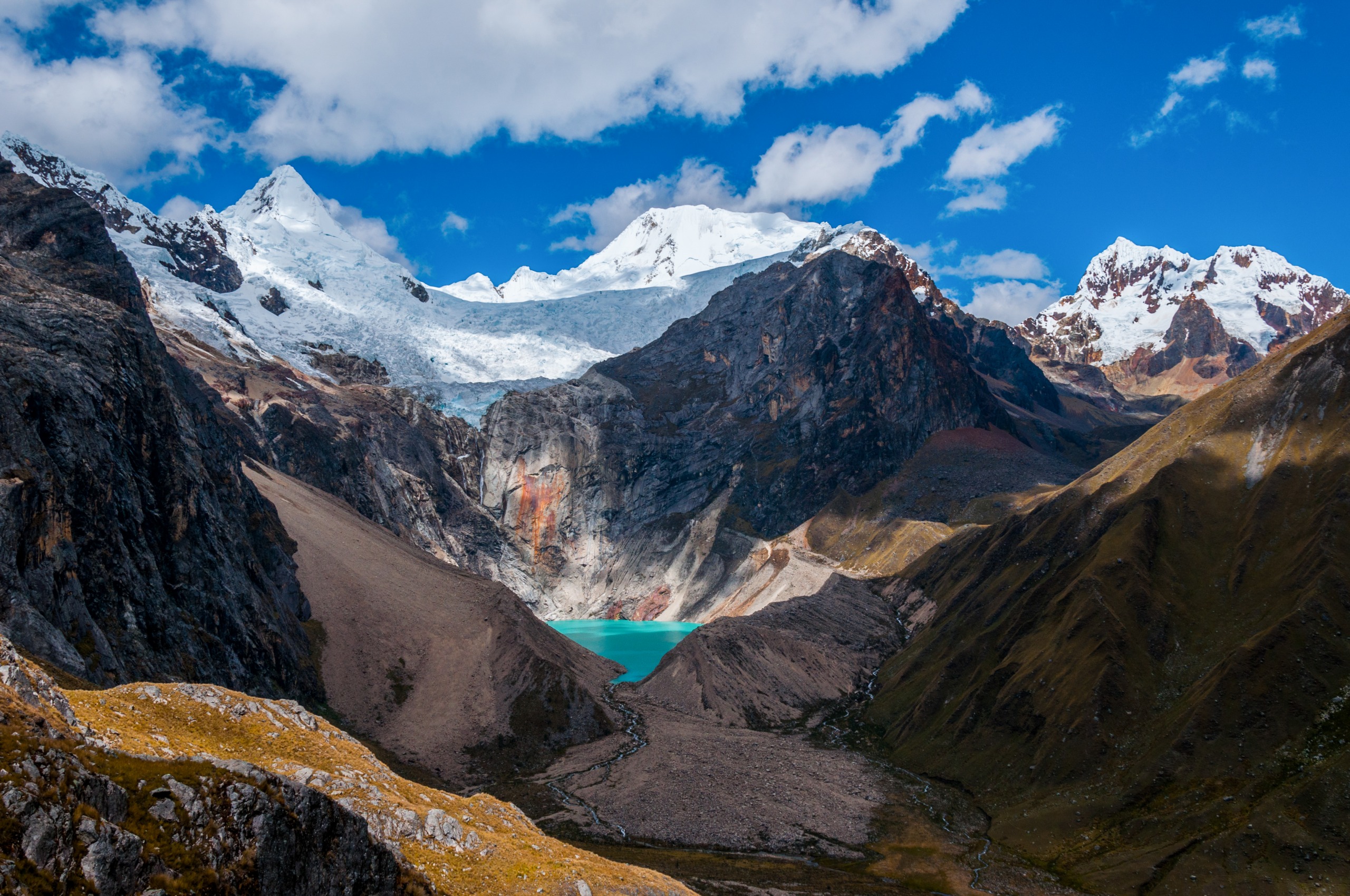
Another natural wonder, Paron is a stunning lake in the Cordillera Blanca. It will charm you with its splendid turquoise waters crowned by beautiful snow-capped peaks such as Huandoy (6,395 m), Caraz (6,025 m), Chacraraju (6,112 m) and Artesonraju (6,025 m).
Huascarán National Park
A hidden treasure of the Cordillera Blanca, this park is home to 296 lakes and 663 glaciers. Covering a total area of 340,000 hectares, Huascarán National Park brings together Pérou's highest peaks, namely Huascarán, Huandoy and Alpamayo. An ideal place to encounter Andean condors, vicuñas, guanacos, Puya Raimondii and queñual trees. To get a fabulous snapshot of Peruvian biodiversity, visiting Huascarán Park is a great idea.
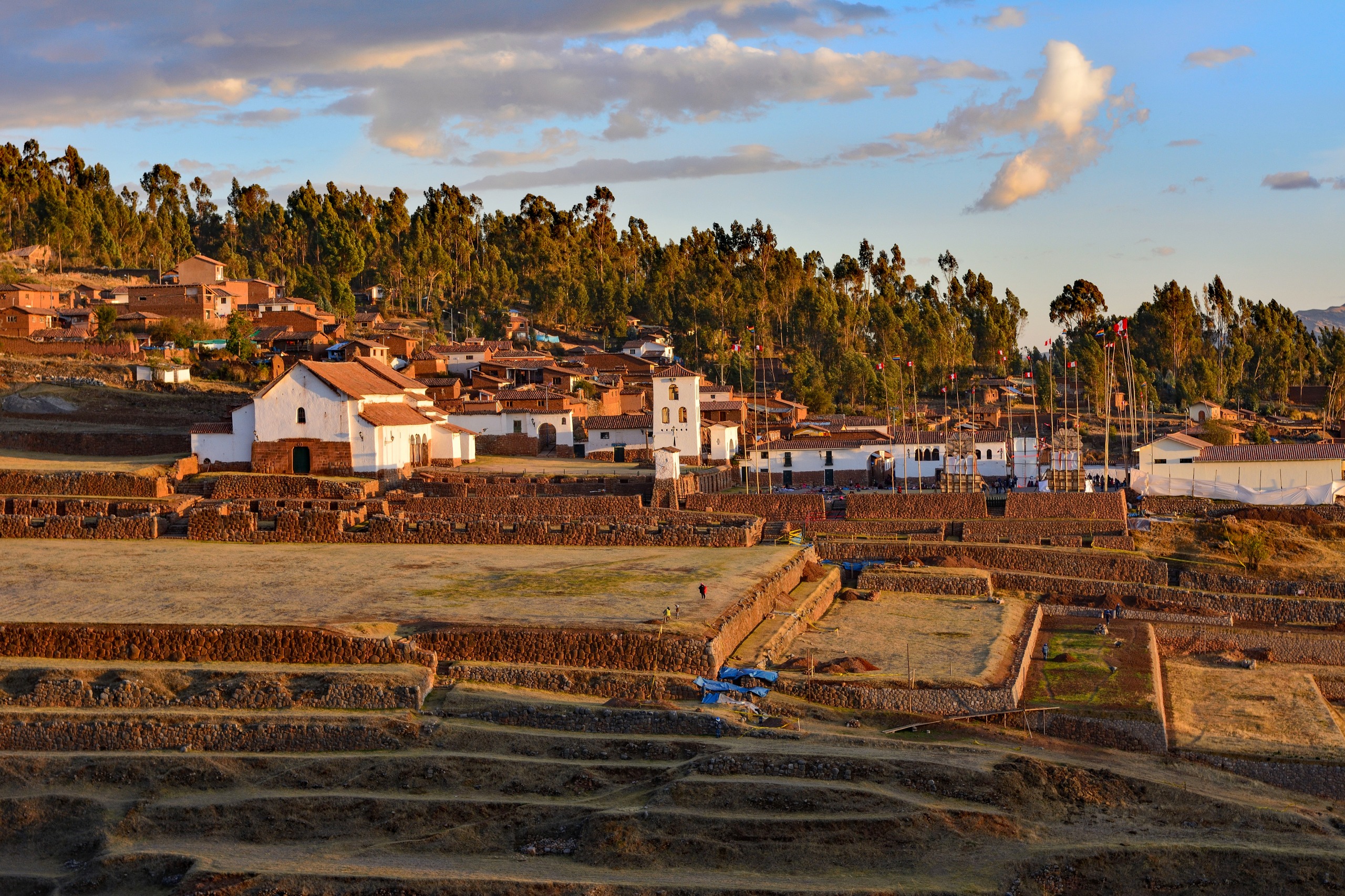
The Chavín de Huántar Archaeological Complex
It was the ceremonial centre of the ancient Chavín tribe. Built in 1200 BC, it was discovered by Julio C. Tello in 1919. It includes temples, galleries and magnificent stone structures that create a very attractive ensemble. In 1985, the complex was declared a UNESCO cultural heritage site of humanity.
What to Do in Huaraz?
Huaraz is the ultimate destination for adventure sports: hiking, horseback riding, trekking, canyon abseiling and canoeing.
For the more experienced, the snow-capped peaks of Pérou offer mountaineering, paragliding, mountain biking, white-water rafting and zip-lining. Pérou's highest mountain range is located here: Huascarán, which rises to 6,768 m altitude.
At the same time, you can enjoy the beautiful rural landscape framed by the mountain setting. Make the most of the region's various hot springs and its fabulous lakes.
The Giants of the Andes
Discover the region's various mountain peaks, starting with Mituraju at 5,750 m high. Among the most difficult climbs are Rondoy (5,870 m), Jirishanca (6,094 m), Yerupaja (6,617 m), a real challenge for the most determined mountaineers. Huaraz is also home to viewpoints and dozens of spectacular lagoons and glaciers. All sites that make the fortune and pride of the Andes mountain range.
Lake 69
Ready for a 900 m elevation trek? It will take you about 2 hours 30 minutes to climb the mountain and reach Lake 69. Camping is also possible, provided you bring tents and all necessary equipment. An adventure at the end of the world, most enriching.
Llanganuco Lake
Two twin lakes await you there. This glacier-fed lake is located in a narrow valley bordered by the Huandoy and Huascarán mountains. With its turquoise-green waters, it captivates travellers from around the world. Its waters complement the colour of the dense queñual forests.
Festivals in Huaraz
To showcase the region's geographical assets, the mountaineering or climbing week is often organised towards the end of June. It is usually held in the Callejón de Huaylas, the world's highest mountain range.
In Huaraz, Holy Week is celebrated in a particular way. Andean processions greet the Lord of the Palms with palm fronds. Then, to represent Judas's betrayal, they use a cart that they escort. A large cross symbolises Christ's death.
Climate
Hidden away in the Andes, the Huaraz region enjoys a cool summer and cold, dry winter. The average annual temperature is around 16°C. Most rainfall falls between October and late April, which corresponds to the warm season. March is the wettest month. Nevertheless, climate change explains why the seasons have become less pronounced than in the past. What troubles farmers brings joy to tourists who can thus enjoy their holidays during the dry summer season. Of course, you will experience rainy days but the days are sunny. Otherwise, the best time to visit Huaraz is between May and September: it's the dry season, when the city is enlivened by several cultural and religious festivals. But be sure to pack appropriate clothing, as temperatures can drop to 0°C.
There are no direct flights to Huaraz from major European capitals. To reach Huaraz, the traveller must book a flight to Lima and land at Jorge Chávez Airport, Pérou's main international airport, which opened in 1960. From there, you will take a second flight to Anta, a small village in the Ancash department. Anta Airport, otherwise known as Comandante Germán Arias Graziani Airport, is 27.5 km north of Huaraz. A taxi can take you directly to the city for around $12.
If you plan to drive to Huaraz in your own car, allow around 8 hours of driving between Lima and Paramonga. In doing so, you will cover 200 km along the Río Santa in the south of the Callejón de Huaylas valley.
In town, you can get around by bus, combi or taxi. To get closer to the local population, we recommend the combi, a sort of traditional bus that honks constantly and where the conductor shouts at every stop. Better to laugh at it than be bothered by it. Renting private cars is also an option for the most demanding.
Want to discover this destination?
Our local advisors design your tailor-made trip.