Waqrapukara
Waqrapukara
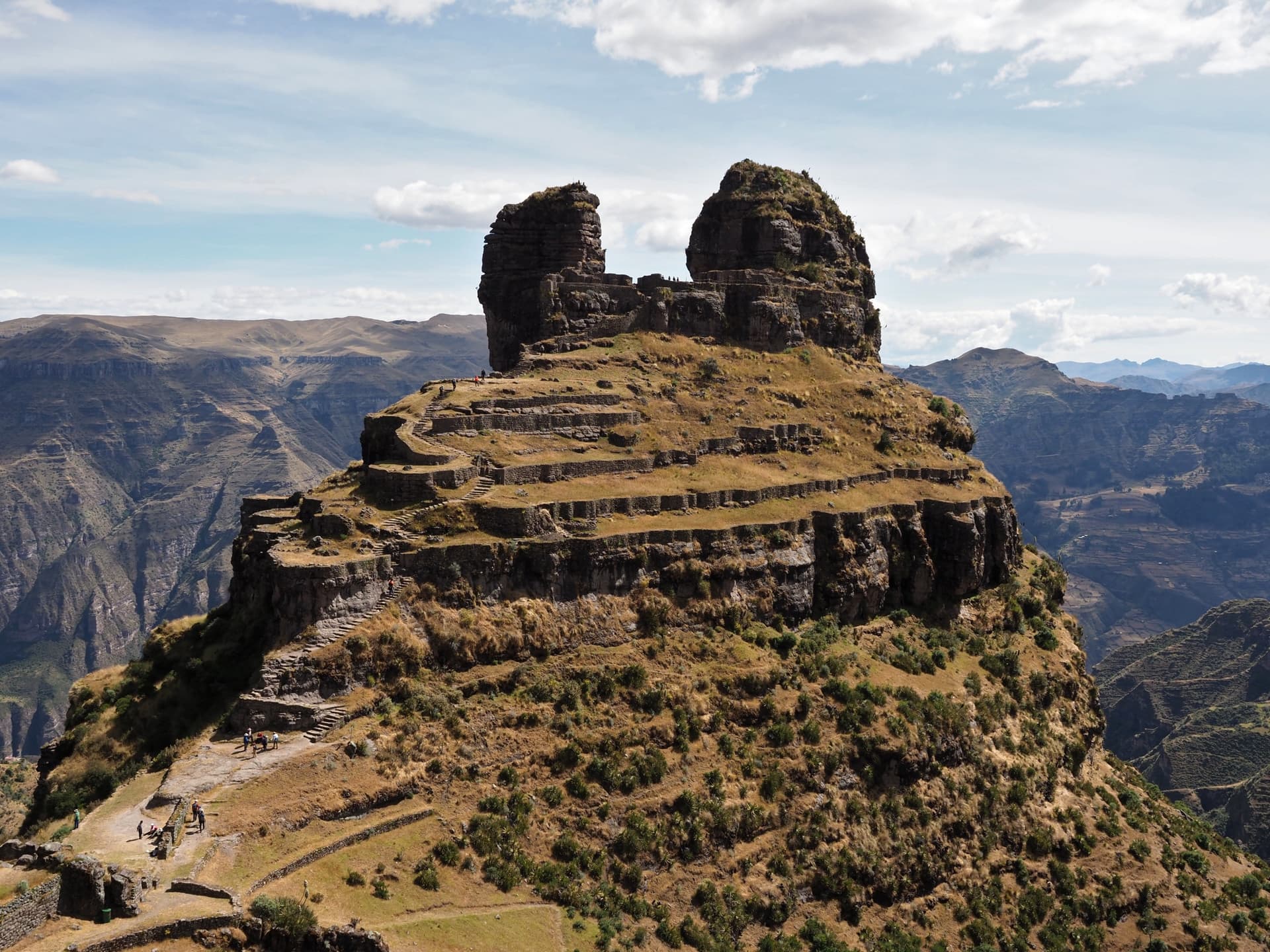
Incan fortress with two stone horns, perched at 4,300 m above the Apurímac canyon, approximately two hours' walk from Sangara or Acomayo.
About a hundred kilometers south of Cusco, Waqrapukara rises with a singular silhouette above the Apurímac canyon. The site owes its name — "fortress with horns" in Quechua — to two rock formations pointing skyward that overlook a complex of terraces and Incan enclosures. Less frequented than Machu Picchu or Sacsayhuamán, it combines archaeological interest, high-altitude trekking and panoramic views of the southern Andes.
Why visit Waqrapukara
Three elements set Waqrapukara apart from other archaeological sites in the Cusco region. First, its remarkably well-preserved Incan architecture, integrated into a rocky spur at approximately 4,300 meters altitude. Next, the hike to reach it — about two hours on ancient Incan trails from nearby villages — which limits crowds and preserves the site's atmosphere. Finally, the sweeping view over the Apurímac canyon, one of Peru's deepest.
The site suits travelers already accustomed to altitude and experienced with steep terrain walking. It fits naturally into a wider itinerary around Cusco, as a complement to the Sacsayhuamán fortress or the Sacred Valley sites.
Site history
Waqrapukara testifies to a long succession of Andean occupations. The earliest traces date back to the Pukará culture, followed by Tiawanaku, Huari, and then the Canchis (or Qanchis), whose ceramics found on-site have been dated to around 800 CE. The nearby town of Pomacanchi, particularly active during the Huari period, attests to the regional importance of the area long before the Incas arrived.
Under the Incan Empire, Waqrapukara was integrated into the network of roads (Qhapaq Ñan). Historical sources mention a triple function: noble residence, sanctuary, and probable astronomical observation center — this latter hypothesis, often repeated, remains debated by scholars. Forgotten for centuries, the site was recognized as national cultural heritage by the Peruvian Ministry of Culture in 2017, which reinforced its protection.
What to see on the site
The two stone horns
At the entrance to the complex, two rock sculptures shaped like horns — or ears, depending on interpretation — give the place its name. They dominate the entire architectural complex and constitute the most immediate visual landmark.
Incan architecture
The remains include agricultural terraces, enclosures, characteristic trapezoidal niches, and several ceremonial platforms. The quality of the stonework, comparable to that of major Incan sites, testifies to the importance given to this location.
The Apurímac panorama
From the summit plateau, views extend across the Apurímac river canyon and surrounding Andean ranges. It is a privileged observation point for local wildlife: Andean condors in flight, vicuñas on the heights, and the high-altitude flora typical of the puna.
Practical information
- Altitude: approximately 4,300 meters. Prior acclimatization of several days in Cusco (3,400 m) is essential.
- Difficulty: moderate to demanding hike, approximately two hours' walk each way on steep terrain.
- Equipment: hiking boots, layered clothing, windproof jacket, sun protection (hat, sunglasses, sunscreen), 1.5 to 2 liters of water, snacks, headlamp in case of late return.
- Entrance fee: an access ticket is generally collected on-site; moderate rate, payable in soles.
- Camping: some visitors camp nearby, but as the site is protected, it's best to inquire with local authorities before any camping.
- Guide: recommended for site interpretation and trail safety, particularly during the wet season.
When to go
The most favorable window extends from May to September, during the Andean dry season: clear skies, passable trails, cool but stable temperatures. Nights remain cold at this altitude; bring warm clothing. From December to March, the rainy season makes trails slippery and visibility unpredictable; excursions are possible but less comfortable. April and October are interesting transition months, with lighter crowds.
How to get there
Waqrapukara is reached from Cusco via the villages of Sangara or Acomayo, starting points for trails leading to the ruins.
- Organized tour: the simplest option. Cusco agencies offer day trips including transport, guide and sometimes meals. Very early departure, evening return.
- Private car or taxi: allows you to reach Sangara or Acomayo depending on your itinerary. A four-wheel-drive vehicle is recommended during the rainy season.
- Local bus: regular connections between Cusco and Acomayo, followed by taxi or shared minibus transfer to the trailhead.
From Sangara or Acomayo, allow about two hours' walk on ancient Incan paths before reaching the ruins. The slope is continuous but the route is clear.
What to combine in the region
Waqrapukara integrates well into a wider stay around Cusco. Nearby, the Church of Andahuaylillas, sometimes called the "Sistine Chapel of the Andes," offers a striking contrast to the austerity of the Incan site. Landscape enthusiasts will extend to Palccoyo and its rainbow mountains, a more accessible alternative to Vinicunca. In the Sacred Valley, the circular terraces of Moray illustrate another facet of Incan agricultural genius, while Sacsayhuamán, at the gates of Cusco, completes understanding of the empire's military and ceremonial architecture.
Frequently asked questions
Frequently asked questions
Preparing your Peru trip
Waqrapukara fits ideally into a circuit around Cusco, the Sacred Valley, and less-visited sites of the southern Andes. To build a custom itinerary combining archaeology, trekking and encounters with local communities, explore our Peru journeys.
Interested in this visit?
We can include it in your personalised itinerary.