San Pedro Church
San Pedro Church
Facing Cusco's central market, San Pedro Church brings together Andean baroque façade, gilded altarpiece and works from the Cusqueñian school within a 17th-century building.
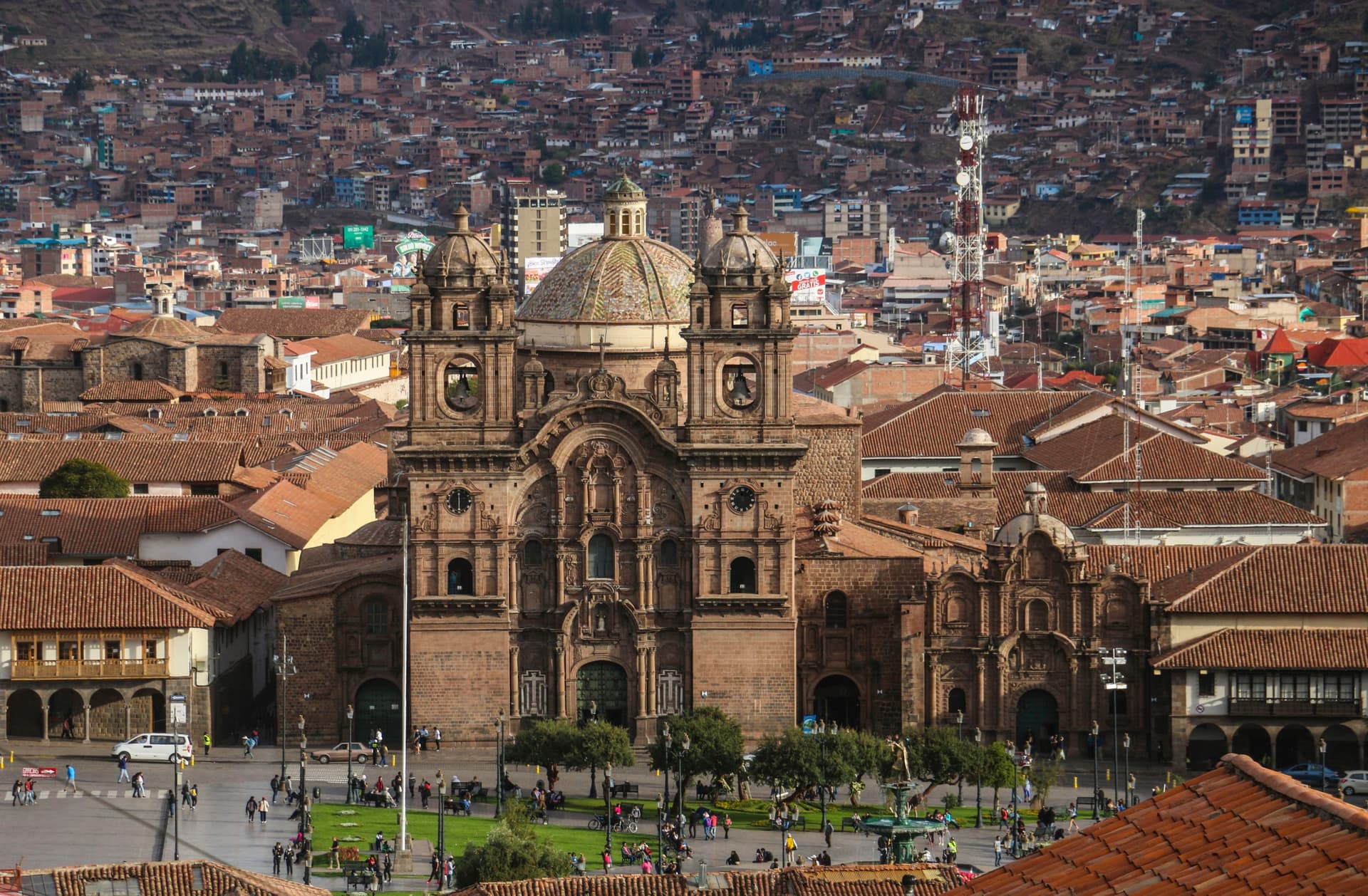
Facing the San Pedro market, a ten-minute walk from Cusco's Plaza de Armas, San Pedro Church stands as one of the historic centre's major religious edifices. Its Andean baroque façade, gilded altarpiece and enduring role as an active place of worship make it a natural stop for those interested in Cusqueñian colonial art and Andean popular devotions.
Why visit San Pedro Church
Three elements distinguish this church from Cusco's other colonial temples. First, its singular history: it was built on the site of the former Cusco hospital for indigenous peoples, founded in 1556, and rebuilt after the 1650 earthquake that left only a single hospital room standing. Next, its immediate proximity to the central market, which allows you to combine spiritual exploration with immersion in daily Cusqueñian life. Finally, its works from the Cusco school, including paintings attributed to Marcos Ribera and portraits of Bishop Mollinedo, its principal benefactor.
Church history
The site's origins date to 1556, with the founding of a hospital for indigenous populations. Following colonial practice, the establishment was equipped with a chapel, built in 1572. The 1650 earthquake, which devastated Cusco, caused all the buildings to collapse except for one hospital room. The structure was partially rebuilt in 1657 under the direction of priest Francisco de Soria.
Construction of the present church began in 1688. It was financed by the family of Manuel de Mollinedo y Angulo, Bishop of Cusco, and entrusted to architect Juan Tomas Tuyro Túpac, a figure of Andean architectural mestizaje. The building weathered the centuries not without damage: the 1950 earthquake, studied by the Kubler mission, caused cracks in the arches and dome towers. Even today, the north tower leans slightly toward Hospital Street, a visible testimony to that tremor.
What to see inside and on the façade
The Andean baroque façade
The façade combines Corinthian columns and decorative niches in a composition representative of Andean baroque. The building measures approximately 68 metres long by 33 metres wide and is entirely built of stone. The two lateral towers symmetrically frame the central portal and remain visible from several surrounding streets.
The main altarpiece and lateral chapels
Inside, the main altarpiece, adorned with gold leaf, houses in its centre the venerated image of the Virgin of La Candelaria. Ten lateral altarpieces complete the nave's decoration. The pulpit, carved from walnut wood, is decorated with figures of Saint Paul and Saint Peter.
Paintings from the Cusco school
The church preserves several works representative of the Cusco school, a mestizo pictorial current born in the 17th century. Notable among these are portraits of Bishop Mollinedo and a collection of paintings attributed to Marcos Ribera depicting five apostles.
Practical information
- Location: facing the central San Pedro market, in Cusco's historic centre.
- Access: on foot from the Plaza de Armas, allow 10 to 15 minutes depending on your pace and the altitude. The neighbourhood is also served by the city's taxis.
- Visit duration: 30 to 45 minutes are sufficient to walk around the nave, altarpiece and main works.
- Fee and hours: the church welcomes masses and visitors outside of services. A modest entry fee may be requested for tourist visits. Check on site or with your guide for current hours.
- Dress code: proper attire is recommended as in any place of worship (shoulders covered, silence during services).
When to visit
Two major moments punctuate San Pedro's liturgical year. On February 2nd, the feast of the Virgin of La Candelaria features a procession through the neighbourhood's streets, accompanied by traditional dances and Andean costumes. Around year-end festivities, the cult of the child Manuelito, an Andean effigy of the Christ child, draws numerous faithful: the main blessings take place on December 25th and January 1st. Outside these dates, attendance remains modest and morning light particularly enhances the gilding of the main altarpiece.
Nearby attractions
- San Pedro Market: just across the way, central market for crafts, Andean fruits and popular cuisine.
- Santa Ana Arch: a few minutes' walk, former colonial gate to the neighbourhood.
- Cusco Cathedral: on the Plaza de Armas, the city's principal religious building.
- Coricancha (Santo Domingo): former Inca temple of the Sun integrated into a Dominican convent.
- Q'enko site: Inca sanctuary a few kilometres above the city.
- Sacred Valley: the ruins of Ollantaytambo naturally extend a discovery of Cusqueñian heritage.
Frequently asked questions
Frequently asked questions
Access to services is free, but a modest contribution may be requested for tourist visits to the nave and artworks. Fees and opening hours vary: confirm on site before planning your visit.
Proper attire is expected, as in any place of worship: shoulders covered, trousers or skirts below the knee. Silence is required when a mass is taking place.
The church faces the market: it makes sense to do both. Many visitors start with the church in the morning, then cross the street to lunch at the market's comedores.
Preparing your trip
San Pedro Church fits into a broader cultural itinerary around Cusco and the Sacred Valley. To build a coherent stay integrating colonial heritage, Inca sites and Andean landscapes, consult our trips to Pérou.
Interested in this visit?
We can include it in your personalised itinerary.