Taquile
Taquile
Quechua-speaking island on Lake Titicaca at 3,950 m, Taquile is renowned for its male weaving inscribed by UNESCO and its car-free, hotel-free communal organization.
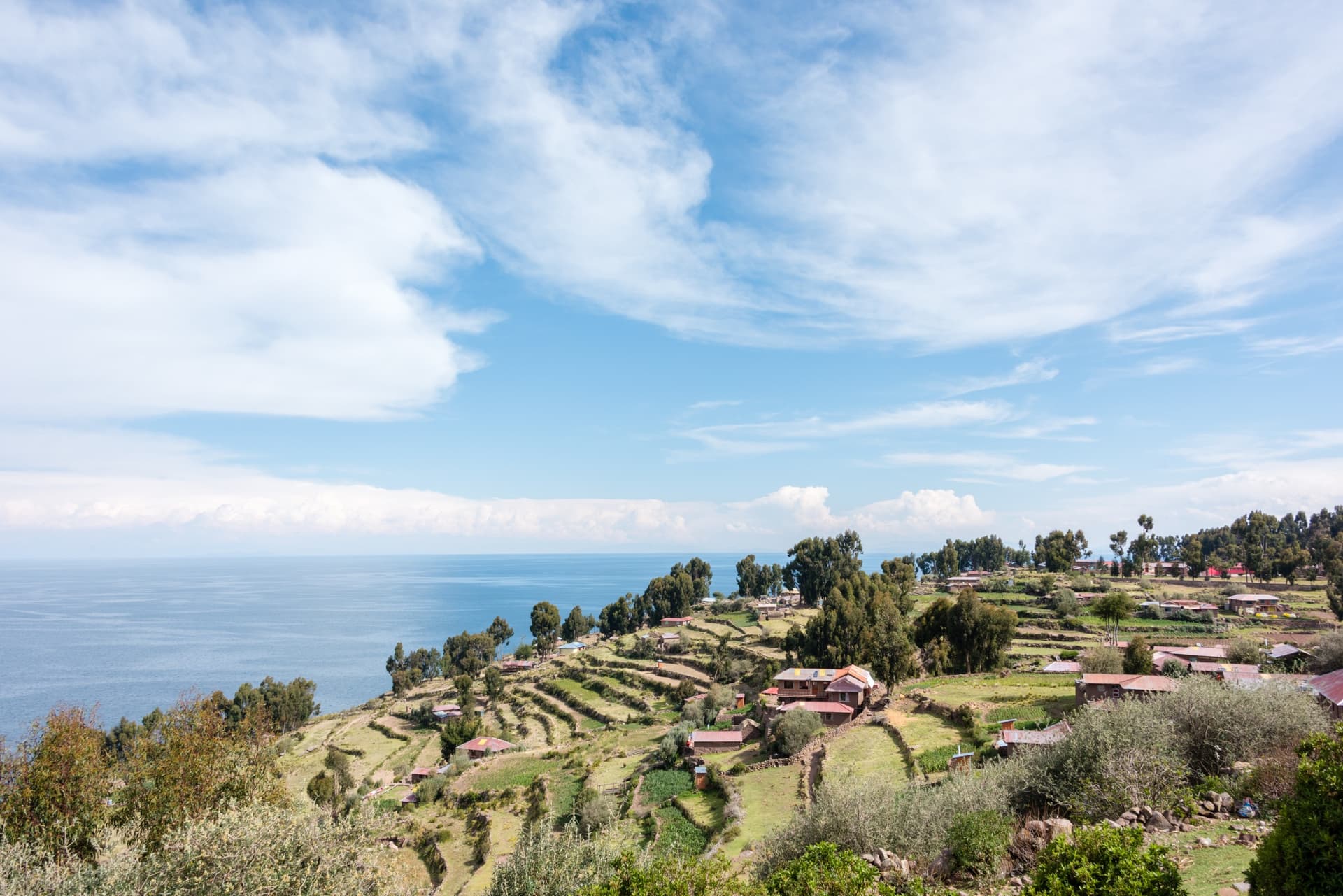
Taquile, or Intika in Quechua, is a Peruvian island on Lake Titicaca covering approximately 5.72 km², with its main village situated near 3,950 m elevation. Inhabited since pre-Incan times, it is today managed by the Quechua-speaking Taquileño community, recognized for its textile craftsmanship inscribed in UNESCO's intangible cultural heritage in 2005. The island is reached by boat from Puno.
Why visit Taquile
Taquile stands apart from other Titicaca islands through its communal organization and textile heritage. Weaving here is exclusively male—a rare practice in Andean societies—while women handle spinning and dyeing wool using mineral sources. This tradition was recognized by UNESCO in 2005 as intangible cultural heritage of humanity.
The island operates without motorized vehicles, paved roads, or conventional hotels. Movement is on foot along terraced paths, and accommodation relies on homestays. A community council settles disputes in the absence of police, and men greet one another by exchanging coca leaves.
History
Taquile has been inhabited since pre-Incan times by peoples connected to Pukara culture, with several archaeological sites still evident today. In the 14th century, the island was integrated into the Inca empire under Pachacútec's reign: the Incas introduced their administrative structures, sun worship, and terraced agricultural systems, while accommodating local practices.
The arrival of the Spanish in the 16th century disrupted this balance. The island was incorporated into the colonial empire, Christianity was imposed, and Taquile reportedly served as a prison during this period. The island remained privately owned until the 20th century. In the 1970s, the Taquileños collectively purchased their land and regained control of their territory—a formative event that explains the current communal organization.
What to see and do
Textile craftsmanship and dress codes
The artisanal market around Plaza de Armas brings together local cooperatives. Among characteristic pieces: the chullo taquileño (ear-flap hat), the chumpi (finely woven belt), and the chuku (women's shawl covering part of the head). Motifs—flowers, alpacas, birds, stars, rivers—encode meanings linked to marriage, abundance, or agricultural cycles.
Dress codes signal marital status: pointed white hat for single men, large red hat for married men. Elders holding important roles wear additional distinctive elements.
Archaeological sites and places of worship
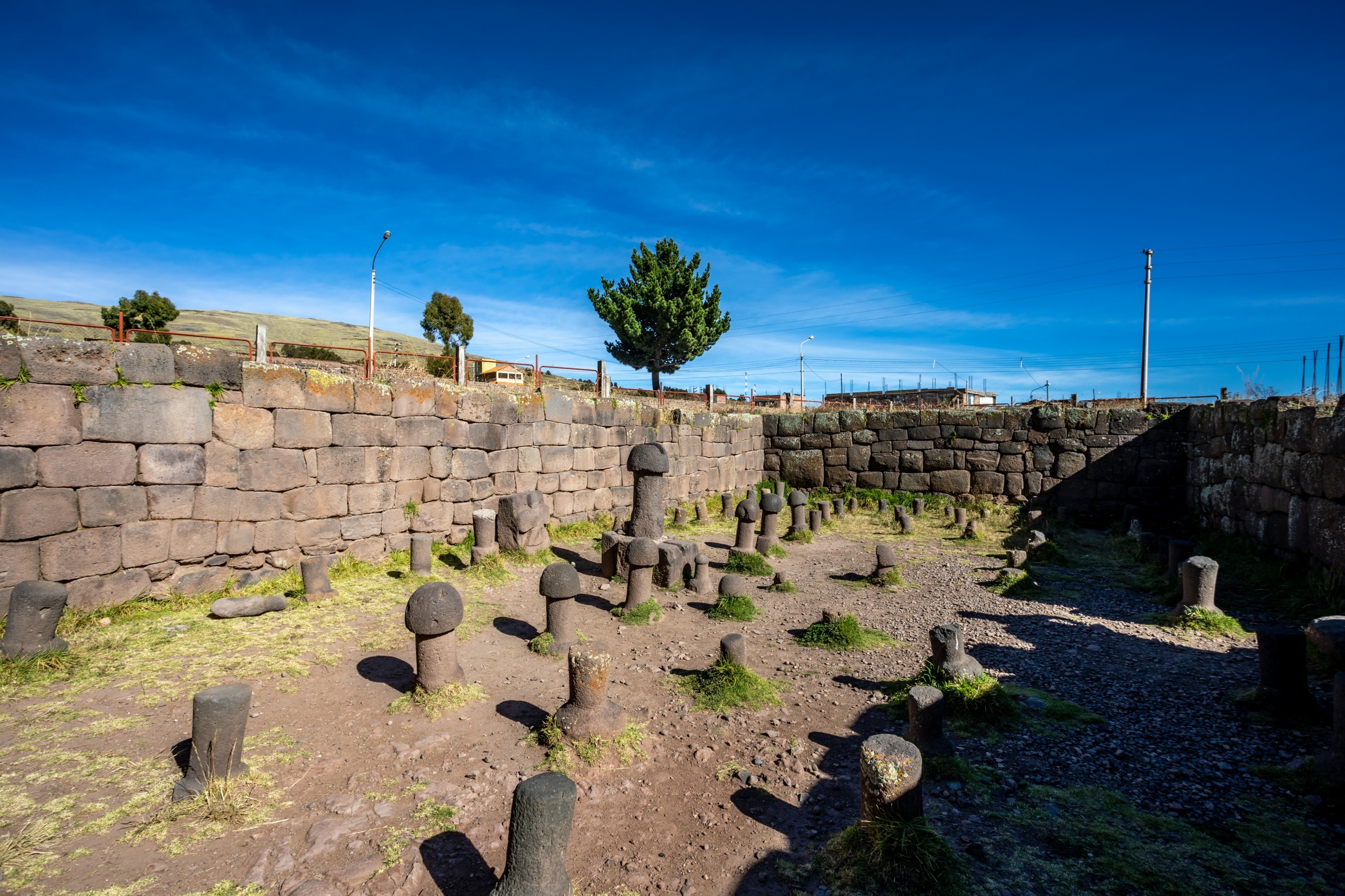
Several pre-Incan sites are accessible on foot: Pukarapata, Quinuapata, Quanopata, and Cruzpata. The temples of Pachamama and Pachatata, dedicated to Mother Earth and Father Earth, remain active ritual sites. Religiously, the island has two Catholic churches (Huayllani and Centre) and an Adventist church in Huayrapata.
Beaches and landscapes
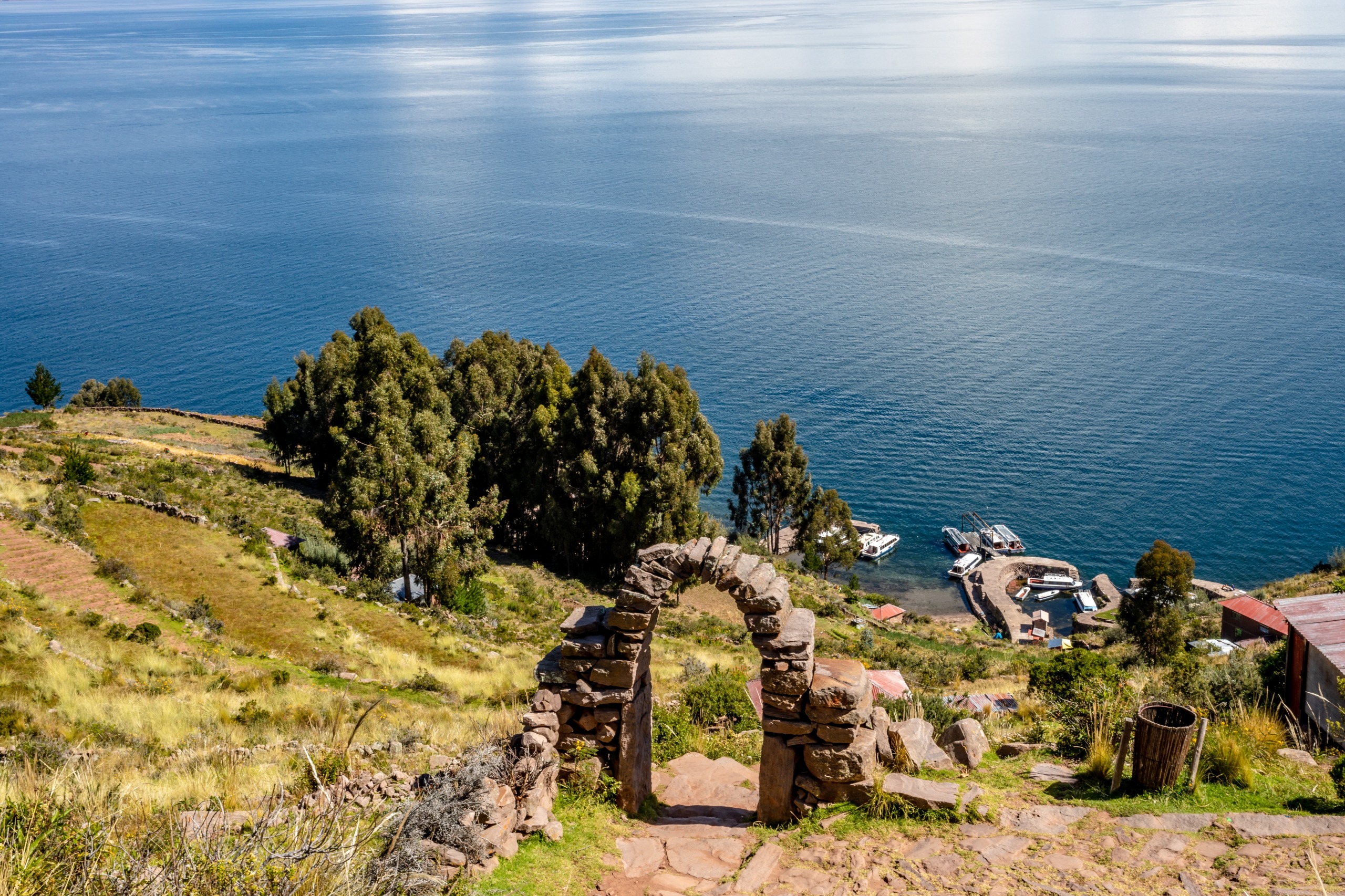
The beaches of Huayllani and Collotta offer rest stops by the lake. Island trails provide views over Titicaca and the Bolivian Royal Cordillera on clear days. Flora includes Kolle (used for roofing and firewood), Muña (medicinal plant), Cantuta (Peru's national flower), and Chukjo (used as natural detergent).
Practical information
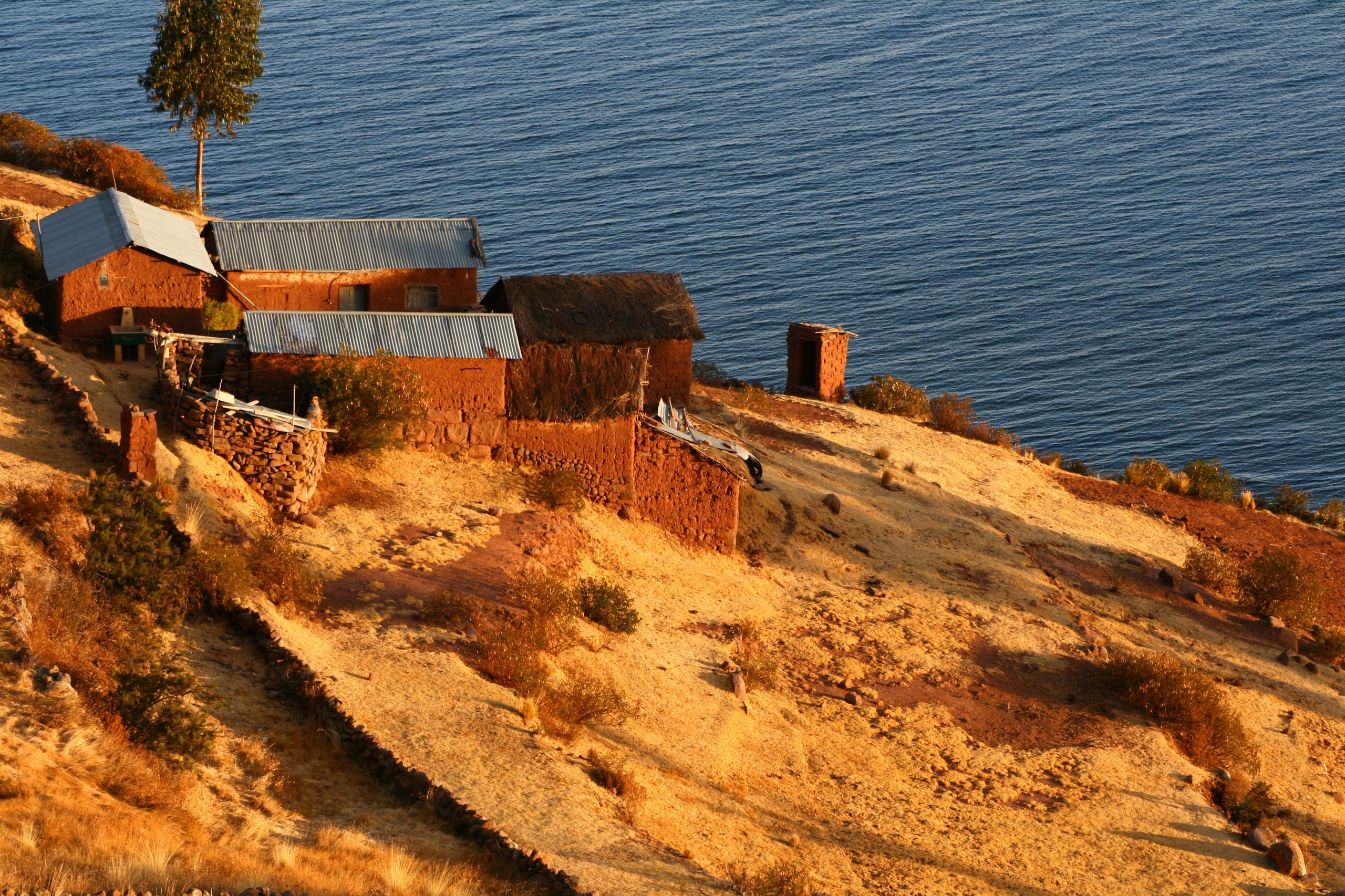
The island can be visited as a day trip or with a one- to two-night homestay, the latter allowing participation in agricultural activities and meals. Main crops are potatoes, quinoa, and barley, grown in terraces. Note: coca is not cultivated on the island; it is imported from Puno and sourced mainly from the Cusco region.
Tourism is managed by the community: visitor numbers are limited, with strict rules on waste and photography. Ask permission before photographing residents. Bring cash in soles; the island has no ATM. Network connectivity remains limited.
When to go
The dry season, May through October, is most favorable: sunny days with temperatures of 15–20 °C, though nights approach 0–5 °C. The rainy season, November through March, concentrates precipitation as often intense but brief showers. The high altitude warrants enhanced sun protection and prior acclimatization in Puno or Cusco.
How to get there
Access is exclusively by boat. From Puno's port, count on approximately 2 to 3 hours by slow boat, less by speedboat. From Amantani island, the crossing takes about 1 hour; from Chifrón, roughly 2 hours. Once landed, you must climb a stone staircase of approximately 220 steps to reach the main village—an ascent to tackle slowly given the altitude.
Nearby
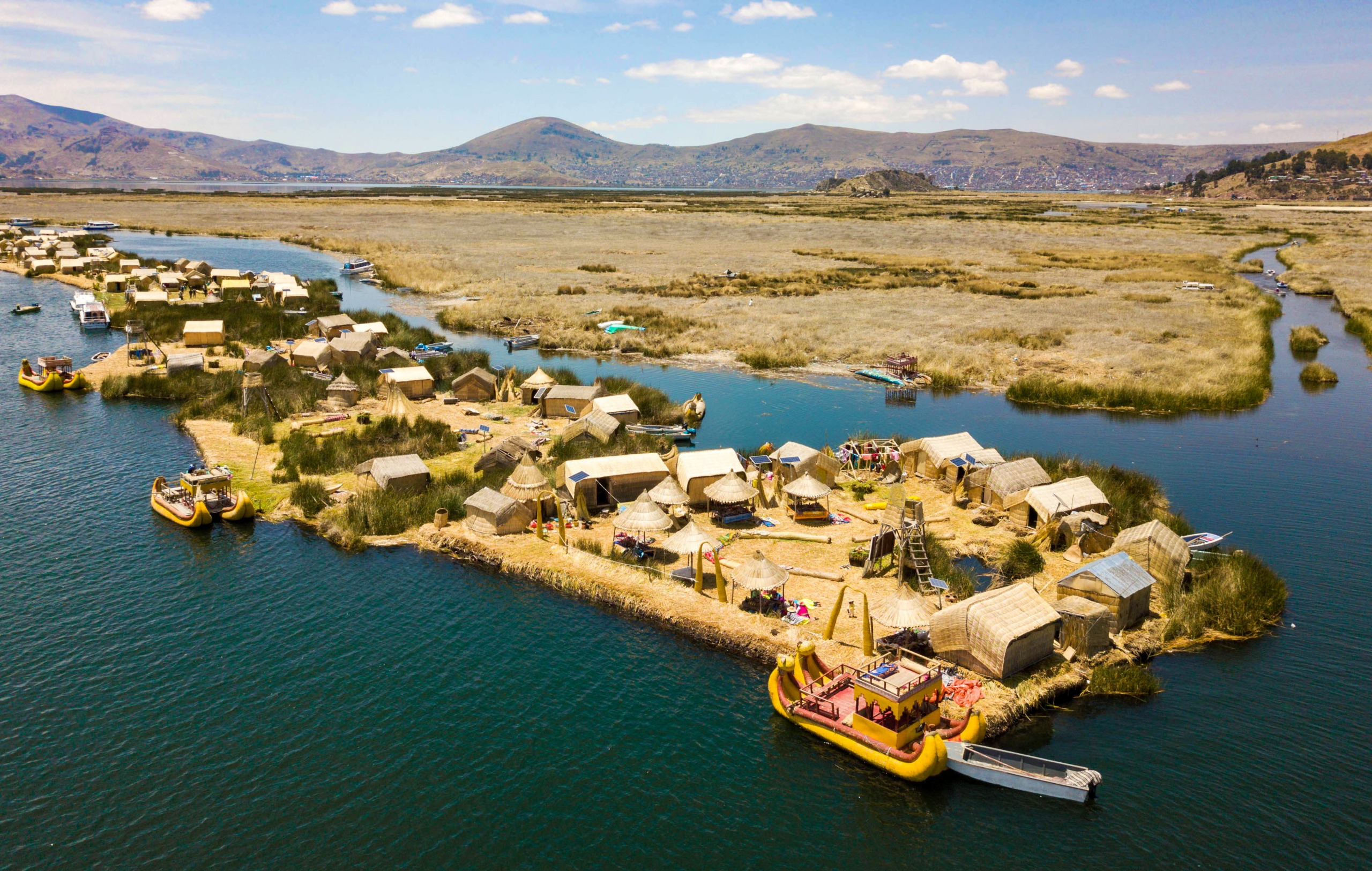
Taquile fits naturally into a Lake Titicaca circuit from Puno. The neighboring island of Amantani often allows an extra night in a homestay, and the Uros floating islands can be visited in half a day. On the lake's northern shore, the village of Ccotos offers a more intimate approach to community tourism. Further afield, in the Sacred Valley, Pisac and Moray complete an Andean itinerary.
Frequently asked questions
Frequently asked questions
A day trip from Puno allows you to see the village, artisanal market, and an archaeological site, though the pace is brisk. For a more complete experience including a night in a homestay and longer walks, allow two days.
The village sits at approximately 3,950 m. The climb from the landing dock is taxing without acclimatization. It is recommended to spend at least two days in Puno (3,800 m) or Cusco before your visit.
There is no hotel on Taquile, but homestay accommodation is organized by the community. Houses are simple (no heating, basic sanitation), meals prepared with local produce. This arrangement is the heart of the island's community tourism.
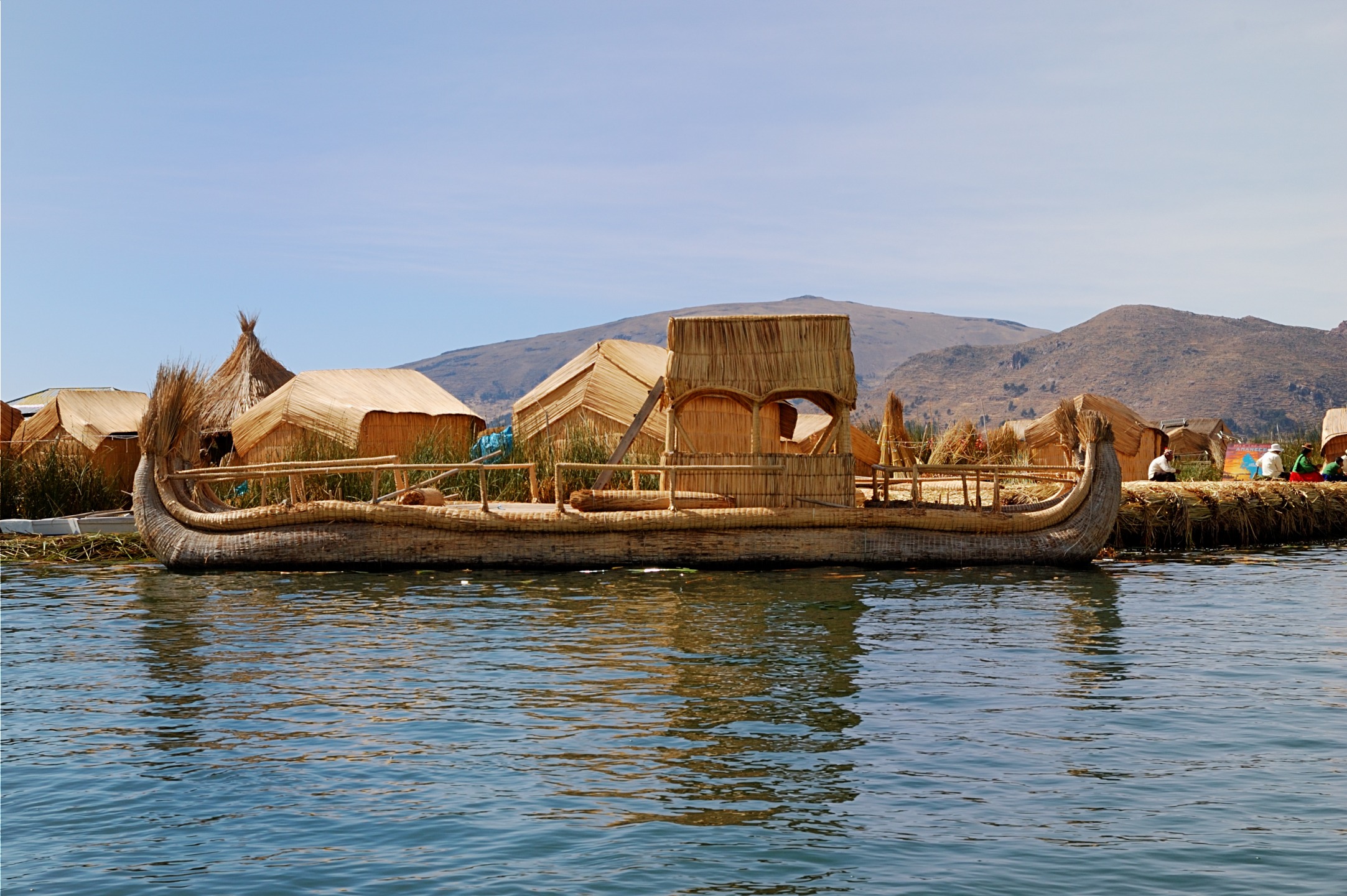
The Uros are artificial totora islands visited in half a day. Taquile is a rocky island inhabited by a Quechua-speaking community with distinct textile traditions. The two often combine within a single circuit from Puno.
Plan your trip
Taquile integrates naturally into a Peruvian itinerary around Lake Titicaca and the Sacred Valley. To build a customized circuit including Puno, Cusco, and the cordillera, consult our journeys in Pérou.
Interested in this visit?
We can include it in your personalised itinerary.