Reserva Park: the magical circuit of water
Reserva Park: the magical circuit of water
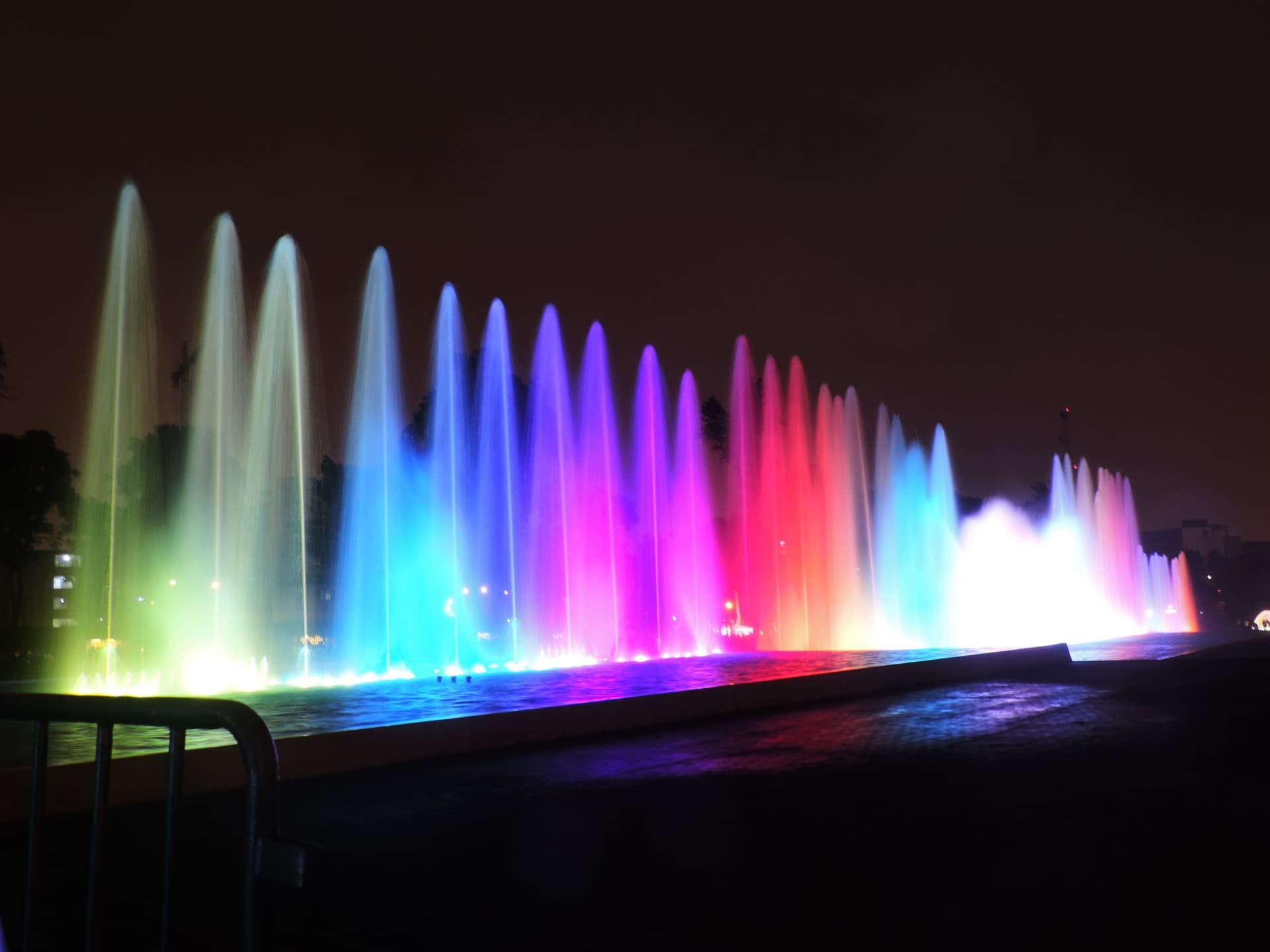
In the heart of Lima, Reserva Park is home to the Circuito Mágico del Agua, a nocturnal journey through thirteen illuminated fountains recognised by Guinness World Records.
Reserva Park, located in downtown Lima, is home to the Circuito Mágico del Agua, a collection of thirteen monumental fountains illuminated at nightfall. Spanning eight hectares, the site combines early 20th-century architecture, military tribute and contemporary aquatic scenography, making it one of the most visited evening outings in the Peruvian capital.
Why visit Reserva Park
Three reasons make this park a worthwhile stop on a visit to Lima:
- A landscape heritage from the 1920s designed by a French architect, in a central neighbourhood with easy access.
- A circuit of thirteen illuminated fountains, several of which are interactive or synchronised with music.
- An educational dimension, with panels dedicated to Lima's water supply system and photographic exhibitions.
The complex holds a Guinness World Record in the category of the world's largest collection of fountains within a public park, a distinction that has given it renown beyond Peru alone.
History of the park and its fountains
In 1926, President Augusto B. Leguía ordered the construction of a major urban park entrusted to French architect Claude Sahut. The complex was named "Parque de la Reserva" as a tribute to Reserve soldiers who fought in the battles of San Juan, Chorrillos and Miraflores during the War of the Pacific. Work was completed in 1929.
For several decades, the park remained a classic green space in downtown Lima. The turning point came in May 2007, when the metropolitan municipality opened the Circuito Mágico del Agua: thirteen fountains distributed throughout the park, equipped with light displays, projections and, for some, interactive elements. This transformation restored the site to a leading cultural and tourism role.
What to see on site
The circuit is navigated on foot, following a marked route between the fountains. The experience is designed for nighttime: most fountains only reveal their true beauty once illuminated.
The thirteen fountains of the circuit
- Fuente del Arco Iris — the rainbow fountain, the most emblematic with its large fan-shaped coloured jet.
- Fuente de la Armonía — the fountain of harmony.
- Fuente Tangüis — dedicated to Peruvian Tangüis cotton.
- Cúpula Visitable — a dome that visitors can enter, traversed by jets of water.
- Fuente de la Ilusión — the fountain of illusion, with optical effects.
- Túnel de las Sorpresas — a water tunnel to walk through.
- Laberinto del Ensueño — the labyrinth of dreams, an interactive circuit where visitors can get sprayed.
- Fuente de la Vida — the fountain of life.
- Fuente de los Niños — designed for children.
- Fuente de las Tradiciones — celebrating Peruvian traditions.
- Ríos de los Deseos — the river of wishes.
- Fuente Mágica — the main fountain, hosting the grand light and sound show.
- Fuente de la Fantasía — the tallest, featuring a musical video mapping display on a water screen.
Exhibitions and educational content
The park also hosts black and white photographic exhibitions dedicated to Machu Picchu, as well as information panels about Lima's water network: its origins, treatment, maintenance and environmental challenges. A visit useful for understanding the water constraints facing a capital built in a desert zone.
When to visit
A visit is best planned for the evening. The fountains are illuminated after dark, and the grand light and sound show of the Fuente de la Fantasía only takes place once the projectors are activated. In practice, aim to arrive in late afternoon to enjoy the park in natural light and then witness the activation of the fountains.
The park is generally closed early in the week and open from mid-week through Sunday. Hours vary by season, so check the official schedule before visiting. The dry season, from May to October, offers the most comfortable visiting conditions.
Practical information
- Visit duration: allow 1.5 to 2.5 hours to walk through the thirteen fountains and watch the main show.
- Admission: moderately priced entry, one of the least expensive paid attractions in the city. Discounts available for children and seniors.
- What to bring: lightweight waterproof clothing or a windbreaker; some interactive fountains splash visitors who approach them.
- Family-friendly: the site is suitable for children, with dedicated areas.
How to get there
The park is located in downtown Lima, very close to Estadio Nacional. Several options:
- Metropolitano: the rapid bus line serves the Estadio Nacional station, just a few minutes' walk from the entrance. This is the simplest option from Miraflores or Barranco.
- Taxi or ride-sharing: direct trips from most tourist areas; prefer this option for the return journey in the evening.
- Minibus: lines run along Avenida Arequipa and serve the area, but require some familiarity with the city.
Nearby attractions
The park is part of a sector rich in cultural facilities:
- The Museo de Historia Natural (Natural History Museum), a few streets away.
- The Parque de la Exposición, another major historic park, home to the Lima Art Museum (MALI).
- The Estadio Nacional del Perú, the country's main sports venue, neighbouring the park.
To extend your journey beyond Lima, several natural and cultural sites in Peru are worth visiting, such as Vinicunca, the Pampa Cañahuas National Reserve or Q'enko near Cusco.
Frequently asked questions
Frequently asked questions
Include Reserva Park in a trip to Peru
An ideal evening stop during a stay in Lima, before heading to Cusco, the Sacred Valley or the southern Andes. To build a custom itinerary combining the capital and the country's major sites, consult our Peru travel suggestions.
Interested in this visit?
We can include it in your personalised itinerary.