Kuelap
Kuelap
Fortified city of the Chachapoyas perched at 3,000 m near Chachapoyas, Kuelap predates Machu Picchu by six centuries and impresses with its 20-meter-high walls.
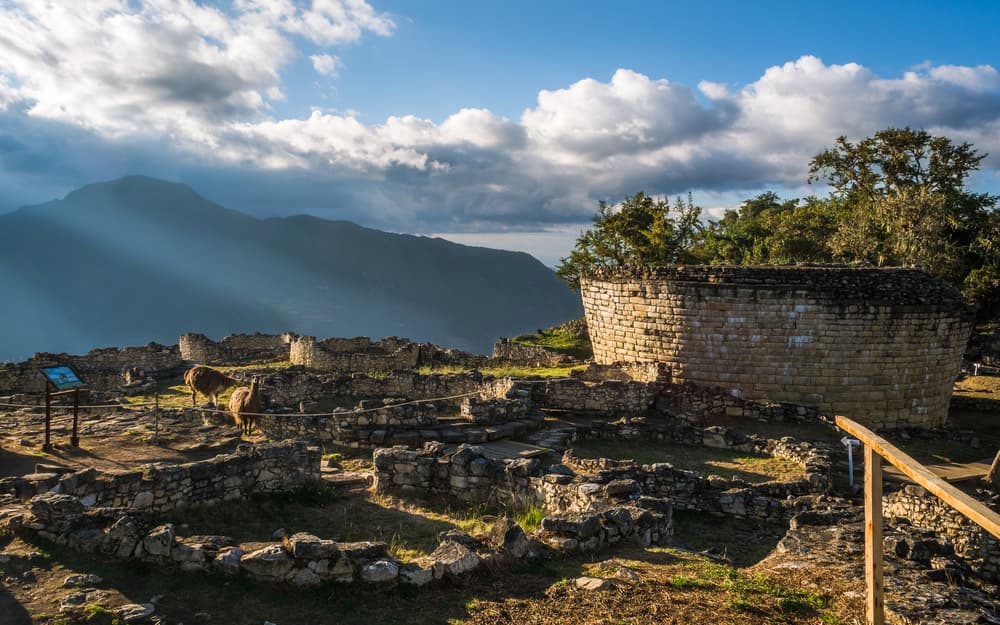
Perched at 3,000 meters on a ridge overlooking the Utcubamba valley, the fortified city of Kuelap was built by the Chachapoyas people between 500 and 800 CE, roughly six centuries before Machu Picchu. Its 20-meter-high perimeter walls and considerable volume of stone make it one of the most monumental pre-Hispanic complexes in South America, located in the Amazonas region in northern Peru.
Why visit Kuelap
Often presented as the "Machu Picchu of the north," Kuelap belongs to a civilization distinct from the Incas: the Chachapoyas — literally "cloud people." The site stands out for:
- distinctive architecture of round houses, unique to Chachapoya culture, organized on tiered platforms across 7 hectares;
- perimeter walls of dressed limestone, with some blocks weighing up to 3 tons;
- a cloud forest atmosphere, where mist regularly envelops the ruins;
- far fewer visitors than Machu Picchu, despite comparable stature.
In 2008, Kuelap was voted 4th in a popular poll designating the "7 Wonders of Peru," after the Cajamarca hot springs, Colca Canyon, and the Los Frailones stone forest.
History of the fortified city
A work of the Chachapoyas
Built between 500 and 800 CE, the site may have housed up to around 3,000 inhabitants at its peak. The city covers 7 hectares arranged in tiered platforms. The main platform, oriented north-south, reaches 584 m long, 110 m wide, and up to 20 m high. The volume of stone mobilized for the perimeter is estimated at 708,000 m³ — a figure often cited as roughly equivalent to about three times the volume of the Great Pyramid of Khufu, to be understood as an order of magnitude. Archaeologists today describe Kuelap less as a simple fortress than as a fortified city with a strong ceremonial function.
The massacre of Kuelap
Numerous skeletons have been found on platforms at the cliff edges. The majority belong to children, and the bodies did not receive customary funerary rites. The absence of swords and firearms at the site rules out late Inca or Spanish intervention: researchers see instead the result of internal conflict between Chachapoya tribes, possibly linked to power rivalries. A fire apparently followed this episode, and the city was abandoned around 1570, following Spanish conquest.
A late rediscovery
Covered by vegetation, Kuelap remained unknown for nearly three centuries. In 1840, judge Juan Crisóstomo Nieto, handling a land dispute between the Kuelap hacienda and villagers of Tingo Viejo, glimpses the walls for the first time without grasping their significance. During a second visit in 1843, informed by locals — who had concealed their discovery for fear of mummies — he explores the site and identifies the main entrance. The official rediscovery is dated January 31, 1843.
Several scholars subsequently studied the site: Antonio Raimondi (1870), French explorer Charles Wiener (1881), Ernst Middendorf (1887), the couple Henry and Paule Reichlen (1948), Arturo Ruíz (1972), Federico Kauffmann, as well as French general Louis Langlois and American Adolf Bandelier, whose work helped spread knowledge of the site.
Funeral traditions
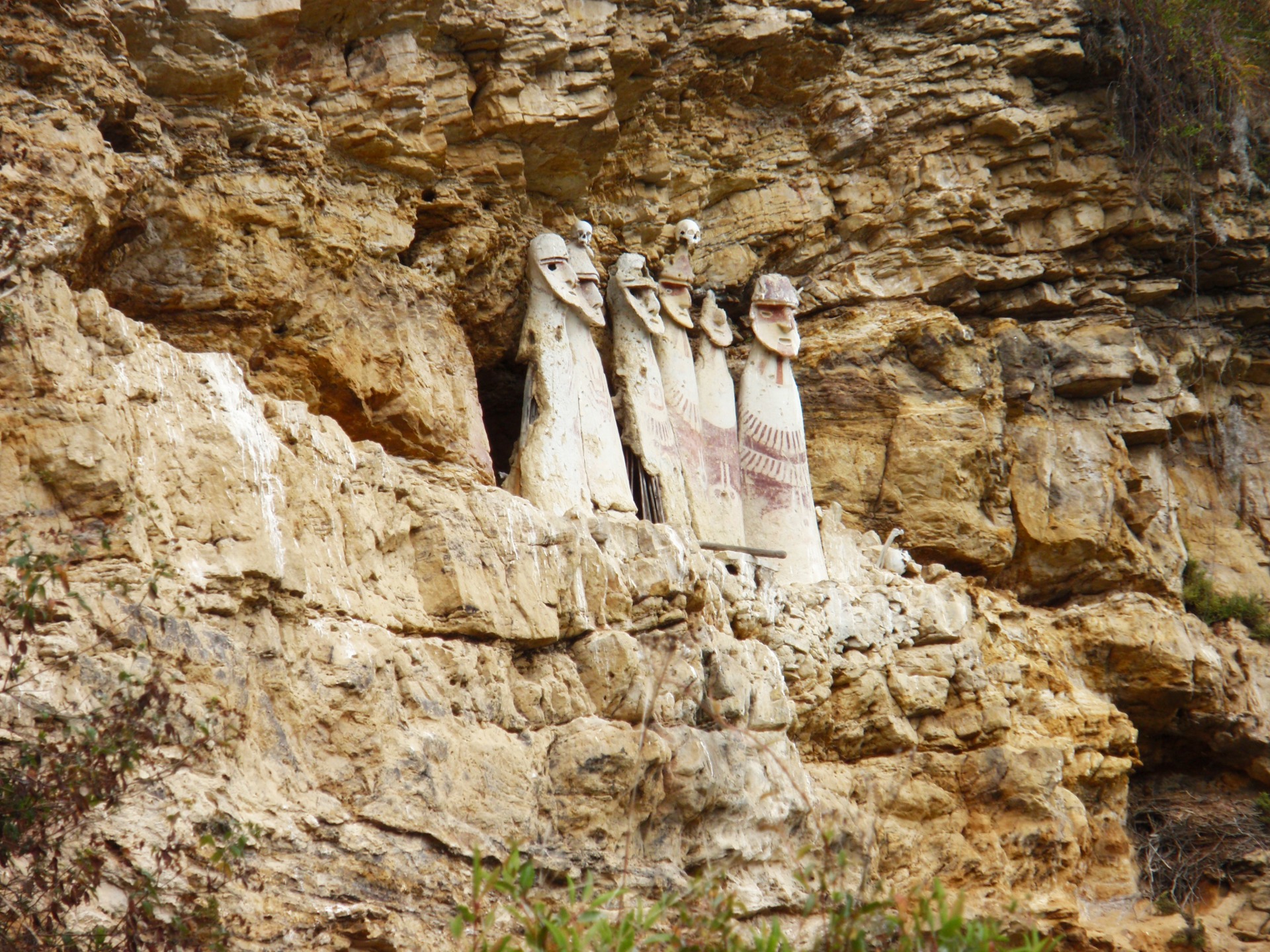
The Chachapoyas practiced a mortuary ritual of mummification linked to beliefs in rebirth. Viscera were removed, the body tied, then placed in an ornamented sack with a face. The deceased was buried in fetal position, inside the house itself, in a circular pit roughly 50 cm in diameter and 1 m deep, accompanied by ceramics and textiles.
What to see on the site
The three entrances
- Entrance n°1: historic main entrance, featured in most official photos. Closed to the public due to collapse risks and restoration work.
- Entrance n°2: facing an external cemetery, it was apparently used by residents returning from the fields or carrying water.
- Entrance n°3: current access for visits. Traces of llama hoofprints carved in stone remain visible, evidence of food and freshwater deliveries.
The first level and round houses
The first level contains 420 round houses, the architectural signature of the Chachapoyas. Each dwelling could accommodate roughly 8 people, had a hearth and 2 to 3 tombs integrated into the floor. This is also where El Tintero (or Templo Mayor), the major ceremonial building, is located. Bones have been unearthed there, some predating the current era; archaeologists consider it possibly a site of sacrifice. A carved feline face — a Chachapoya deity — adorns one of the exterior walls; 14 additional representations of felines and serpents have been identified in the Entry n°1 corridor.
The second level, space of the elite
- El Torreón: the city's highest point, former watchtower, not accessible to visitors.
- El Castillo: rectangular building associated with trepanations and medical interventions.
- Circular platform: residence of priests, closely linked to the Templo Mayor. Massacre skeletons were found on its edges.
- Callanca: the largest building of Inca origin, used to lodge travelers and guests and hold ceremonies.
- Pueblo Alto: three distinct sectors in the northwest, including an adolescent Inca tomb identified as a sacrificial rite site, with restricted access.
Practical information
- Visit duration: allow approximately 2 hours on site.
- Altitude: 3,000 m. Prior acclimatization in Chachapoyas (2,335 m) is recommended to reduce altitude sickness risk.
- Equipment: hiking shoes, layered clothing, windbreaker and rain protection; the ground is often wet.
- Heritage status: Cultural Heritage of the Nation since 2000.
When to go
The Amazonas region features a cloud forest climate, humid much of the year. The dry season, May to September, offers the most stable conditions for visiting: less frequent showers, less slippery trails, and better visibility from the cable car. Mist remains common year-round — it's what gives the site its characteristic atmosphere. The rainy season, November to March, can complicate road access.
How to get there
Reaching Chachapoyas
Chachapoyas is the logistics hub for visiting Kuelap. From Lima, two options are available:
- flight to Jaén, then bus to Chachapoyas (a few hours by road);
- flight to Tarapoto, then combi to Chachapoyas (longer journey, mountain route).
From Chachapoyas to the site
- Cable car: fastest and most comfortable option. From Chachapoyas, a colectivo reaches Nuevo Tingo, where the Estación de Embarque is located; a minibus then takes you to the departure station. The crossing takes approximately 20 minutes above the valley.
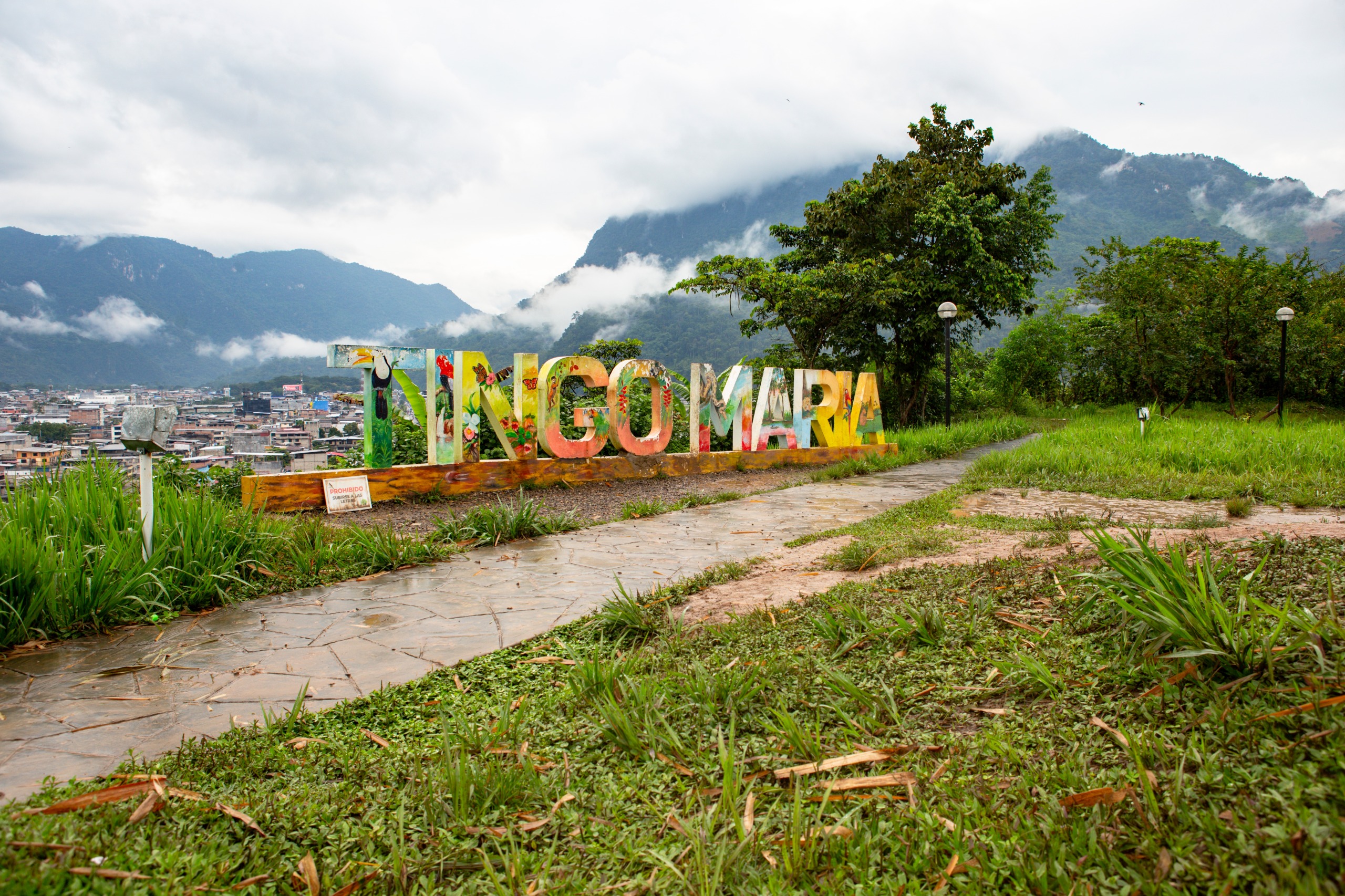
- By car: allow around 2.5 hours to the La Malca parking area, via Tingo Viejo, Nuevo Tingo, Choctamal, María, and Longuita.
- On foot: from Tingo Viejo, a 8.9 km hike leads to the site with approximately 4 hours of climbing. No resupply points along the way: bring water and snacks.
Nearby attractions
The Amazonas region concentrates several sites complementary to Kuelap:
- the Revash mausoleums, Chachapoya collective tombs clinging to a cliff;
- the Karajía sarcophagi, anthropomorphic funerary statues;
- Gocta waterfall, one of Peru's highest waterfalls, accessible by hiking.
To further explore the country's archaeology, the Inca site of Chachabamba on the Inca Trail, or the pre-Inca pyramid of Huaca Pucllana in Lima, usefully complete an itinerary. For relaxation, the thermal springs of Cocalmayo in the Sacred Valley offer a welcome break for hikers.
Frequently asked questions
Frequently asked questions
Yes. Kuelap was built by the Chachapoyas between 500 and 800 CE, roughly 600 years before Machu Picchu was built by the Incas in the 15th century.
Allow approximately 2 hours on the site itself. Adding the journey from Chachapoyas and the cable car, plan for a half-day to a full day.
The site stands at 3,000 m elevation. One or two days of acclimatization beforehand in Chachapoyas (2,335 m) is advised. Walking on site remains limited and accessible to most visitors in good health.
The cable car from Nuevo Tingo (approximately 20 minutes) is the fastest and most comfortable option, with clear views of the valley. The 8.9 km hike from Tingo Viejo, more demanding (roughly 4 hours climbing), suits experienced walkers.
The term literally designates the "cloud people," referring to the culture that developed in the cloud forests of the Peruvian Amazonas.
Planning your trip
Kuelap fits naturally into an itinerary dedicated to northern Peru, still rarely visited. To build a journey combining archaeological sites, hiking, and living cultures, consult our Peru travel ideas.
Interested in this visit?
We can include it in your personalised itinerary.