Gamarra
Gamarra
Textile district in the La Victoria neighborhood of Lima, Gamarra concentrates thousands of shops and clothing workshops. History, access and practical tips.
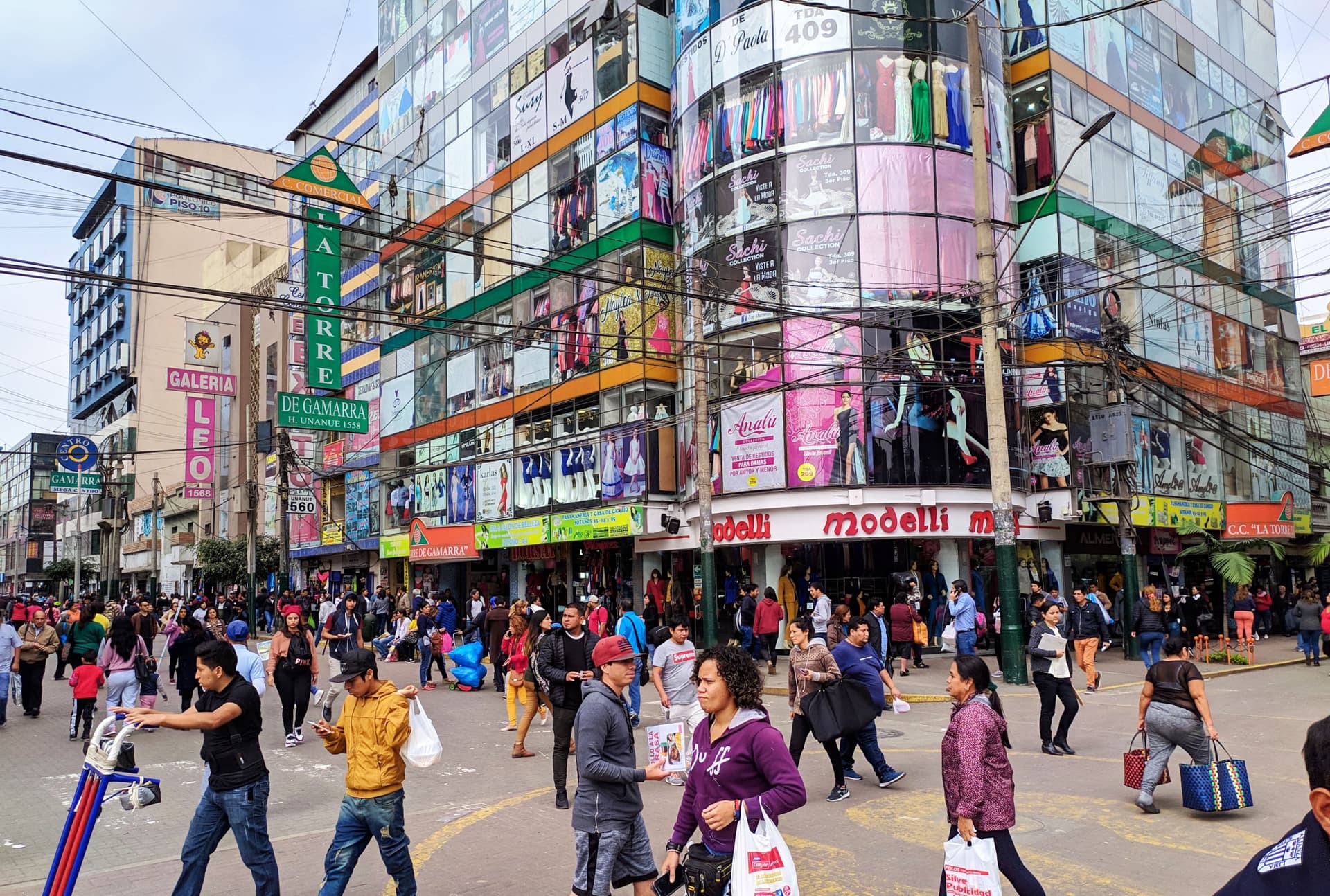
Gamarra is not a shopping mall but a textile district in its own right, stretching across several blocks of the La Victoria neighborhood in Lima. This immense cluster of clothing manufacturing and retail brings together thousands of shops, workshops, commercial galleries, and wholesalers. It is one of South America's most active textile hubs, frequented equally by Limeños seeking bargains and traders restocking their inventories.
Why visit Gamarra
Gamarra offers a tangible window into Peru's popular economy. Within just a few streets, you can observe the entire textile supply chain: from sewing workshops to fabric warehouses, wholesalers to retailers. The atmosphere is dense, loud, sometimes chaotic, yet authentically vibrant—street vendors calling out prices, tricycle deliverymen, ambulant sellers hawking beverages and prepared dishes.
The district appeals to three types of visitors: travelers curious about Lima's urban life beyond the usual tourist circuits, those seeking factory-price clothing, and enthusiasts of Latin American working-class neighborhoods where informal commerce remains a driving force. It's not a comfortable visit, but an immersion that usefully complements the more polished walks through Miraflores or Barranco.
A history of immigration and informal economy
Gamarra took shape in the 1960s, driven by rural immigrants settling in Lima, primarily from the Andes. Lacking access to the formal market, these new Limeños established small clothing workshops in the La Victoria neighborhood, clustered around Gamarra Avenue, which gave the district its name.
In 1972, changes to zoning laws allowed several already-established businesses to formalize their status. This partial regularization never fully absorbed the scale of informal commerce: Gamarra remains, even today, regarded as one of South America's largest informal markets, with a significant share of undeclared activity. This dimension explains both its low prices and the complexity of oversight by authorities.
What you'll find there
Products
The district is entirely oriented toward textiles and clothing. The range covers most needs:
- T-shirts, polos, shirts
- Jeans and trousers
- Underwear and lingerie
- Dresses and formal wear
- Suits and business attire
- Shoes
- Sportswear and tracksuits
- Fabrics, notions, and accessories
Purchases are made individually in retail shops, or in bulk at specialized galleries that often require minimum volumes.
Galleries and commercial towers
The district is organized around large vertical galleries (the famous "galerías") that each house dozens, even hundreds of shops across multiple floors. Some specialize in particular categories: bridal dresses, school uniforms, children's clothing, bulk fabrics. Identifying these specializations saves you time.
Street atmosphere
Beyond the shops, the experience is defined equally by the street itself: vendors of picarones (a Peruvian dessert made from squash and sweet potato, fried in rings and drizzled with chancaca syrup) stationed on the sidewalks, fresh juice stands, and the presence of local fortune tellers offering readings and divination consultations, a practice still vibrant in Peruvian popular culture.
Practical information
- Hours: activity is concentrated during the day, peaking in the morning and early afternoon. Most shops close in the late afternoon, and Sundays are quieter.
- Payment: cash (soles) remains widely preferred, especially in smaller shops. A few businesses accept cards or mobile payments, but don't count on it systematically.
- Safety: pickpockets are common in the crowds on main streets. Keep your belongings in front of you, avoid displaying phones, jewelry, or cash, and travel light. Certain peripheral streets in La Victoria are best avoided, particularly in the evening.
- Duration: allow 1 to 2 hours for a quick visit, a half-day if you plan to do actual shopping.
- Negotiation: possible in small shops, especially for multiple items, less common in formal galleries.
How to get there
Gamarra is located in the La Victoria neighborhood, east of Lima's historic center. From Miraflores or San Isidro, expect 20 to 40 minutes by taxi depending on traffic, which can be heavy during rush hours. Lima's metro (Line 1) serves the Gamarra station, often the fastest option from the southeast of the city.
Opt for a taxi booked via an app rather than hailing one from the street, and avoid arriving after dark. If you're staying in the historic center, the journey is short but passes through areas where vigilance remains advisable.
Nearby and to extend your stay
Gamarra is typically visited as part of a Lima day trip, combined with the historic center (Plaza de Armas, cathedral, San Francisco convent) or walks through Barranco and Miraflores. For the rest of your Peruvian itinerary, several stops near Cusco merit a detour: the colonial village of Andahuaylillas and its "Sistine Chapel of the Andes," the hot springs of Cocalmayo on the Machu Picchu route, the discreet Inca site of Chachabamba, or the Cusco Planetarium to understand Inca astronomy.
Plan your trip
A visit to Gamarra fits easily into a broader discovery of Lima and Pérou. To build a custom itinerary blending the capital, sacred valley, and highlands, explore our Pérou travel suggestions.
Nearby
Interested in this visit?
We can include it in your personalised itinerary.