Ausangate Trek
Ausangate Trek
The Ausangate loop connects mineral lagoons, 5,000-meter passes, and hot springs in the Peruvian Andes, departing from Cusco. A high-altitude trek through the heart of Quechua territories.
Ausangate is the sacred peak of the Peruvian Andes, towering at 6,384 meters southeast of Cusco. The circuit encircling it traverses radically wild high-altitude landscapes: lagoons in turquoise and crimson hues, hanging glaciers, herds of vicuñas and llamas, Quechua villages virtually unchanged by time. It ranks among the great Andean treks—demanding yet accessible to well-acclimatized hikers.
Quick Reference
- Full circuit duration: 5 to 6 days for the classic loop; 3-4 day variations available.
- Maximum altitude: passes exceeding 5,000 m (Palomani Pass ~5,100 m, Arapa Pass ~5,050 m).
- Mandatory acclimatization: minimum 2-3 days in Cusco (3,400 m) before departure.
- Trailhead: village of Tinki, accessible from Cusco via the road toward Ocongate.
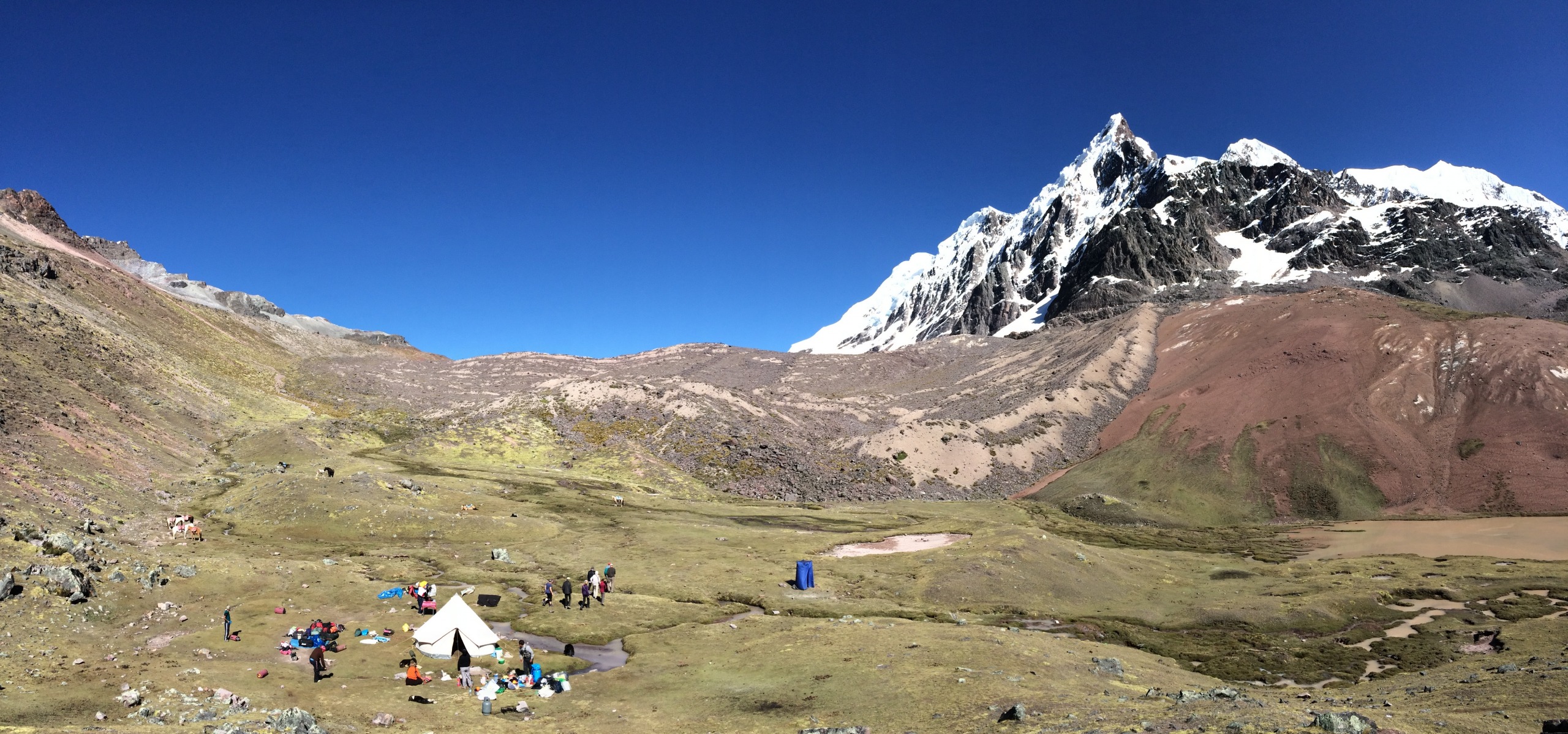
- Tent and gear: self-guided camping or with a local agency; no fixed lodges on the main circuit.
- Best season: dry season, May through October (clear skies, very cold nights).
- Wheelchair accessibility: not accessible.
What You'll See
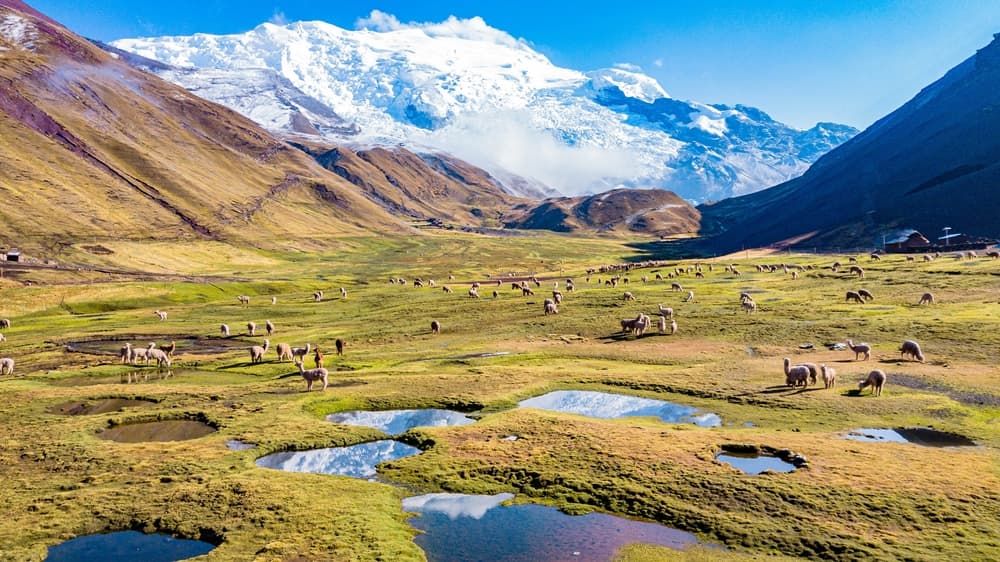
The landscape transforms with each pass crossed. The Ausangate Cocha and Pucacocha lagoons mirror intense mineral colors depending on the time of day. The massif's flanks bear glaciers in visible retreat, direct witnesses to climate change. The apachetas—ritual cairns—punctuate the passes, a reminder that Ausangate remains an apu, a tutelary deity for the local Quechua communities.
History and Context
For the Quechuas of the Southern Andes, Ausangate is the most powerful of the apus in the Cusco region. Each June, the Qoyllur Riti pilgrimage draws tens of thousands of devotees to the glacier's base, blending Andean Catholicism with pre-Hispanic beliefs. The massif long served as a natural boundary between Inca territories and the peoples of the Amazon.
Highlights of the Trek
The Colored Lagoons
Pucacocha ("red lagoon" in Quechua) derives its hue from suspended iron minerals. Ausangate Cocha, the larger lake, reflects the glacier in calm weather. These waters are often ringed by Andean flamingos, visible early in the morning.
Passes Above 5,000 m
Each pass offers sweeping views of the glacial massif and valleys below. Crossing demands real physical effort but requires no climbing technique. Start early: clouds rise by late morning.
Pacchanta Hot Springs
At the massif's base, the hamlet of Pacchanta shelters natural warm-water pools. A classic stage at trek's end, they offer welcome muscle recovery with direct views of the Ausangate glaciers.
High-Altitude Wildlife
Vicuñas, alpacas, llamas, and viscachas (rock-dwelling rodents) are omnipresent. Andean condors regularly soar over ridgelines. Avoid sudden approaches: the herds belong to local communities.
Photography Tips
Morning raking light (6am–8am) brings the most saturated colors to lagoons and glaciers. Passes offer spectacular backlighting in late afternoon, though clouds often shroud the massif after 1pm. Protect your gear: trail dust and brutal temperature swings (freezing nights, intense sun days) are harsh on optics.
Location and Access
The Ausangate massif lies in Quispicanchi Province, roughly 100 km southeast of Cusco. Tinki village, the usual trailhead, is reachable by bus or private vehicle from Cusco's central terminal via Ocongate. The journey takes about 3 to 4 hours depending on road conditions. Most Cusco agencies offer organized treks with muleteers, cooks, and full gear—strongly recommended for first-timers.
Nearby places with internal links:
- Rainbow Mountain (Vinicunca) — accessible from Cusco, often combined with Ausangate.
- Cusco Historic Center — essential logistical hub before departure.
Nearby Attractions
- Rainbow Mountain (Vinicunca) — the same mineral hues, accessible as a day excursion from Cusco.
- Cusco — Inca capital, natural starting and finishing point for any trip in the region.
- Lake Titicaca — several hours to the south, accessible by extending travel toward Puno.
Give it a go!
Our local experts arrange this activity for you.