Arequipa Cooking Class
Arequipa is the gastronomic capital of inland Pérou. Its cooking workshops blend market visits with the preparation of traditional dishes like rocoto relleno, set in colonial homes in the historic centre.
Arequipa is the gastronomic capital of inland Pérou. Its signature dishes — rocoto relleno, adobo, chupe de camarones — are learned in workshops led by local chefs, often in colonial homes within the historic centre. A cooking class here is as much a lesson in technique as an introduction to Andean ingredients: peppers, Cayma cheeses, shrimp from the Chili river.
Quick practical info
- Recommended duration: 3 to 4 hours (market + cooking + meal)
- Language: classes available in Spanish and English depending on the provider
- Dress code: comfortable clothing, closed-toe shoes; apron usually provided
- Booking: advance reservation recommended, groups often limited to 8–10 people
What you'll discover
Most workshops begin with a visit to the Mercado San Camilo or San Antonio market. You'll identify key ingredients: the rocoto (local red pepper), queso helado, river shrimp. In the kitchen, recipes vary by provider, but rocoto relleno stuffed with meat and cheese remains the signature dish in nearly every class.
History and context
Arequipa cuisine is the result of a blend between colonial Spanish techniques and Andean ingredients. The city has developed a culinary identity distinct from the rest of Pérou, carried by its picanterías — traditional popular restaurants designated as intangible cultural heritage by the Peruvian government. Learning to cook here means stepping into this living tradition.
Highlights of the experience
The market visit
A trip to the market grounds the class in local reality. The chefs explain how to select a ripe rocoto, distinguish varieties of Andean potatoes, and negotiate with vendors. Often the most memorable part for travellers.
Preparing rocoto relleno
Hollowing out the pepper without puncturing it, balancing the filling, mastering oven cooking — this dish demands precision and patience. Instructors pass on techniques learned in picanterías, not hotel schools.
The final meal
The class ends at the table with the dishes you've prepared. Some providers serve chicha de jora or a local beverage alongside. This is the moment to connect with your group and the chef about the region's food culture.
Photography tips
Natural light in colonial kitchens (open courtyards, white sillar walls) is favourable in the morning. Photograph ingredients at the market before starting — the colourful stalls of peppers and Andean tubers offer great frames. Ask the chef's permission before filming technical gestures.
Location and access
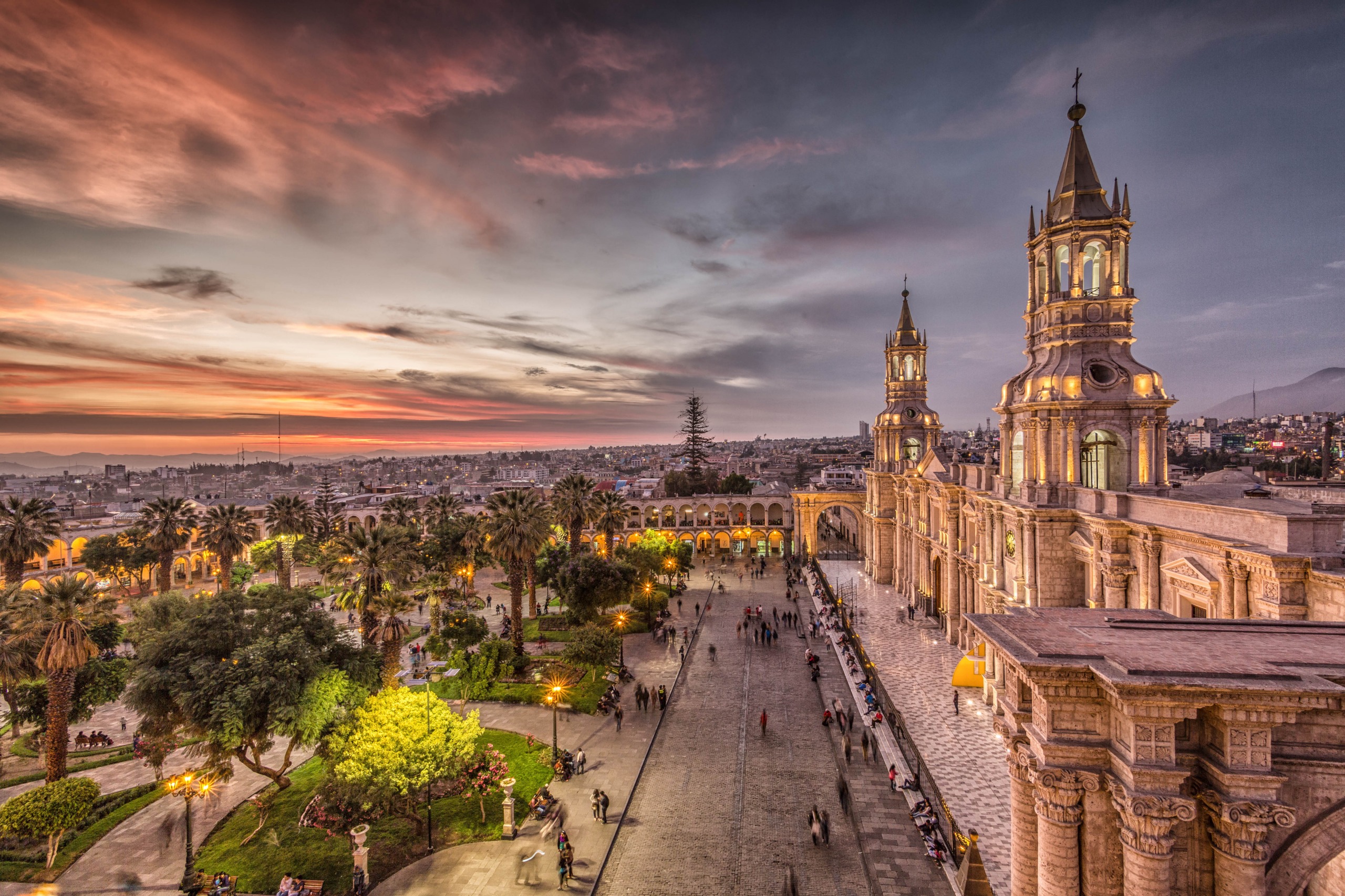
Workshops are held mainly in Arequipa's historic centre, near Plaza de Armas. Several providers are located within minutes on foot of the Arequipa Cathedral and the Santa Catalina Monastery. No special transport required: the centre is walkable. Accessibility for people with reduced mobility depends on the exact location — check with your provider.
Nearby attractions
- Santa Catalina Monastery — 16th-century colonial religious compound, worth visiting before or after class.
- San Camilo Market — central covered market, starting point for many cooking workshops.
- Arequipa's Plaza de Armas — heart of the UNESCO-listed historic centre, minutes from providers.
- Museum of Andean Sanctuaries — home to the Juanita mummy; a perfect complement to a cultural day in Arequipa.
Frequently asked questions
No. Several providers offer English-language classes, particularly those catering to international travellers. Confirm the language available when booking.
Expect 3 to 4 hours, including the market visit. Shorter classes (2 hours) are available without a market stop.
Rocoto relleno is almost always on the menu. Depending on the provider, you may also prepare adobo arequipeño (marinated pork stew) or chupe de camarones (shrimp soup).
Workshops run year-round. Dry season (May to October) is peak tourist season: book earlier. During the rainy season (November to April), groups are often smaller.
Yes. Classes typically finish in early afternoon, leaving time to visit Santa Catalina afterwards. Both activities are within the same area of the historic centre.
Some providers adapt the menu on request. Mention your dietary requirements when booking: rocoto relleno can be prepared without meat, using a cheese and vegetable filling instead.
Give it a go!
Our local experts arrange this activity for you.