Titinos
Titinos
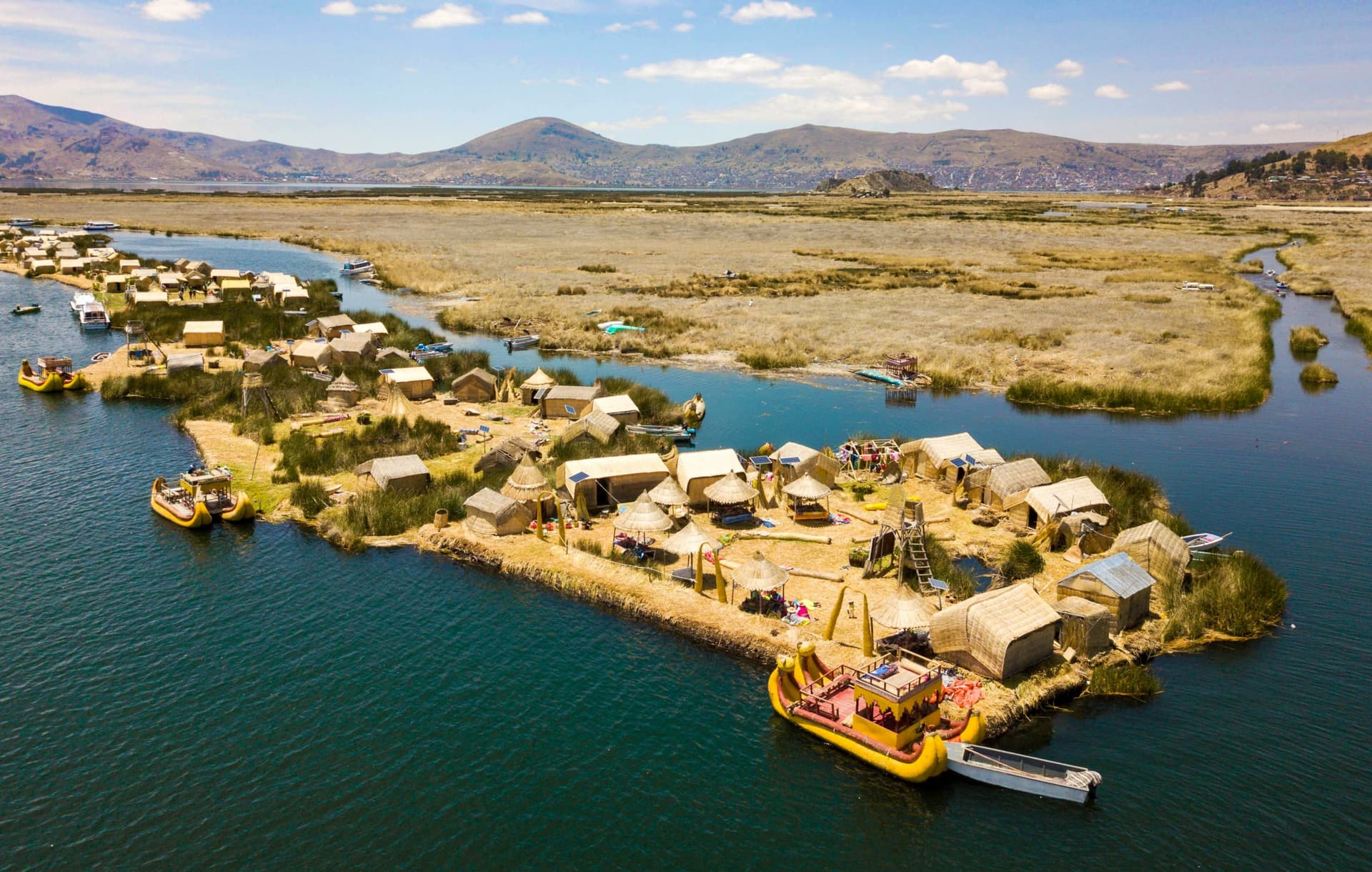
Small artificial floating reed islands on Lake Titicaca near Puno, inhabited by around twenty people from Aymara and Quechua communities.
The Titinos form a small cluster of artificial floating islands on Lake Titicaca, near Puno. Built from totora, an aquatic plant that thrives in the lake's shallow waters, they are home to around twenty people from Aymara and Quechua communities. Less visited than the famous Uros islands, they offer a more intimate glimpse into Andean island life.
Why visit the Titinos
The appeal of the Titinos lies in their human scale and the singular technical skill of their construction. Only a few families—fewer than ten, totaling around twenty inhabitants—live on these entirely hand-woven reed platforms. Tourism remains limited, allowing direct exchange with residents, far from the organized flows of the lake's larger islands. It is also an opportunity to observe living artisanal craftsmanship: alpaca wool weaving, traditional geometric patterns, and gestures linked to fishing and island maintenance.
What to see and do
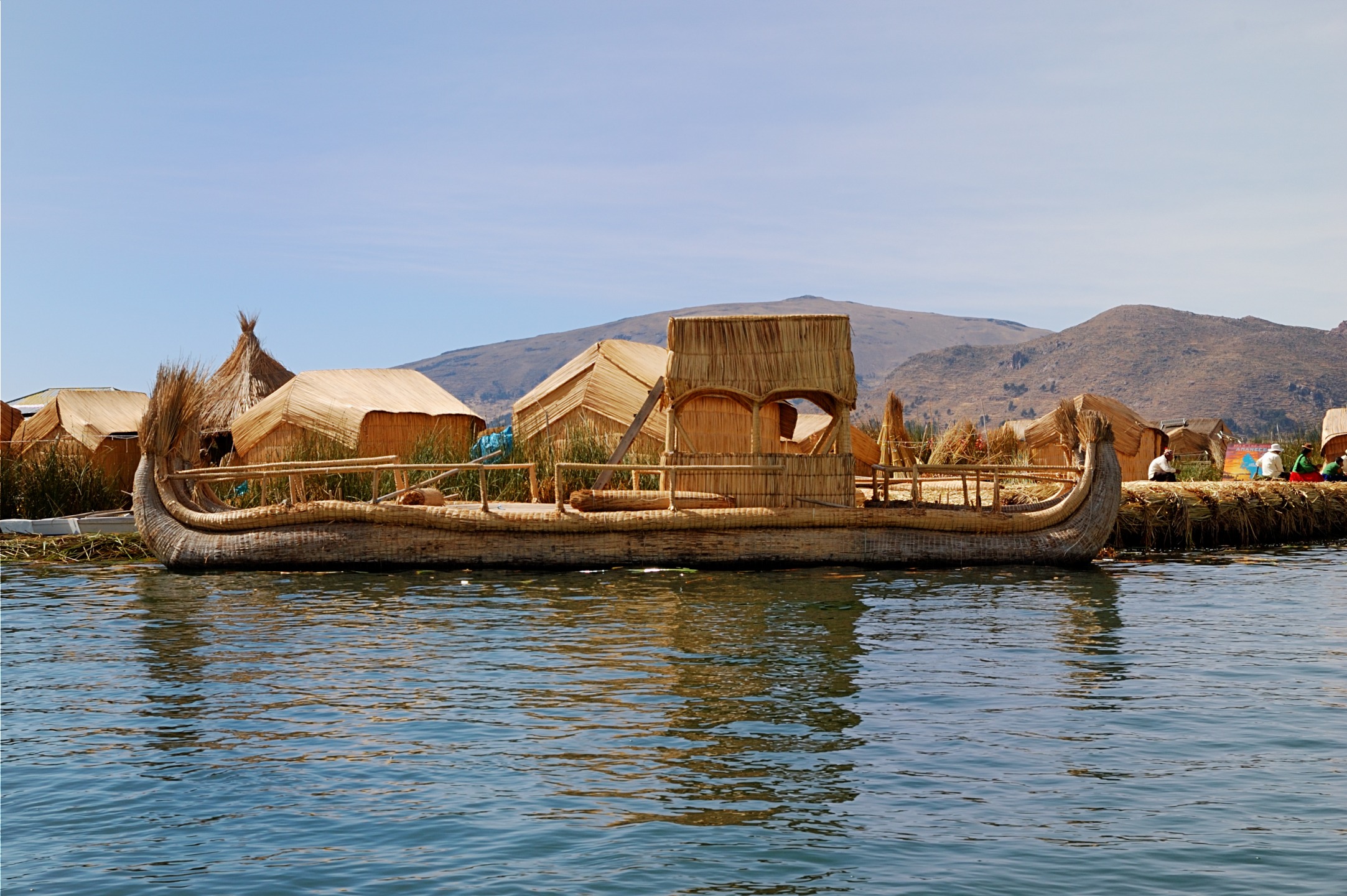
- The round totora houses: built entirely from reeds, they rest on the same floating base as the islands themselves.
- Textile crafts: alpaca wool items adorned with geometric and symbolic patterns, sold directly by residents.
- A boat tour: a complete circuit around each island in a traditional boat takes about twenty minutes.
- Local gastronomy: fresh trout caught in the lake is the signature dish served to visitors.
- Traditional activities: fishing, harvesting aquatic plants, and depending on the season, hunting wild ducks, presented by the inhabitants.
The sensation of walking on a soft surface that shifts slightly underfoot is part of the experience: the ground is entirely made up of layers of dried, floating reeds.
History and construction of the islands
Building an island takes roughly two years of collective work. Residents assemble blocks of totora roots, onto which they layer successive reeds. An island's lifespan can reach 35 years depending on maintenance. To keep it afloat, a new layer of reeds is added to the base every 30 days, or at most every two months, as the lower layer gradually rots from water contact.
According to local traditions, the lake sector where the Titinos are located was considered sacred by pre-Incan peoples, who paid homage to water deities there. These orally transmitted narratives remain a reference for current inhabitants, whose culture blends Aymara and Quechua heritage with Andean Catholicism.
Practical information
- Duration of visit: plan for a half-day from Puno, including the round-trip crossing.
- Prices: moderate, payable in soles to local operators at Puno's port. Budget cash for crafts purchased directly from families.
- Season: the dry season (May to October) offers more stable navigation and clear skies.
- Altitude: Lake Titicaca sits at approximately 3,800 meters. Prior acclimatization in Puno or Cusco is recommended.
- What to bring: sun protection, warm clothing (the wind on the lake is cold), flat-soled shoes.
How to get there
Access to the Titinos is exclusively by boat from Puno's port. The crossing takes approximately 40 minutes depending on the type of vessel and weather conditions. Most excursions departing from Puno cover the Uros, sometimes Taquile, and rarely the Titinos, which you generally need to request specifically from the agency or boat operator.
Nearby attractions
- Puno: departure city for all Lake Titicaca excursions.
- Taquile Island: renowned for its male weaving tradition, inscribed on UNESCO's intangible cultural heritage list.
- Capachica Peninsula: a land-based alternative for exploring the lake's northern shore and its communities.
- Tinajani Canyon: spectacular rock formations accessible from the Puno region.
Frequently asked questions
Frequently asked questions
To include the Titinos in a complete circuit through the Andes, explore our journeys to Pérou.
Interested in this visit?
We can include it in your personalised itinerary.