Wiracocha Temple at Raqchi
Wiracocha Temple at Raqchi
Located 120 km south of Cusco, the Wiracocha Temple at Raqchi preserves an 18 to 20 meter-high wall, circular storage silos, and remnants of a major Incan ceremonial center.
Approximately 120 km south of Cusco, the Raqchi archaeological complex houses one of the most singular ceremonial structures in the Andean region: the Wiracocha Temple. Its central wall, rising between 18 and 20 meters high, makes it one of the tallest structures left by the Incan Empire. The site, a major waypoint of the Qhapaq Ñan, also preserves circular storage silos, ritual fountains, and dwellings that illuminate the administrative and religious role of Raqchi.
Why visit the Wiracocha Temple
Raqchi remains removed from the major tourist flows that converge on Machu Picchu or the Sacred Valley. Yet the site offers a complete picture of an Andean center: a monumental sanctuary dedicated to Wiracocha, revered as the "Creator God of the Universe" in Andean cosmovision, but also agricultural granaries, ceremonial baths, a barracks, and a prison. The functions are multifaceted—worship, ceremonial and administrative center, ceramic production—making it one of the rare Incan sites where the daily organization of a city is so clearly perceived.
The temple lies moreover on the route connecting Cusco to Puno, making it a natural stopping point for travelers crossing the Altiplano toward Lake Titicaca.
History of the site
The sanctuary is attributed to the pre-Incan era, to the civilization of the Canas, before being reinvested by the Incas. A local legend recounts that Wiracocha, poorly received by the inhabitants, unleashed a "rain of fire" on the region to assert his power. The proximity of the active Quimsachata volcano likely nourished this account, linked to ancient eruptions.
Historical chronicles differ on the author of the Incan reconstruction. Some historians attribute it to Inca Pachacutec, others to Inca Viracocha (Hatun Tupac, the eighth sovereign of the dynasty), who is said to have ordered the temple's construction after a vision of the Andean god. During the conquest, the building was largely dismantled by the Spanish, who reused the materials to erect churches in the region.
What to see at the site
The Wiracocha Temple
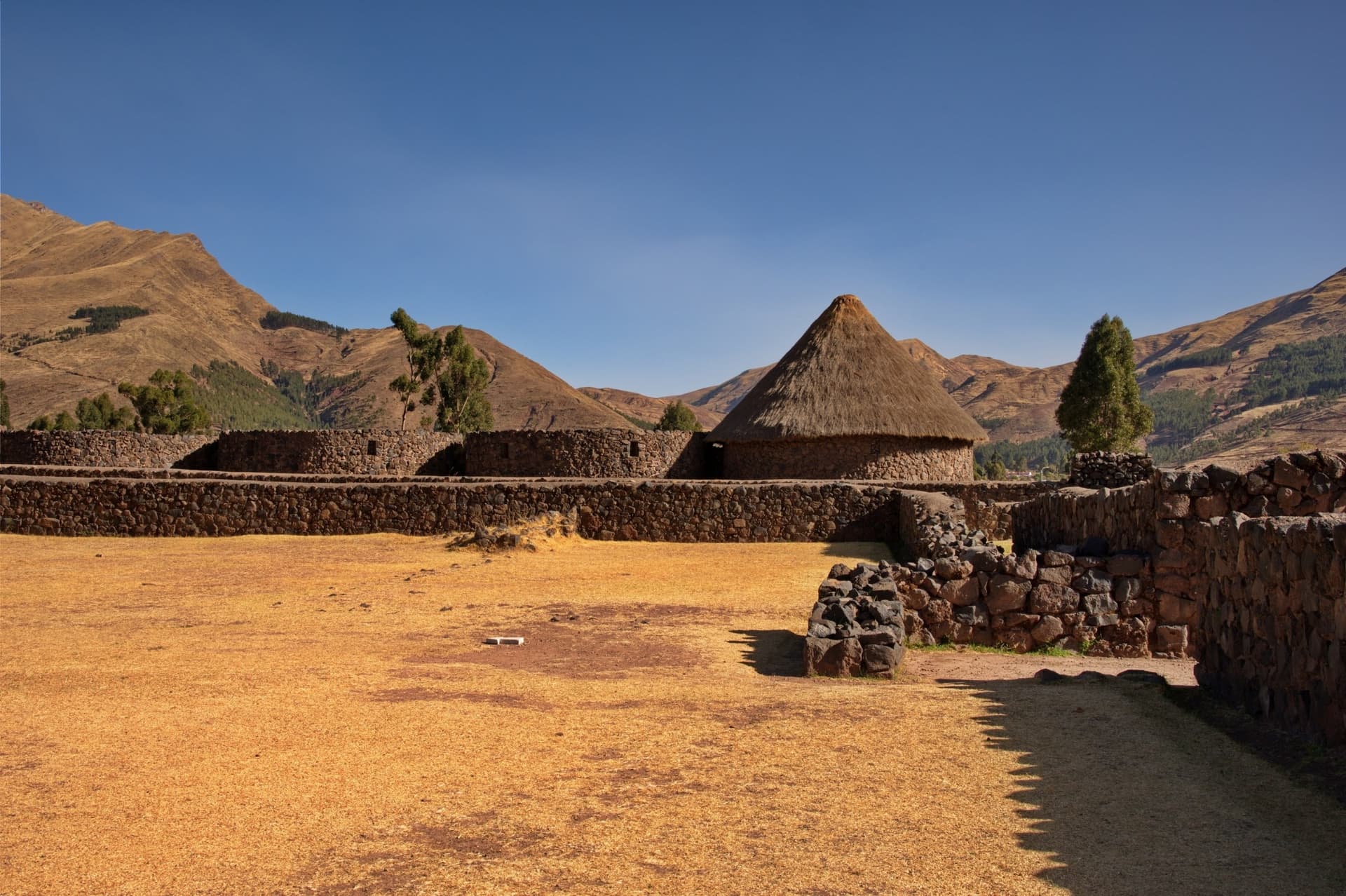
The edifice forms a rectangle approximately 90 meters long by 25 meters wide, on two levels. The foundations are laid in finely-fitted volcanic stones, while the upper portion is built of adobe. The central wall, pierced with windows and doors, rises between 18 and 20 meters.
On either side of the wall stood a row of 11 circular columns, with a stone base and the rest in earth, supporting a gabled roof now lost. The precision of the assembled carved stones illustrates Incan architectural mastery, despite the monument's ruined state.
The storage silos and dwellings
North of the temple extends a spectacular alignment of colcas, those circular granaries intended for crop storage. The village once contained up to 200 silos, testament to Raqchi's logistical importance on the Incan Road. Alongside, a residential complex of six patios and five phaqchas (bathing sources arranged for leaders) completes the residential ensemble.
The barracks and prison of Raqay
Approximately 500 meters from the site, along the Qhapaq Ñan route, one reaches on foot the remains of the cuartel (barracks) and cárcel (prison) of Raqay. The precolumbian road network, which connected the entire Incan Empire, is clearly visible here.
Practical Information
- Duration of visit: allow 1 h 30 min to 2 hours to walk through the entire complex.
- Hours: the site is open daily during daylight hours. Hours change regularly, so check with your agency or local office before your visit.
- Admission fees: entrance at a moderate rate, with discounts for students. Tickets are paid on-site.
- Altitude: Raqchi sits above 3,400 meters; plan for prior acclimatization in Cusco.
- What to bring: hat, sunscreen, water, and hiking shoes.
When to go
The dry season, from May to September, offers the best conditions for visiting Raqchi: clear skies, cool mornings, and bright light on the adobe walls. The rainy season, from December to March, makes some trails more difficult but keeps the site less crowded.
The highlight of the year remains the Raqchi Folk Festival, celebrated every third Sunday in May on the site's ancient terraces. War dances, religious rites, and agricultural demonstrations bring neighboring communities together for several days.
How to get there
Raqchi lies approximately 120 km southeast of Cusco, roughly 2 hours by road along the route leading to Puno. Several options are available:
- Organized excursion: the most practical option, often included in a "Route of the Sun" circuit between Cusco and Puno, with stops at Andahuaylillas and La Raya Pass.
- Taxi or private car with driver: useful for adapting your pace or extending to other sites.
- Regional bus: buses connecting Cusco to Sicuani or Puno pass nearby; you'll need to walk or take a mototaxi to reach the site.
Public transport being limited in the area, travel by private vehicle or through an agency remains the simplest solution.
See in the surrounding area
- Yucay, in the Sacred Valley, to continue exploring the Incan landscapes around Cusco.
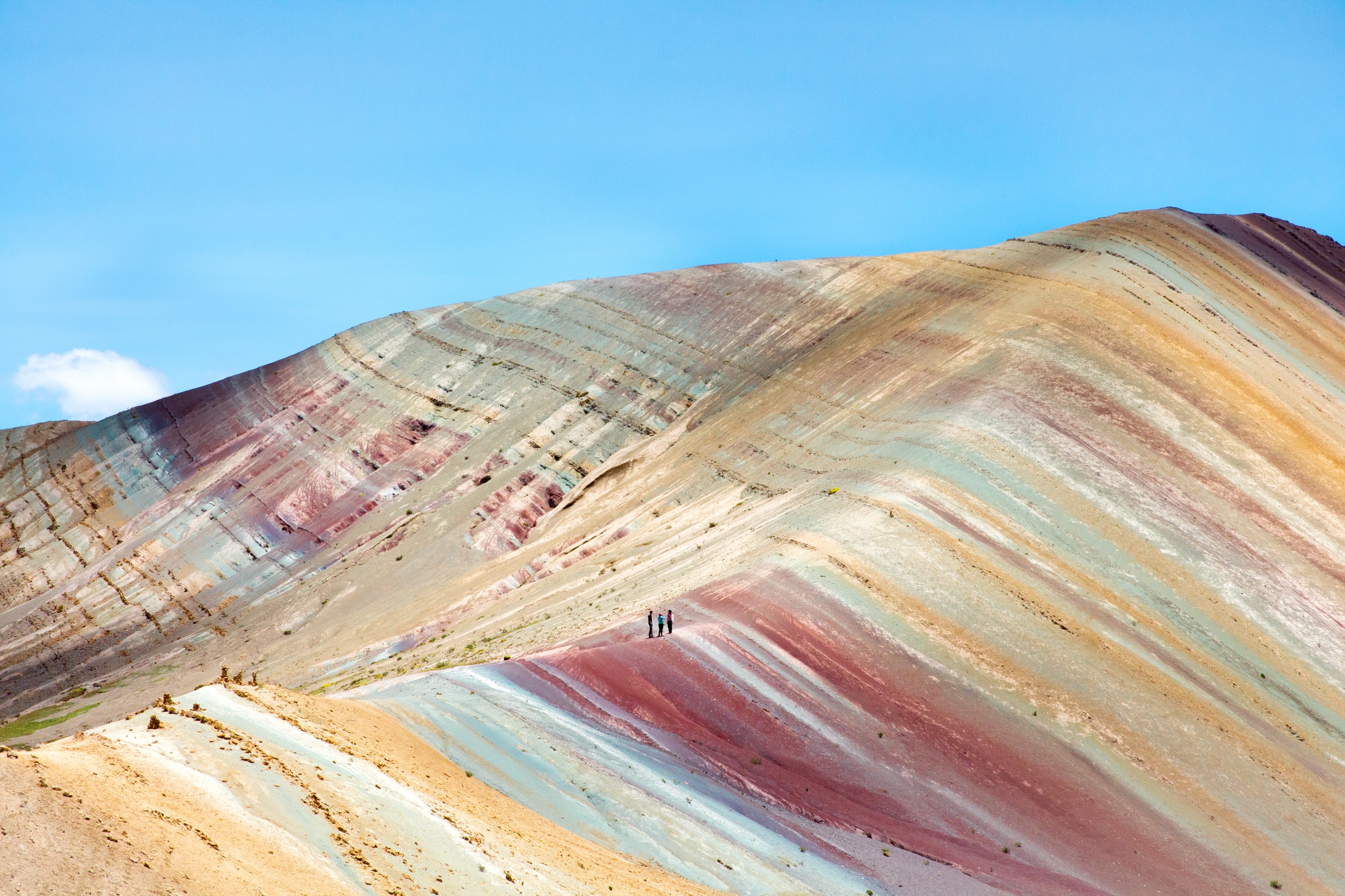
- Vinicunca, the famous seven-colored mountain, accessible from the same route.
- Tinajani Canyon, a spectacular rock formation located further south, toward Puno.
- Cusco Planetarium, to understand the Andean cosmovision evoked at Raqchi.
Frequently Asked Questions
Frequently asked questions
Allow 1 h 30 min to 2 hours to walk through the temple, storage silos, dwellings, and reach the Raqay barracks on foot.
Yes, the site is accessible as a same-day round trip (approximately 4 hours of driving total). It is more often included in a Cusco-Puno circuit with multiple stops.
Raqchi is situated above 3,400 meters in altitude. Prior acclimatization in Cusco is recommended to avoid acute mountain sickness.
The Raqchi Folk Festival is held each year on the third Sunday in May, featuring war dances and Andean rites on the site's terraces.
The original sanctuary is attributed to the pre-Incan civilization of the Canas. Its monumental reconstruction is traditionally attributed to Inca Pachacutec or Inca Viracocha (Hatun Tupac), depending on the source.
Prepare your trip
The Wiracocha Temple naturally fits into an itinerary connecting Cusco to Lake Titicaca. To build a custom journey including Raqchi, the Sacred Valley, and the highlands, consult our suggestions for travel in Pérou.
Interested in this visit?
We can include it in your personalised itinerary.