Ballestas Islands
Ballestas Islands
Off the coast of Paracas, the Ballestas Islands concentrate exceptional marine fauna: sea lions, Humboldt penguins, cormorants, and the Candelabra geoglyph.
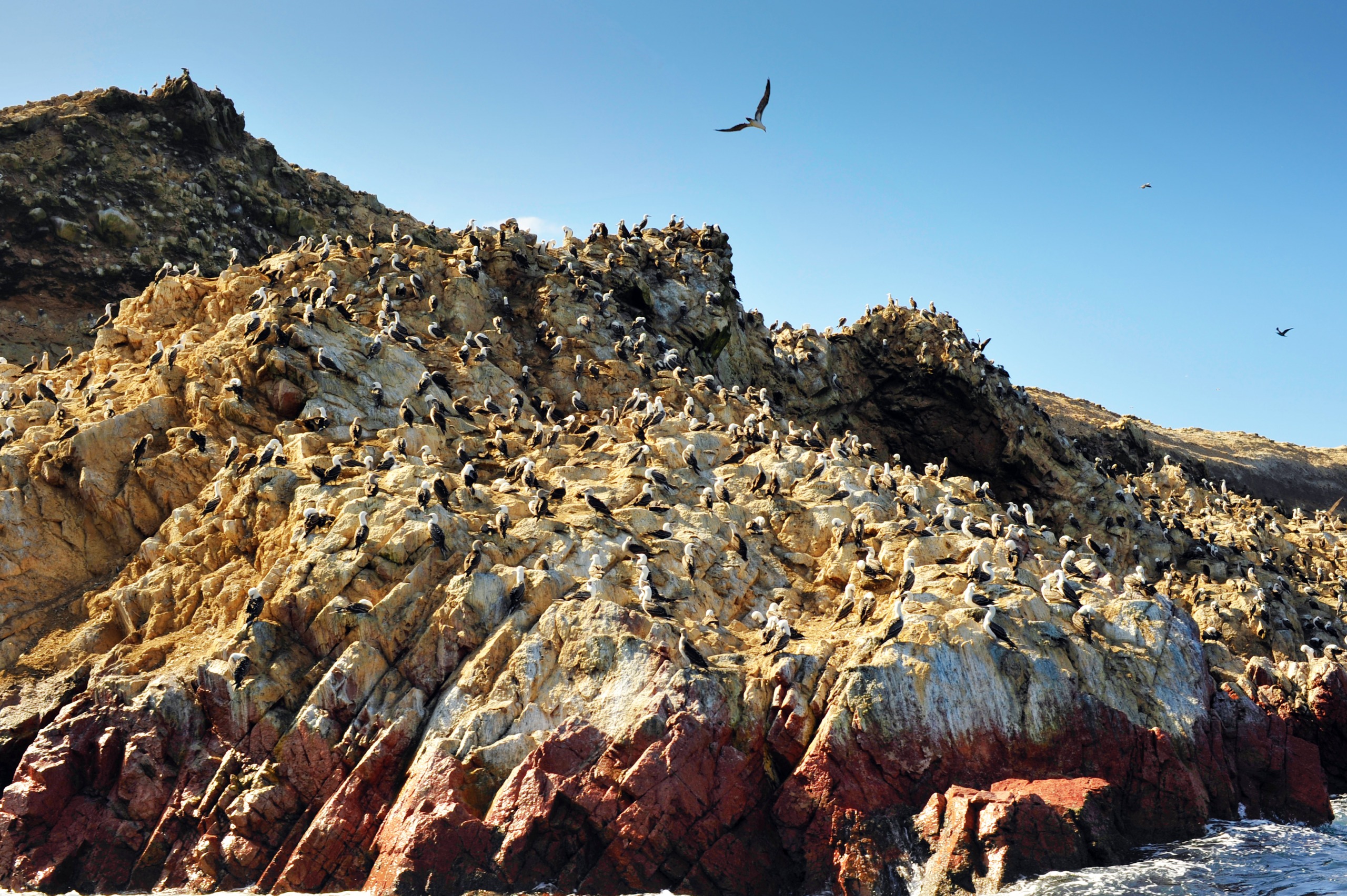
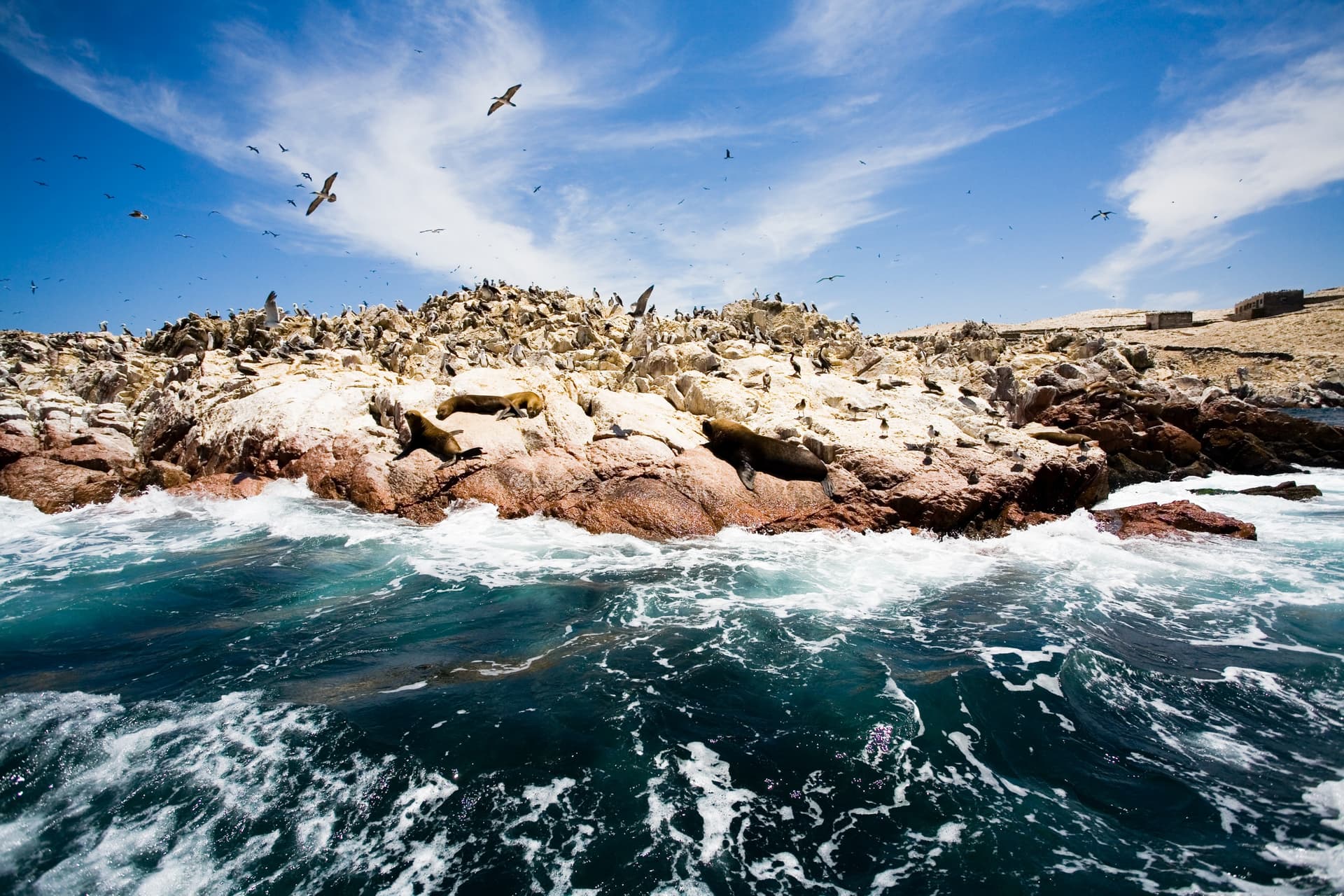
Off the southern coast of Pérou, at the level of Pisco and approximately 250–300 km south of Lima, the Ballestas Islands form an uninhabited rocky archipelago, accessible only by boat from the port of Paracas. Nicknamed the "Galápagos of the poor" by travellers, they concentrate within a reduced area an abundant marine and avian fauna: sea lions, Humboldt penguins, cormorants, pelicans, boobies and terns nest there by the thousands. The tour also allows you to pass by the famous Candelabra geoglyph, carved into the flank of a dune facing the ocean.
Why visit the Ballestas Islands
The appeal of the Ballestas lies in the density of their fauna. Over a journey of a few kilometres at sea, you observe at close range approximately 60 bird species, nearly 4,000 maned sea lions, a dozen varieties of dolphins and nearly 180 fish species recorded in the surrounding waters. The cold currents of the Humboldt system explain this unusual biological richness at such a tropical latitude.
Since the islands are not accessible on foot (landing is prohibited to preserve wildlife), observation takes place from the boat. This constraint is also an asset: tourism pressure remains limited and animal colonies maintain their natural behaviour.
History: from guano to protected reserve
The Ballestas Islands have long been exploited for their guano, the droppings of seabirds accumulated in thick layers and used as agricultural fertiliser. In the 19th century, Pérou massively exported this product to Europe and North America, to the point of making it a pillar of its economy. Intensive and poorly regulated exploitation weakened seabird populations.
In the early 20th century, guano extraction was regulated to preserve nesting colonies. The archipelago is today integrated into a protected reserve system, complementing the Paracas National Reserve located on the neighbouring peninsula.
What to see during the crossing
The Candelabra
Before reaching the islands, the boat approaches the Candelabra of Paracas, a geoglyph 200 metres long and 70 metres wide, carved in bas-relief on the flank of a coastal dune. Its origin, date of creation and function remain unknown. Organic remains found nearby have been dated without any consensus emerging. Among the hypotheses: a navigation landmark linked to the era of pirates and privateers, a pre-Incan ritual symbol, or a plant representation. Its visibility from the sea suggests a function as a reference point.
Marine and avian fauna
Once at the islands, you observe the colonies established on the cliffs and rocky beaches:
- Humboldt penguins (Spheniscus humboldti), vulnerable species endemic to the Peruvian and Chilean coasts
- Maned sea lions, approximately 4,000 individuals grouped in harems on the beaches
- Bougainville's cormorants (Phalacrocorax bougainvillii), primary producers of guano
- Peruvian pelicans (Pelecanus thagus) and various boobies (Sula variegata)
- Inca terns (Larosterna inca), recognisable by their white moustaches
- Taczanowski's cinclode (Cinclodes taczanowskii), a rare coastal songbird
- Dolphins and, depending on the season, passing whales
Rock formations
Marine erosion and winds have carved the cliffs with caves, arches and tunnels that the boat passes close by. Some cavities serve as refuge for sea lions and remain inaccessible to visitors.
Practical information
- Point of departure: Paracas tourist jetty (El Chaco)
- Tour duration: allow approximately 2 hours round trip, including a good hour of observation on site
- Boat type: open-air speedboats, life jacket provided
- To bring: windbreaker, cap secured with a cord, sunglasses, sunscreen and a garment over your shoulders (guano sometimes falls)
- Landing on the islands is prohibited to preserve wildlife
When to go
The climate of Paracas is subtropical desert, moderated by the cold Humboldt current. The average annual temperature hovers around 19–20 °C and rainfall is very low (approximately 200 mm per year). The most favourable period extends from September to October, with calmer seas and good visibility. The Austral summer (December–March) remains practicable but the sea can be rougher. Departures take place in the morning, when navigation conditions are best.
How to get there
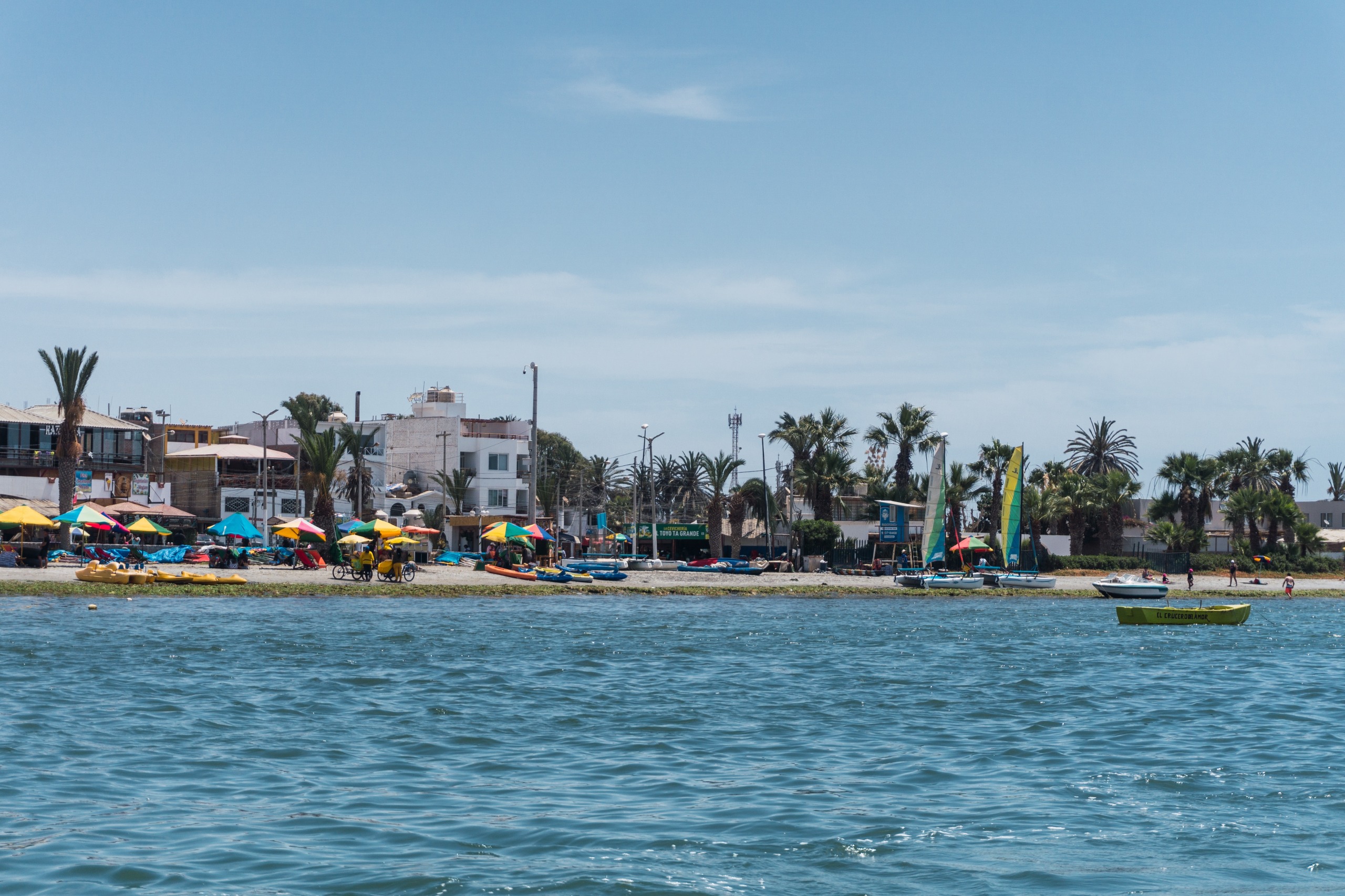
From Lima, allow approximately 4 hours by bus to reach Paracas, on the southern Panamerican highway. Several companies ensure daily service. Once in Paracas, the jetty is located a few minutes' walk from the village centre. Boat tours depart only in the morning, so plan to arrive the evening before or take a very early bus.
What to combine in the region
- Paracas and its national reserve, accessible by buggy or bike, with its red cliffs and desert beaches
- The Huacachina oasis, in the heart of the dunes, approximately 1 hour 15 minutes south by road
- The Nazca Lines, 3–4 hours further south, to extend your exploration of geoglyphs
- Salinas and Aguada Blanca, another Peruvian wildlife reserve, in the Arequipa region
Frequently asked questions
Frequently asked questions
Prepare your journey
The Ballestas Islands fit naturally into an itinerary along Pérou's southern coast, between Lima, Paracas, Huacachina and Nazca. To build a bespoke circuit combining the Pacific coast, the Andes and the Amazon, consult our trips to Pérou.
Interested in this visit?
We can include it in your personalised itinerary.