Huchuy Qosqo
Huchuy Qosqo
An ancient Inca palace of Wiracocha perched at 3,600 m above the Sacred Valley, Huchuy Qosqo is reached by a 2 to 4-day trek from Cusco.
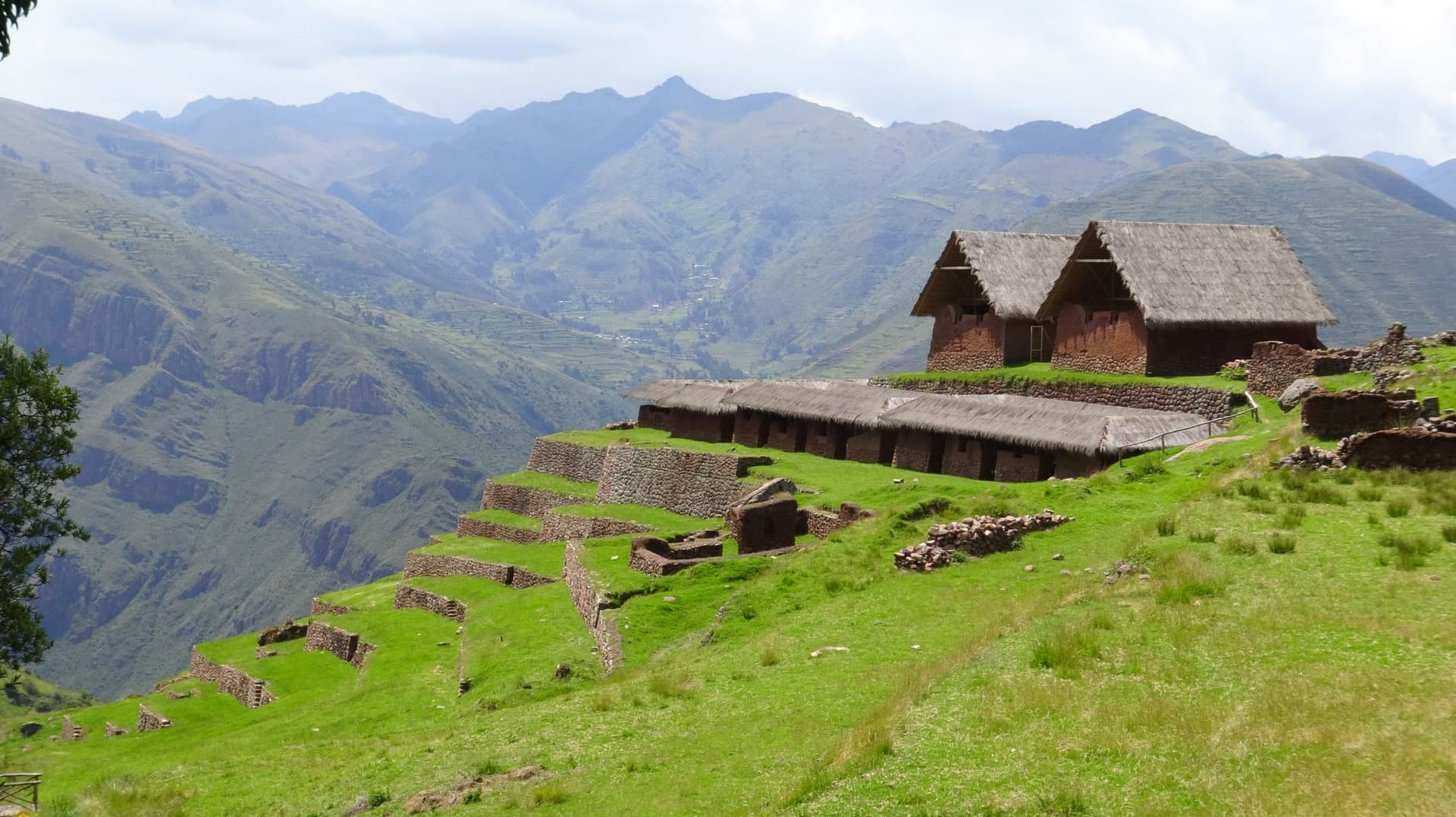
Perched at 3,600 meters above the Sacred Valley of the Incas, Huchuy Qosqo ("Little Cusco") is an Inca archaeological site accessible only on foot. A former palace of the sovereign Wiracocha Inca, it combines summer residence, citadel, and agricultural enterprise. Its original Quechua name, Kakya Qawani or Kakya Shakishawana, means "Viewpoint of the Lightning."
Why visit Huchuy Qosqo
Unlike the major sites in the Cusco region, Huchuy Qosqo remains rarely visited. Its isolation, the absence of roads, and the necessity of trekking to reach it make it a sought-after stop for independent travelers. The appeal is threefold: a palace unspoiled by mass tourism, a panoramic outlook over the Sacred Valley, and a walking route that follows an ancient Inca royal road recently restored.
The site also illuminates a lesser-known chapter of Andean history: the period before the formation of the Inca Empire, when the sovereigns of Cusco controlled only limited territory.
History of the site
The earliest traces of human activity on the site date back to around 1000 CE. The imperial palace itself is believed to have been established from 1420 onward (estimated dating). Its owner was Wiracocha Inca, the eighth sovereign of the lineage. Foreign visitors use the modern name "Huchuy Qosqo"; Quechua-speaking inhabitants preserve the original toponym, Kakya Qawani.
Wiracocha, the mi'tà and the yanakunas
To acquire and maintain an estate of this scale without overly burdening the population, the Inca sovereigns controlled the factors of production—land and labor—rather than multiplying taxes. The system of the mi'tà, a mandatory corvée equivalent to a tax in kind, mobilized subjects for construction projects or agricultural work; in return, the Inca drew from his storehouses to feed the workers. Another class, the yanakunas, served the imperial court full-time and in return enjoyed a privileged social status. This arrangement is documented in the chronicles of Pedro de Cieza de León, a Spaniard who departed for the New World at age sixteen.
The Chanca invasion and the Battle of Yawarpampa
Around 1430, the kingdom of Cusco—still confined to the valley of Cusco, the Anta plain, the Chinchero plateau, and the Sacred Valley—is threatened by the Chancas, a neighboring people from the north. Wiracocha contemplates submission. His son Pachacuteq, who was not his favorite, takes the lead of the resistance and prevails at the Battle of Yawarpampa ("Plain of Blood"), in the present-day Anta pampa. Wiracocha cedes the throne to him. Pachacuteq then pursues the Chancas into their own territory and launches the process of expansion that gives rise to the Tawantinsuyu, the Inca Empire.
The palace remains inhabited until the Spanish conquest. In 1530, it is sacked by Gonzalo Pizarro and converted into an agricultural farm.
What to see on the site
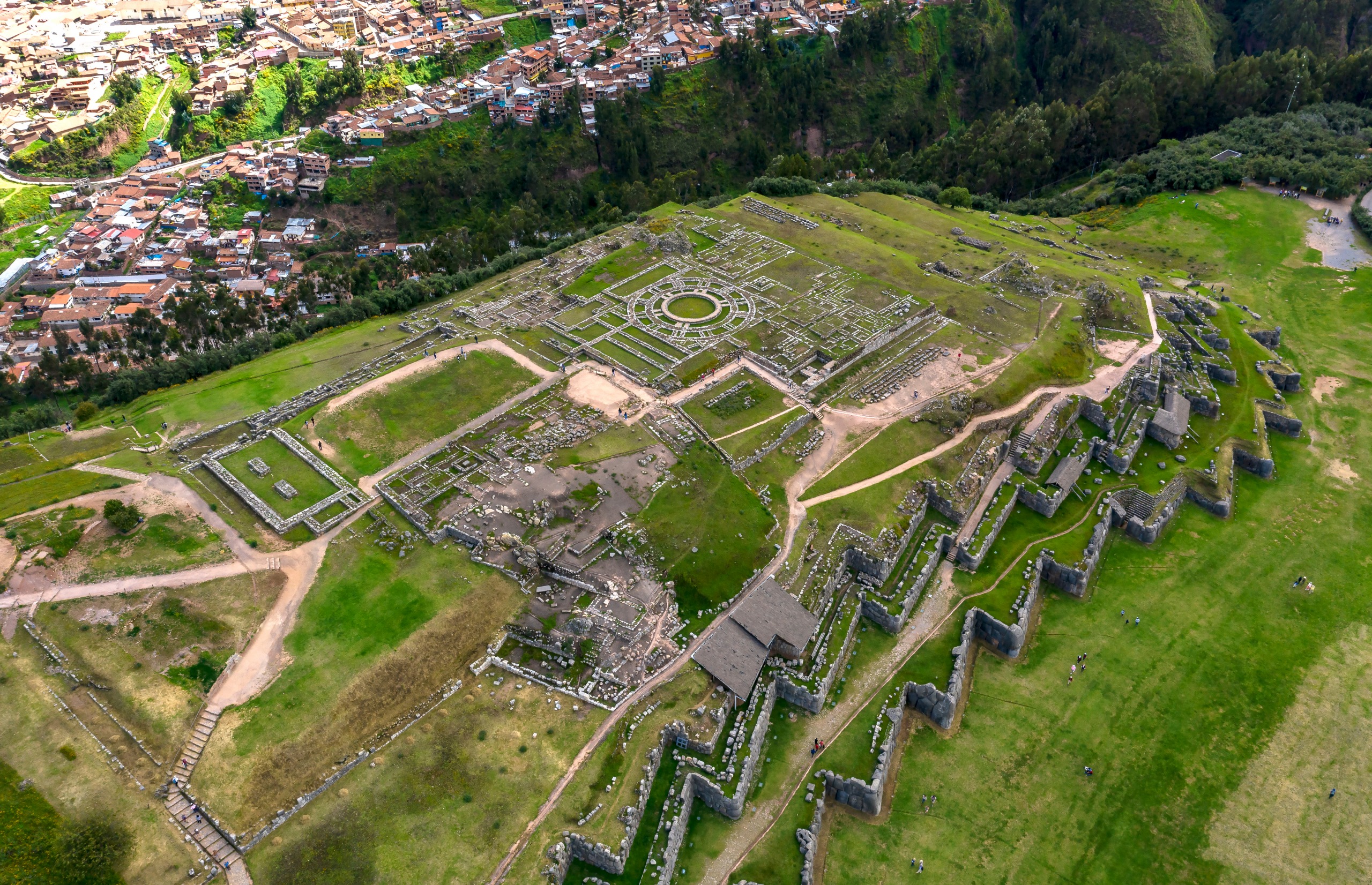
The ensemble combines stone and adobe. One recognizes the classical elements of Inca architecture:
- the kallankas, vast halls used for storage or assembly;
- the conjeras, a sort of cold storage chambers used for food preservation;
- a network of small wells managing water arrival and circulation between dry season and rainy season;
- a substantial cistern behind the lightning temple, likely built after the conquest, which led to the destruction of some older Inca buildings;
- fortifications attesting to the defensive role of the complex.
From the viewpoint, the view plunges over the Sacred Valley approximately 800 meters below.
How to get there
Huchuy Qosqo is not accessible by car. Several road construction attempts, first from Calca and then from Lamay, have been abandoned: the first due to huaycos (landslides), the second stopped by the cliffs that dominate the site. Access is therefore only by foot, via two main routes:
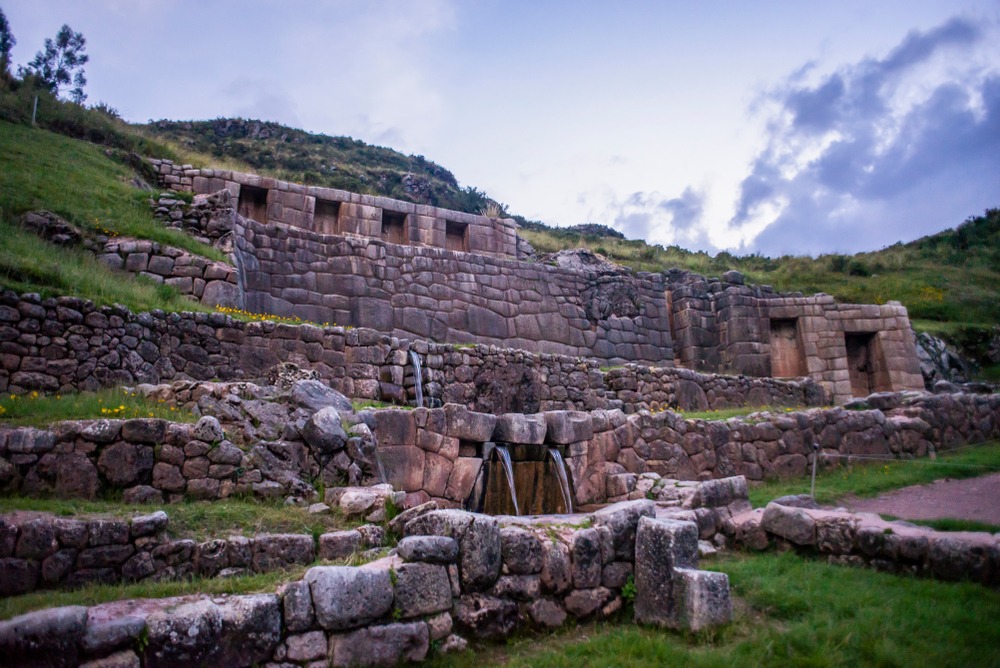
- From Tambomachay, on the heights of Cusco: approximately one day's walk.
- From Patabamba: approximately 1 hour 30 minutes by road from Cusco, then trek. This is the most common option.
The route starting from Patabamba runs along the mountainside, sometimes as a ledge, sometimes in switchbacks to cross a pass, and reaches the village of Pukamarca, where an old Inca tambo (way station on imperial roads) serves as a rest stop. One then reaches the restored royal road that crosses the Leónpunku gorges before arriving at Huchuy Qosqo.
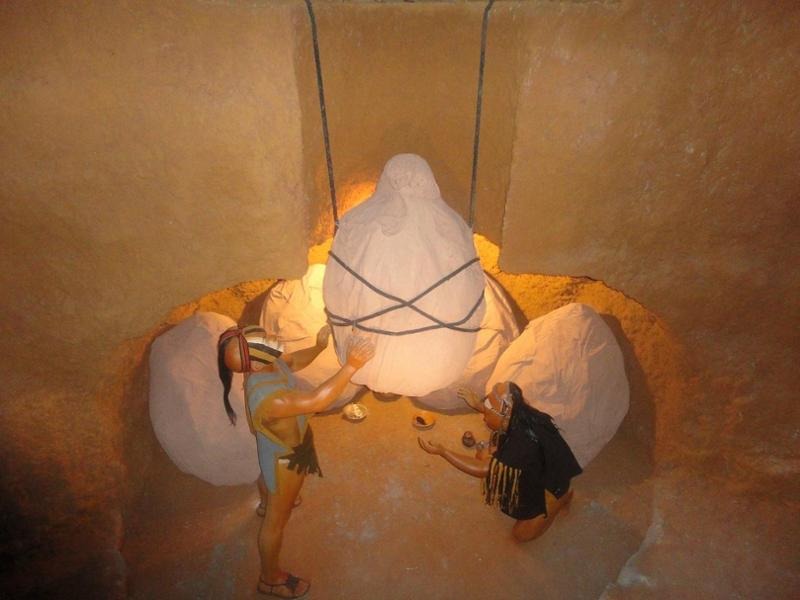
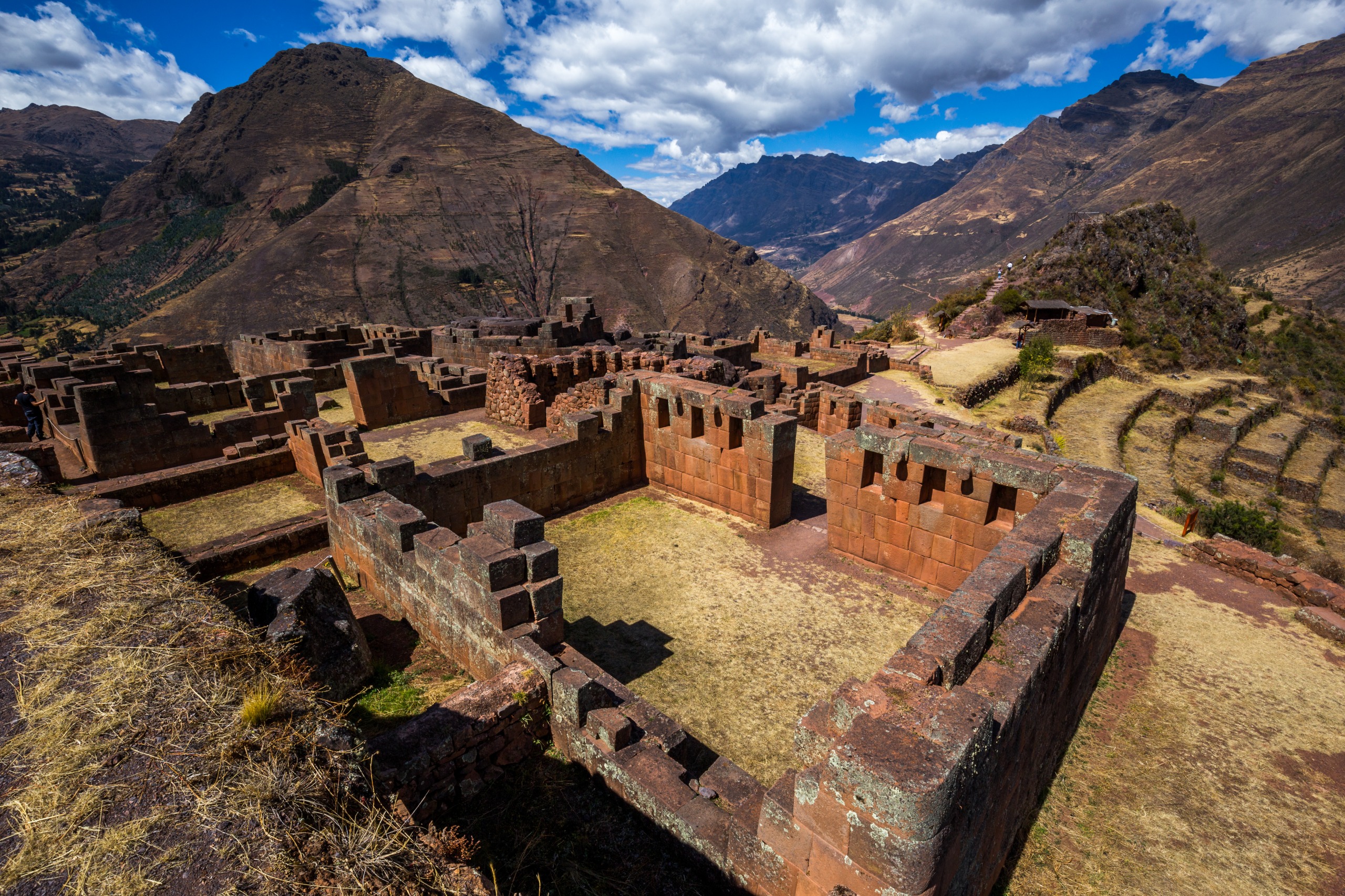
The complete trek typically takes 2 to 4 days. Standard outings descend toward Taucca (near Chinchero) or down to Lamay in the Sacred Valley. An extension is possible through the communities of Huayllafara, Paru Paru and Amaru, with homestays, descending finally to Pisaq via the tomb sector of the archaeological site.
Practical information
- Altitude: 3,600 m. Acclimatization in Cusco recommended before the trek.
- Level: Trek accessible to hikers in good physical condition, accustomed to elevation changes at altitude.
- Accommodation: Camping, basic shelter, or homestay depending on the itinerary.
- Entrance fee: Modest, payable on site.
- Water and supplies: To be arranged at departure; rest stop possibilities at Pukamarca village.
When to go
The site can be visited year-round. The dry season (May to September) offers the most stable hiking conditions and clearest visibility. The rainy season (December to March) remains feasible: landscapes are green and flowering, and showers, often brief, are described in Quechua as misti manchachiq—"frightening to the gentleman," with misti originally designating townspeople and today by extension foreign travelers.
In the surrounding area
The Cusco region offers other treks and lesser-visited sites to combine with Huchuy Qosqo:
- the Lares treks, shorter, focused on Andean communities;
- routes of the Vilcanota range and Carabaya, for experienced hikers, accessible from Tinki, Ocongate, or Pitumarca near Checacupe;
- the Choquequirao trek, which allows you to venture deep into the Vilcabamba cordillera or reach Machu Picchu via the Yanama pass;
- near Cusco, the Cusco Planetarium to understand Inca astronomy, or Andahuaylillas and its baroque church in the southern valley.
Frequently asked questions
Planning your trip
Huchuy Qosqo fits naturally into an itinerary combining Cusco, the Sacred Valley, and Machu Picchu, with an added trekking stage to venture off the beaten path. To craft a bespoke itinerary including this trek, consult our Peru journeys.
Nearby
Interested in this visit?
We can include it in your personalised itinerary.