Typical animals of Peru you might encounter while traveling
Between its mountainous landscapes, verdant meadows and Amazon jungle, Peru possesses incredible biodiversity. Its lands are populated with numerous domestic and wild endemic animals
Between its mountainous landscapes, its verdant meadows and its Amazon jungle, Peru possesses incredible biodiversity. Its lands are populated with numerous domestic and wild endemic animals. Discover the typical and emblematic animals you might encounter during a trip to Peru…
1. The Llama
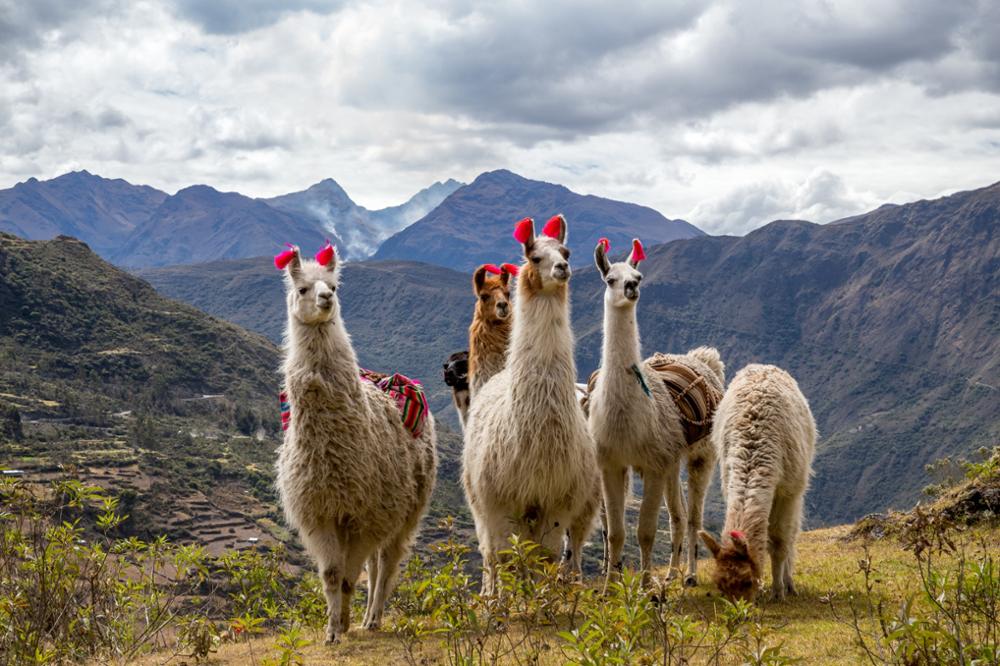
It's Peru's emblematic animal par excellence! And surely the one you'll encounter most during your trip to Peru. With its long neck—it can reach up to 1.30 meters at the shoulder—it's the largest of South American camelids. Domesticated thousands of years ago by pre-Columbian civilizations, the llama is recognized for its endurance and great ability to adapt to high-altitude climates. Even today, Peruvians still use it to transport goods, as a pack animal, for its wool and for its meat, notably dried (charki).
2. The Alpaca
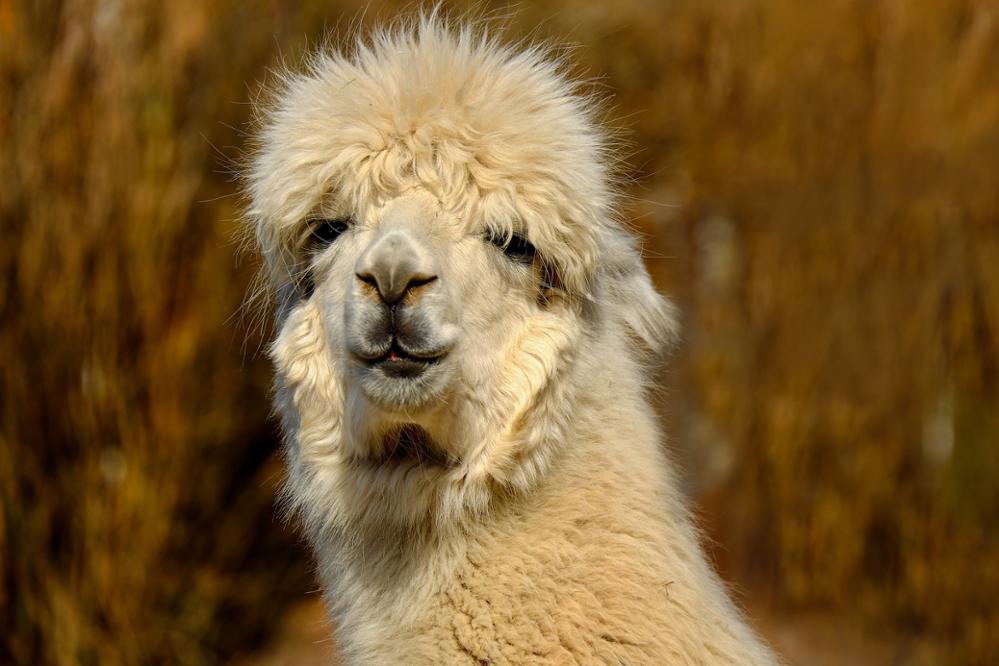
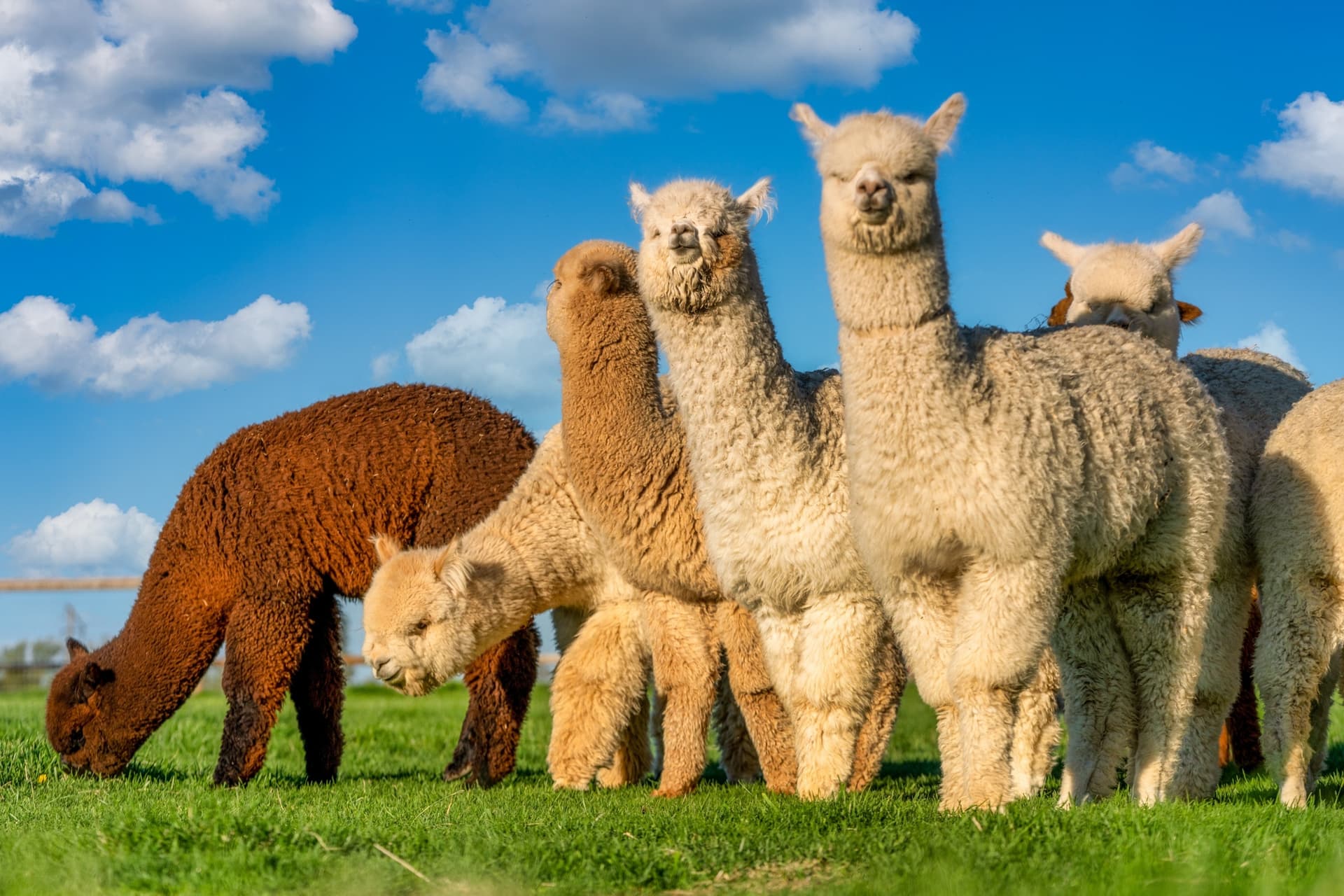
Often confused with the llama, the alpaca is another camelid frequently observed in Peru. It's smaller than the llama (less than one meter at the shoulder) and is characterized by fleece as soft as plush! Its wool was used by the Incas and continues to captivate haute couture today. Peru is even the country with the most alpaca ranching.
3. The Vicuña
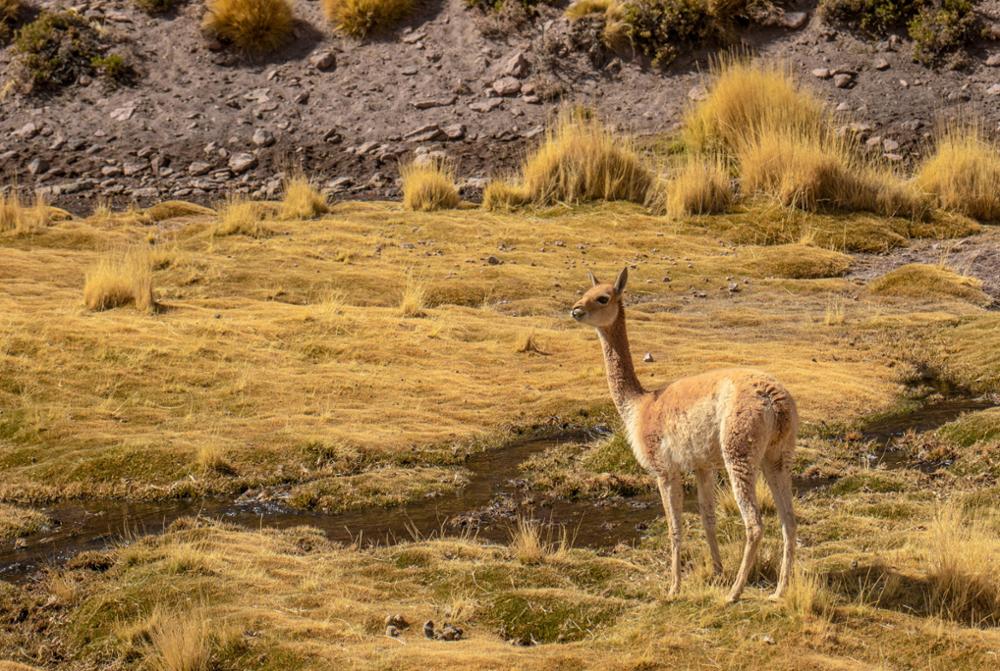
It's the third Peruvian animal in the camelid family and the smallest (90 cm at the shoulder). It's defined by an elegant and slender appearance, close to that of a doe. Its wool is considered one of the most prestigious in the world. It nearly disappeared due to intensive hunting. This is why the vicuña is today an animal protected by strict regulations. In Inca times, only the "panacas" (Inca royal families) could wear garments woven from vicuña wool. Today, the vicuña wool market is extremely controlled by the Peruvian State because vicuña wool and vicuña wool clothing sell for its weight in gold. In all Andean regions where it's present, the "chacu de vicuña" is organized twice a year—an event that brings together many people who encircle the vicuñas to shear them before releasing them again.
4. The Condor
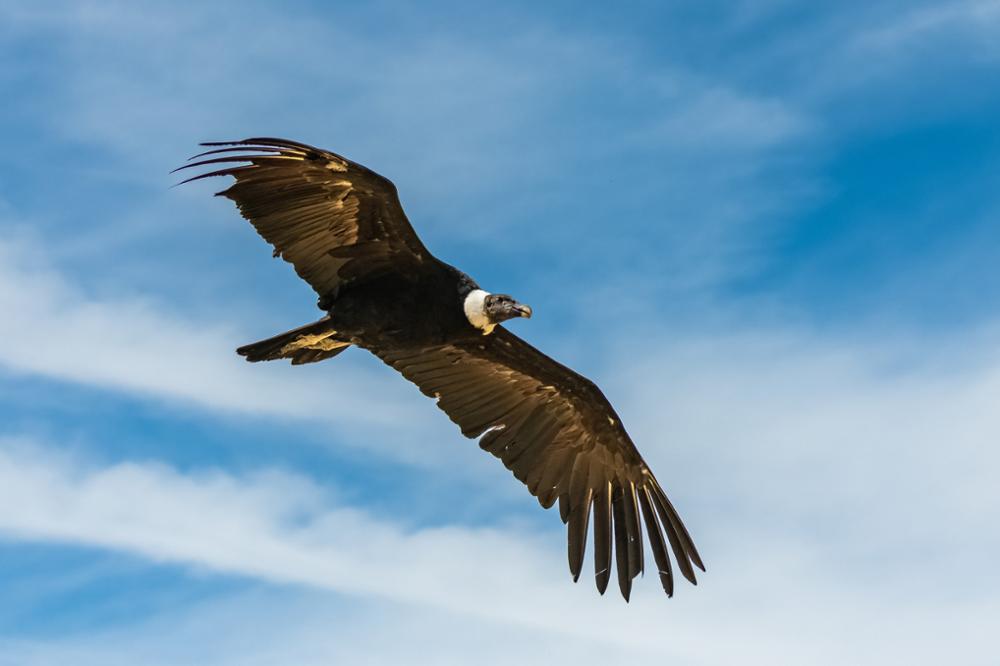
Look up and open your eyes wide during your trip to Peru. You'll surely see flying the largest bird on the planet: the Andean condor! With a wingspan reaching 3.30 meters, you won't miss it! This scavenger lives mainly in the Andes cordilleras and is easily recognized by its black plumage and white collar. Colca Canyon, Sondondo Canyon, and Apurímac Canyon in their respective regions are the places where it's easiest to observe them in Peru, but they're found throughout the Andes down to Patagonia.
5. The Vizcacha
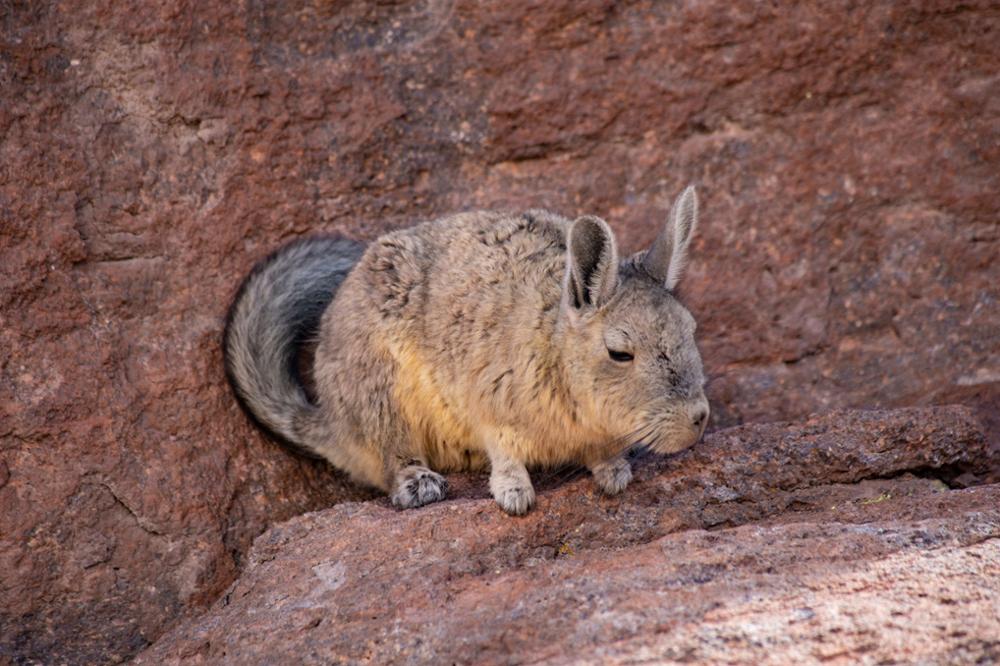
Endemic rodent of Peru, the vizcacha, also called the "Andes chinchilla" in English, belongs to the family Chinchillidae. It closely resembles a rabbit but its tail is like that of a squirrel. It's found on plains or in mountains. Its gray-beige color often blends with the rock. Vizcachas generally live among rocky outcrops. They're very agile and jump from rock to rock at high speed. In certain protected areas, they willingly approach visitors hoping to scavenge crumbs from their picnic.
6. The Spectacled Bear
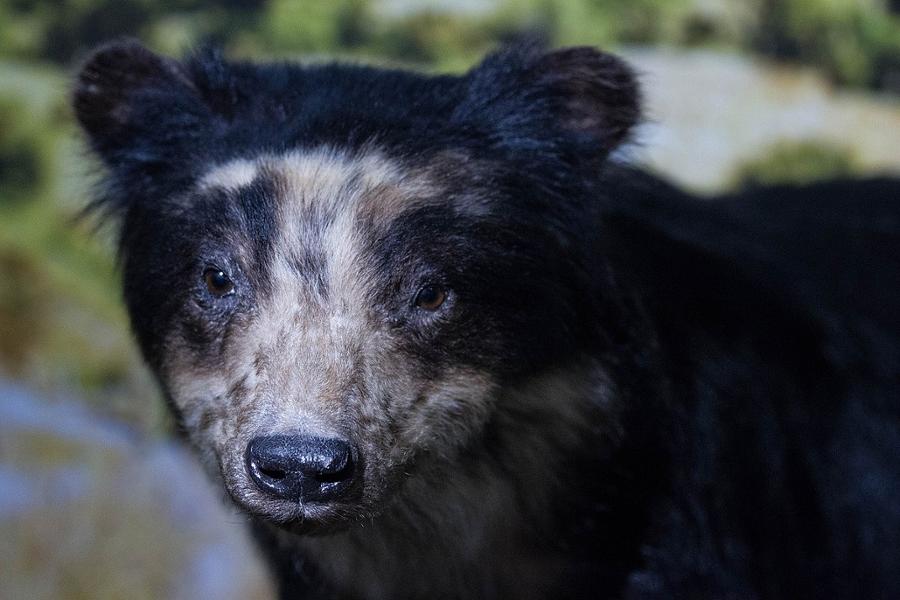
It's the only bear species living in South America. It's easily recognized by its white-furred eyes that contrast with the brown hair covering the rest of its body, resembling glasses—hence its name. The spectacled bear lives mainly between the Andes and the Amazon. Like many wild animals, it's unfortunately threatened with extinction due to hunting and deforestation.
7. The Pink River Dolphin
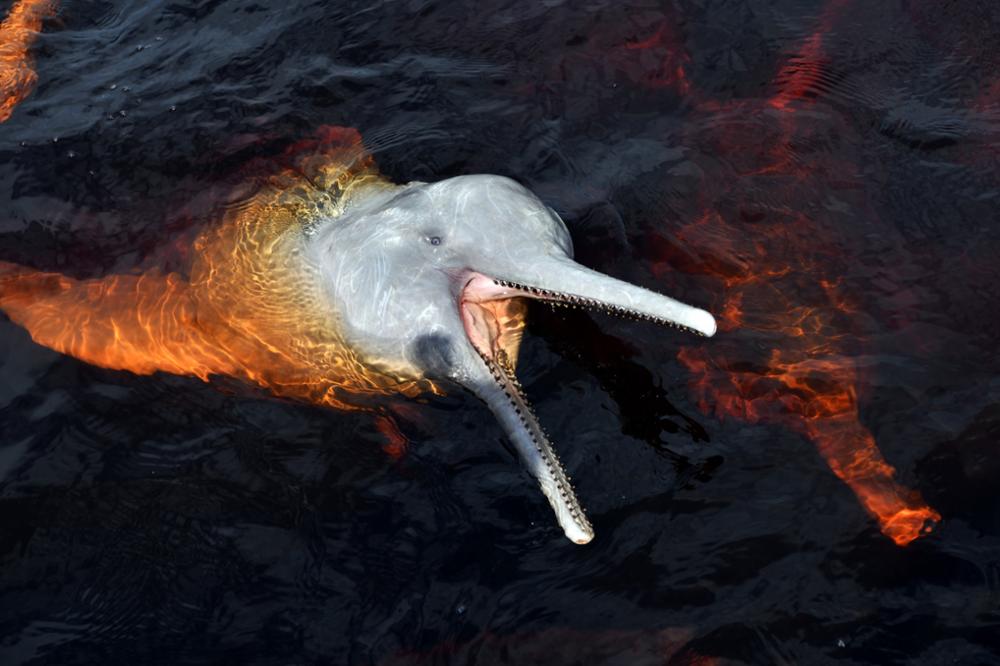
Measuring 2.50 meters, it's the largest freshwater dolphin in the world. The pink river dolphin, also called Boto, lives mainly in the Amazon River. It owes its name to the pink color it acquires with age. Indeed, younger ones have gray skin that brightens and becomes pink in adulthood, with males displaying a more vivid pink than females.